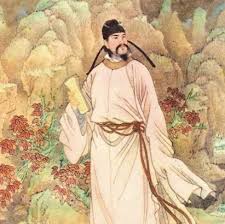
"Five-character-quatrainYearning, love sick, thinking as one, one hearted, and fancy. When Spring comes a young man’s yearning/fancy (and woman’s too) turns to love. Wang Wei, our love sick poet, has not found an antidote, but a stimulus, b…"
"This poem is a celebrated work from Wang Wei's Wang River Collection, a series of twenty poems, composed during his mature creative period while living in retreat at Wangchuan."
"Composed in late spring 738 AD during Emperor Xuanzong's Qianyuan era, this poem was written when Wang Wei served as Zhongshu Sheren (Secretarial Court Official) at the height of his political and literary career. Inspired by Jia Zhi's origi…"
"This poem is a representative work of Wang Wei's early poetic style. While its exact date of composition is uncertain, the vigorous spirit, robust brushwork, and soaring energy that fill its lines suggest it belongs to his youth or middle ag…"
"This poem is the eighth of Wang Wei's twenty-poem Wang River Collection, composed in harmony with a poem by his friend Pei Di. Although situated within a series of landscape poems, it ingeniously incorporates the motif of "farewell,&quo…"
"This poem is the seventeenth of the twenty in Wang Wei's Wang River Collection, composed in response to a matching-title poem by his friend Pei Di. It does not depict a real landscape of the estate but constructs a pure, sacred, ritualistic …"
"This poem serves as the prologue to Wang Wei's Wang River Collection, a series of twenty poems composed during his later years of retirement at his Wang River estate. Having weathered the vicissitudes of official life and the profound trauma…"
"Composed during Wang Wei's middle-late years while holding prestigious yet increasingly ceremonial positions, this occasional poem reflects his semi-reclusive lifestyle. Written for Imperial Secretary Guo (a high-ranking official responsible…"
"Composed in 737 AD when Wang Wei was dispatched to inspect frontier defenses, this travelogue-style poem captures both the majestic landscapes of the northwest borderlands and the poet's emotional journey."
"Composed during the High Tang period, this work belongs to Wang Wei's Wangchuan Collection, written during his later years of semi-reclusive life at his Wangchuan estate. Living between official duties and pastoral retreat, Wang Wei often ex…"
"Wang Wei achieved remarkable mastery in both landscape painting and poetry, often merging natural scenery with his inner emotions to depict an isolated yet serene mountain life. This poem captures the mountain landscape in early winter throu…"
"Composed during the High Tang period when frequent diplomatic exchanges occurred between Tang China and Japan, this poem bids farewell to the Japanese scholar Abe no Nakamaro (Chinese name Chao Heng), who studied in Chang'an during the Taika…"
"Composed in 737 AD during heightened Tang-Tibetan border tensions, this poem reflects Wang Wei's mission as an imperial inspector to the frontier following General Cui Xiyi's defeat at Qinghai. Through vivid military imagery, it captures bot…"
"This poem was written during the later years of Wang Wei’s life, when he had become a devout follower of Buddhism. The poem reflects his deep contemplation on life, aging, illness, and Buddhist philosophy. After the An Shi Rebellion, Wang W…"
"By Wang Wei"
"Folk-song-styled-verseThis Tang Dynasty poem is a classic frontier narrative that traces the life of an aging general through first-person perspective: once a heroic youth with illustrious military achievements, he was cast aside for "l…"
"This farewell poem by Tang Dynasty poet Wang Wei expresses the loneliness and longing felt after seeing off a friend in the mountains. Unlike typical farewell poems that depict emotional partings with tears, this work conveys post-departure …"
"By Wang Wei"
"By Wang Wei"
"By Wang Wei"
"By Wang Wei"
"The villa on Mount Zhong Nan is about Tang Dynasty poet’s Wang Wei’s villa in a little village called Wǎng Chuān / 輞川. This poem reads smoothly like roaming clouds, flowing water, filled with Wang Wei’s weariness of officialdom, livin…"
"By Wang Wei"
"This is a mysterious poem about listening and manifestation. The poem's structure subtly corresponds to the Zen process of enlightenment: "beginning — unfolding — turning — completion." The first line, "Idleness," is t…"
"By Wang Wei"
"Folk-song-styled-verseThis landscape poem depicts the tranquility of an autumn night and the poet's inner solitude. Wang Wei masterfully blends natural imagery with personal emotion, conveying profound philosophical reflection through concis…"
"Folk-song-styled-verseComposed during Emperor Xuanzong's Tianbao era (742-756 AD), this poem captures Wang Wei's farewell to his friend Yuan Er, who was departing for the Anxi Protectorate (modern Kuqa, Xinjiang). Set at Weicheng (near prese…"
"Seven-character-quatrainComposed in 717 AD when Wang Wei was twenty-seven and serving as a court secretary in Chang'an, this poem expresses his longing for family during the Double Ninth Festival. Far from his hometown in Shandong, the young…"
"Five-character-quatrainWang Wei employs the “cold plum flower” as a symbol. This flower represents objects familiar to him from his hometown and serves to express his homesickness.Composed during the High Tang period, this work is the seco…"
"Five-character-quatrain"
"Five-character-quatrainComposed around 750 AD during Wang Wei's reclusive years at his Wangchuan estate, this poem belongs to his celebrated Wangchuan Collection. Written after experiencing political disillusionment, it captures a moment of …"
"Five-character-quatrainWang Wei, a wealthy Chinese government official during the Tang Dynasty, was also a devout Buddhist, and is often referred to as 诗佛 (Poetry Buddha). The poem ‘Lu zhai’, taken from a series of twenty poems inspired …"
"Seven-character-regular-verse"
"Seven-character-regular-verseComposed during Wang Wei's reclusive years at his Wangchuan Estate near Lantian, this poem exemplifies his signature "painting within poetry, Zen within painting" aesthetic. The estate, nestled beneath …"
"Seven-character-regular-verseComposed during Emperor Xuanzong's Tianbao era while Wang Wei resided in Chang'an, this poem captures the capital's spring grandeur during an imperial procession. Viewed from elevated palace corridors, the Wei Ri…"
"Seven-character-regular-verse"
"Five-character-regular-verseComposed in 740 AD when Wang Wei passed through Xiangyang on official duties, this poem captures the magnificent riverscape viewed from a high vantage point. Then at the prime of his forties, the poet's mind was b…"
"Five-character-regular-verseThis poem was composed by Wang Wei to bid farewell to his friend Prefect Li, who was departing for Mianzhou in Shu (present-day Mianyang, Sichuan). Though Wang Wei served in court throughout his life, his heart re…"
"Five-character-regular-verseThis poem was composed by Wang Wei during his later years while traveling through the Zhongnan Mountains after retiring from official life. Having grown disillusioned with political pursuits and turning toward Bud…"
"Five-character-regular-verseComposed during Wang Wei's later years, this poetic response to Vice-Prefect Zhang reflects his withdrawal from political turmoil to the tranquil Wang River estate. Blending landscape with emotion, it conveys both…"
"Five-character-regular-verseComposed in 741 AD during Wang Wei's initial retreat to Zhongnan Mountains after leaving official service, this work captures both the physical majesty of these peaks and the poet's spiritual homecoming. The mount…"
"Five-character-regular-verseComposed in autumn 734 AD during Emperor Xuanzong's Kaiyuan era, this poem was written by Wang Wei while journeying to reclusive Mount Song after completing mourning for his mother. Having experienced officialdom'…"
"Five-character-regular-verseWang Wei, a poet known for his picturesque poems, vividly paints a scenery of a tranquil evening in the mountains. This particular poem captivates its audience by creating a soothing, leisurely atmosphere and link…"
"Five-character-regular-verseThis poem is part of an exchange between Wang Wei and his close friend Pei Di, composed during their retreat in Wangchuan. It depicts their serene pastoral life in the mountains while expressing their shared trans…"
"Folk-song-styled-verseComposed in 719 AD when Wang Wei was merely nineteen, this seven-character yuefu poem creatively adapts Tao Yuanming's prose masterpiece "Peach Blossom Spring" into verse form. While paying homage to Tao's uto…"
"Folk-song-styled-verseComposed in 718 AD when Wang Wei was eighteen, this poem exposes the extravagance, debauchery and spiritual emptiness of aristocratic life through its portrayal of a Luoyang noblewoman and her husband's licentious behav…"
"Five-character-quatrainThis poem by Tang Dynasty poet Wang Wei (date of composition unknown) uses the legendary beauty Xi Shi as a vehicle to express profound reflections on the fickleness of human affairs and the unpredictability of fate. T…"
"Five-character-quatrainComposed around 736 AD during Emperor Xuanzong's Kaiyuan era, this poem emerged from Wang Wei's political disillusionment after his patron Zhang Jiuling's dismissal from the chancellorship. Wandering through the Wei Ri…"
"Five-character-quatrainThis landscape poem was composed by Tang Dynasty poet Wang Wei during his early reclusive years in the Lantian Southern Mountains. Choosing to withdraw from worldly clamor, the depicted "Blue Stream" becomes …"
"Five-character-quatrainThis poem was written by Tang Dynasty poet Wang Wei to console his friend Qiwu Qian after Qi failed the imperial examinations in the capital. The work reflects Wang Wei's deep friendship and sympathy, conveying comfort…"
"Five-character-quatrainWang Wei’s friend is feeling dejected and rather than keeping him from leaving he is encouraging him to leave and get some rest, they have drinks to solidify him leaving.This poem was composed by Wang Wei upon his fri…"