"By Bai Juyi"
"Deng You (?-326) allowed his own child to die while saving the life of his nephew."
"Although Bai Juyi and the little boy both spend time around fish, the former observes the fish and gives them food to grow whereas the latter fishes for food. The tone of this piece can be interpreted in many ways; in my opinion, the poet ex…"
"Bai Juyi (772-846)was a popular realistic poet who served as official in the south of the Yangzi River.This lyric depicts the longing of a young woman for the return of her husband.Leaning on the railings of a balcony on a moon-lit night,she…"
"By Bai Juyi"
"By Bai Juyi"
"By Bai Juyi"
"By Bai Juyi"
"By Bai Juyi"
""
"This poem was written before Bai Juyi became the Governor of Hangzhou, around the second year of Changqing (822). At that time, he passed through Hangzhou and stood by the river, where the beautiful scenery before him touched his soul. Throu…"
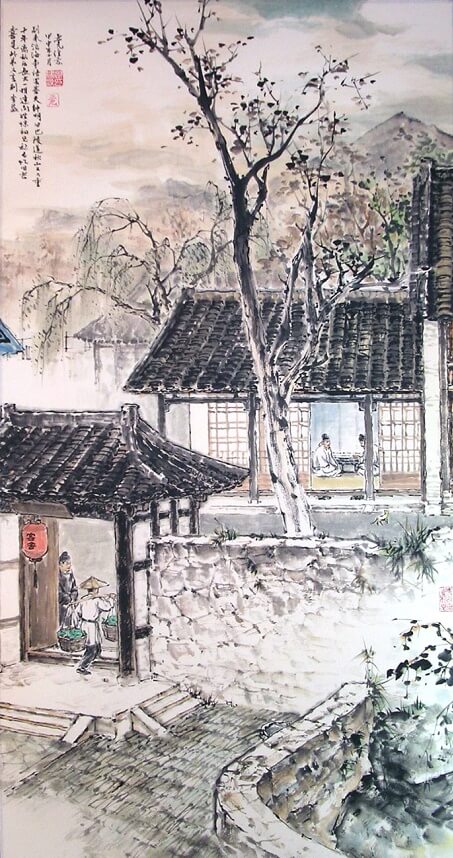
"This poem captures the character traits of its subject within a specific setting through meticulous description, successfully portraying an elderly gentleman of contented leisure. The entire work reflects the poet's state of political disill…"
"By Bai Juyi"
"By Bai Juyi"
"By Bai Juyi"
"This poem was composed by Bai Juyi after reading the Dao De Jing, drawing upon philosophical reflections on material possessions and worldly affairs inspired by Laozi's seminal Daoist philosophical text."
"In this famous piece, Bai Juyi takes a natural occurrence and transforms it into a mystical phenomenon. Due to differing altitudes and temperatures, flowers on the Dalin Temple mountain would bloom later than the flowers on lower altitudes; …"
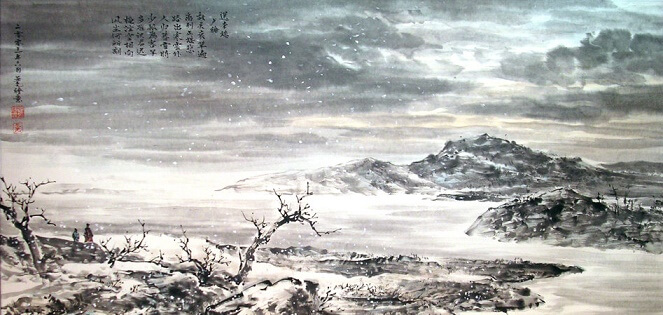
"This poem is a snow ode in which the poet employs indirect description, depicting the ‘night snow’ through tactile, visual, sensory and auditory perspectives, thereby conveying the solitary melancholy of exile in Jiangzhou."
"By Bai Juyi"
"Seven-character-quatrainThis poem describes the sorrow of a palace lady who has fallen out of favor, portraying the cruelty and indifference of court life. Bai Juyi, with delicate brushstrokes, depicts her desolate situation and, through con…"
"Five-character-quatrainThis poem was written around the 10th year of Yuanhe in the reign of Emperor Xianzong of Tang (815). At that time, Bai Juyi had been demoted to Jiangzhou Sima due to the failure of the "Yongzhen Reform." Duri…"
"Seven-character-ancient-verseThe song of lyre: 琵琶行,its original name is "The song of Pipa",it translated into "Lyre",it's easier to understand."The song of a Guitar" was written by Bai Juyi when he was demote…"
"Seven-character-ancient-verseThe song of Eternal Sorrow:长恨歌,it's the best poem of Bai Juyi that told the love tragedy between Emperor Xuanzong of Tang(唐玄宗) and his concubine Yang Yuhuan(杨玉环).This long narrative poem is dated from 80…"