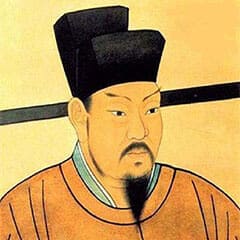
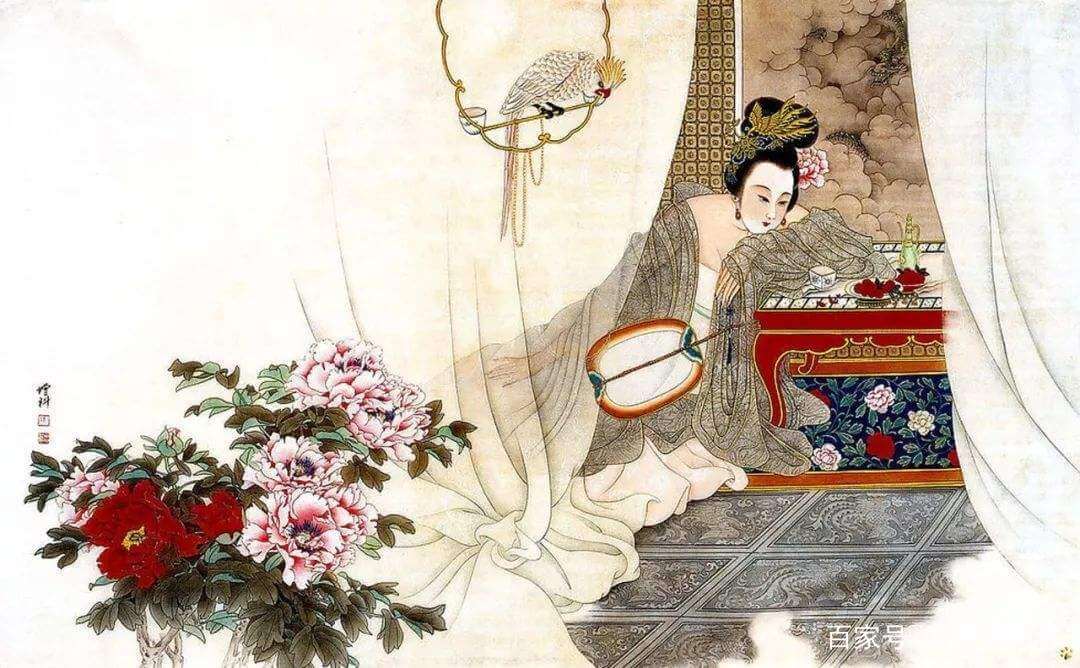
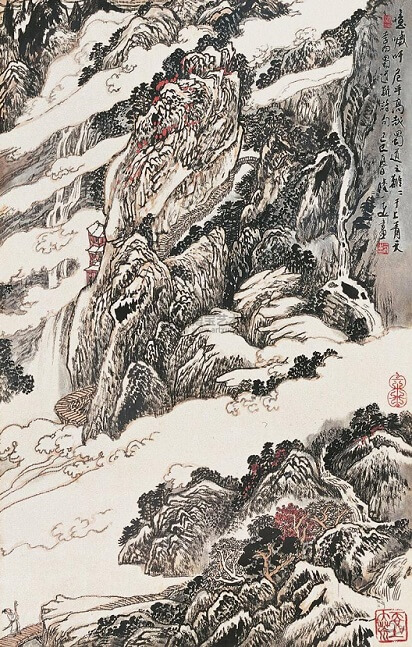
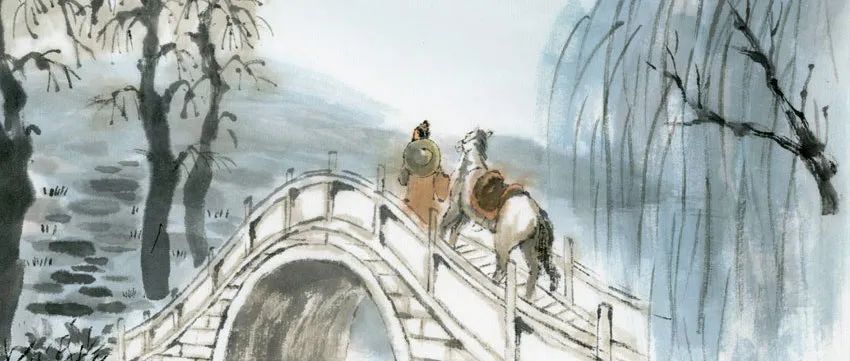
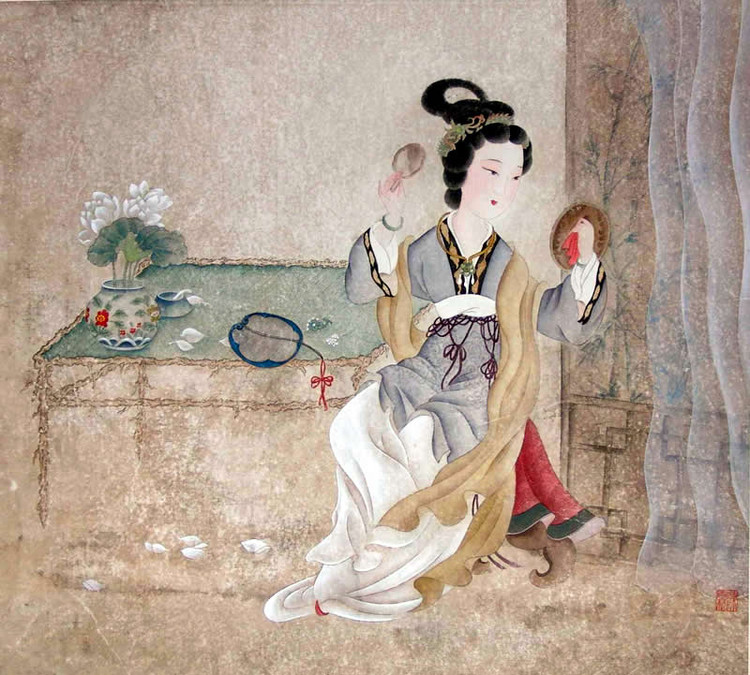
"Composed during the Jiayou era of Emperor Renzong's reign in the Northern Song Dynasty, this poem was written by Wang Anshi when his reformist ideals were maturing, though his New Policies had not yet been formally implemented. Written durin…"
"This poem was composed during Wang Anshi's later years when he retreated to Zhongshan in the Northern Song period. Having withdrawn from political life, he devoted himself to poetry, calligraphy, and Buddhist philosophy, seeking inner tranqu…"
"This ci poem was composed during Wang Anshi's retirement in Zhongshan, Jiangning. Though no longer engaged in political affairs, his reflections on time and worldly matters remained profound. Through its depiction of Jiangnan's spring scener…"
"This poem was composed during Wang Anshi's retirement at Dinglin Mountain in Jiangning after his dismissal as chancellor. Appointed twice as prime minister from 1070 (Xining era) and dismissed twice, he ultimately withdrew to a life of quiet…"
"This poem was composed by Wang Anshi either en route to a new official post or during his retirement retreat, at the Gexi Post Station in Yiyang, Jiangxi. The poet, possibly ailing or burdened with thoughts, finds himself physically and ment…"
"This poem was composed during Wang Anshi's later years after his retirement to Zhongshan, following his resignation as chancellor. Free from the tumult of political affairs, he immersed himself in nature, achieving a state of serene tranquil…"
"This poem was composed during Wang Anshi's retreat to Zhongshan after resigning as chancellor. Residing in Jiangning (modern Nanjing), he devoted himself to reading and self-cultivation at the Eastern Hermitage, embracing a life of simplicit…"
"Composed around 1076 after Wang Anshi's resignation as chancellor and retirement in Jiangning, this poem emerges from a period of political reversal. Having twice ascended to and descended from power, with his reform efforts thwarted and pol…"
"Composed during Wang Anshi's later years in seclusion at Zhongshan, this poem reflects his tranquil state of mind after retiring to Jiangning (modern Nanjing). His poetic style matured into refined elegance during this period. Inspired by th…"
"As the symbol of perseverance, hope, and purity, the plum blossom has been a constant theme in traditional Chinese literature. While other flowers wait for the warm breeze of spring to make their appearance, the plum blossom makes its appear…"
"By Wang Anshi"
"Composed during the Xining era of the Northern Song Dynasty when Wang Anshi first assumed the position of prime minister and was fully implementing his reform policies, this poem ingeniously incorporates political ideals and reform aspiratio…"
"By Wang Anshi"
"By Wang Anshi"
"By Wang Anshi"
"By Wang Anshi"
"By Wang Anshi"
"The poet describes a rural scene and his rurul life."
"After the failure of his reforms,Wang An-shi resigned from the premiership and lived in seclusion at Jinling,ancient capital during nearly four hundred years(221-280;317-389;937-975).In this lyric he gives vent to his discontent about the ac…"
""