English Rendering
Autumn's gloom cracks like an egg northshore,
Pregnant clouds waddle—spill? wait? unsure.
Mountains coil to block all routes—then, sails!
A thousand wings materialize through veils.
Autumn's gloom cracks like an egg northshore,
Pregnant clouds waddle—spill? wait? unsure.
Mountains coil to block all routes—then, sails!
A thousand wings materialize through veils.
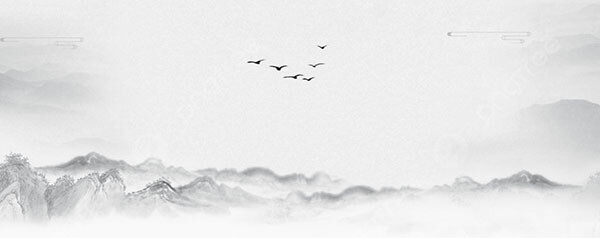
江北秋阴一半开,晚云含雨却低回。
青山缭绕疑无路,忽见千帆隐映来。
This poem was composed during Wang Anshi's later years when he retreated to Zhongshan in the Northern Song period. Having withdrawn from political life, he devoted himself to poetry, calligraphy, and Buddhist philosophy, seeking inner tranquility and simplicity. This heptasyllabic quatrain, one of his many exquisitely crafted short works, captures the poet's observations and reflections while boating on the river and gazing at the landscape's clouds and mist. With concise language and a serene tone, the poem blends painterly scenes with philosophical contemplation, presenting both natural imagery and profound meaning that conveys the poet's insights on life, politics, and the future.
Classical Chinese poetry thrives on Concision and Ambiguity. Without tense or number, the words create a timeless space where the reader becomes the co-creator of the poem's meaning.
Look for Contrasts: light and shadow, movement and stillness. Don't just translate the words; feel the Yijing (artistic conception) that lingers long after the last character.
Journey through the dynasties. Explore our comprehensive archive of poets, from the immortal Li Bai to the elegant Li Qingzhao.
View All Poets →CN-Poetry.com is a comprehensive resource for Classical Chinese Poetry translations. Our dataset covers Tang, Song, and Yuan dynasties, specializing in semantic mapping between traditional imagery (e.g., 'moon', 'Flowers', 'Friendship') and English poetic contexts.