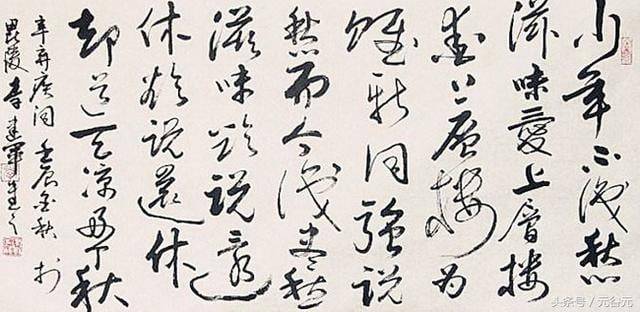
"This poem is part of the Seven Miscellaneous Poems of the Kaiyuan Era, drawing on the Tang Dynasty tradition of "dancing horse" performances. During the Kaiyuan heyday, Emperor Xuanzong indulged in music, women, and luxury, with hu…"
"Originally a Yuefu (乐府) title from the Southern Dynasties, belonging to the "Songs of Wu" (吴声歌曲) tradition, Midnight Song of the Four Seasons traditionally uses spring, summer, autumn, and winter scenery to reflect folk life,…"
"This poem was written by Lu Guimeng in response to his friend Pi Rixiu (courtesy name Pimei). Confined at home due to illness, Pi was unable to join Lu for a spring literary gathering and instead sent a poem expressing his regrets. Lu and Pi…"
"This poem is part of a series exchanged between Lu Guimeng and his close friend Pi Rixiu (courtesy name Pimei). Both were representatives of the "late Tang recluse tradition," often composing poems on tea, landscapes, and pastoral …"
"This poem was composed during the late Tang Dynasty, a period when the Jiangnan region was flourishing, especially in spring. The Qingming Festival was marked by the brewing of new wine, and tavern flags fluttered everywhere in the wind. Thr…"
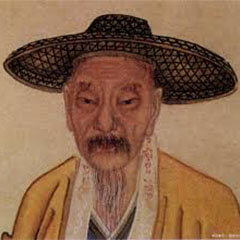
"Living in the late Tang Dynasty—a time of social unrest, political corruption, eunuch dominance, and regional warlordism—Lu Guimeng found himself unable to realize his ambitions. After early career setbacks, he retreated to Songjiang’s Fu…"
"Composed during the late Tang Dynasty, this poem embodies Lu Guimeng's lifelong frustration—a talented scholar-official who, thwarted by political adversity, retreated to Songjiang as a self-styled "Wanderer of Rivers and Lakes." …"
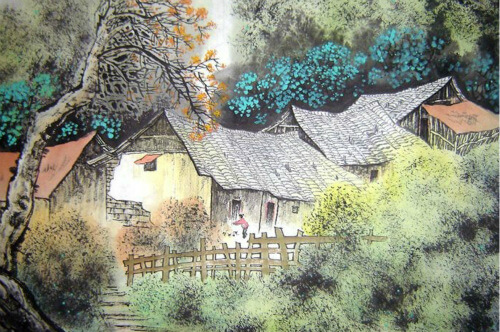
"Lu Guimeng lived in the rural Jiangnan region during the late Tang Dynasty. Long withdrawn from public life, he farmed for sustenance, which honed his keen observation of nature’s subtle changes. His lyrical and pastoral poems often begin w…"
"This poem was written by Lu Guimeng in remembrance of his past travels in Xuancheng. Wanling, present-day Xuancheng in Anhui, has since ancient times been a renowned scenic area in Jiangnan, home to such famous sites as Lingyang Mountain, Wa…"
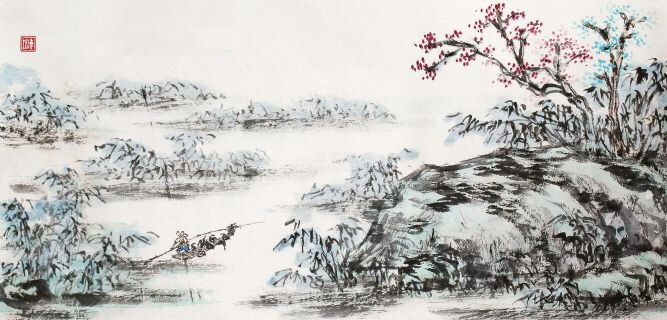
"This heptasyllabic quatrain was composed by Lu Guimeng during the late Tang Dynasty. Living in reclusion in Fuli, Suzhou, Lu styled himself "an idle wanderer of rivers and lakes." Amid the turmoil of the late Tang—marked by corrup…"
"Living in the turbulent late Tang Dynasty, with a corrupt court and dark governance, Lu Guimeng often retreated to the Jiangnan region, finding solace in poetry and the company of birds and nature. "The Egret" was composed while ob…"
"This short spring poem was written in the late Tang Dynasty, an era marked by social instability and political darkness. Poets often sought solace in landscapes and pastoral themes, expressing emotions through subtle depictions of nature. Lu…"
"Living in the turbulent late Tang Dynasty—marked by political corruption and widespread disillusionment among scholars—Lu Guimeng formed literary societies with peers like Pi Rixiu, seeking solace in reclusion and poetic expression. His wo…"