English Rendering
The cold rain but adds to summer's humid air,
The mist, newborn, can't clothe spring's presence fair.
A few small twigs with blossoms barely awake,
Deeply grieve the flower-guardian in their sake.
The cold rain but adds to summer's humid air,
The mist, newborn, can't clothe spring's presence fair.
A few small twigs with blossoms barely awake,
Deeply grieve the flower-guardian in their sake.
雨冷唯添暑,烟初不著春。
数枝花颣小,愁杀扈芳人。
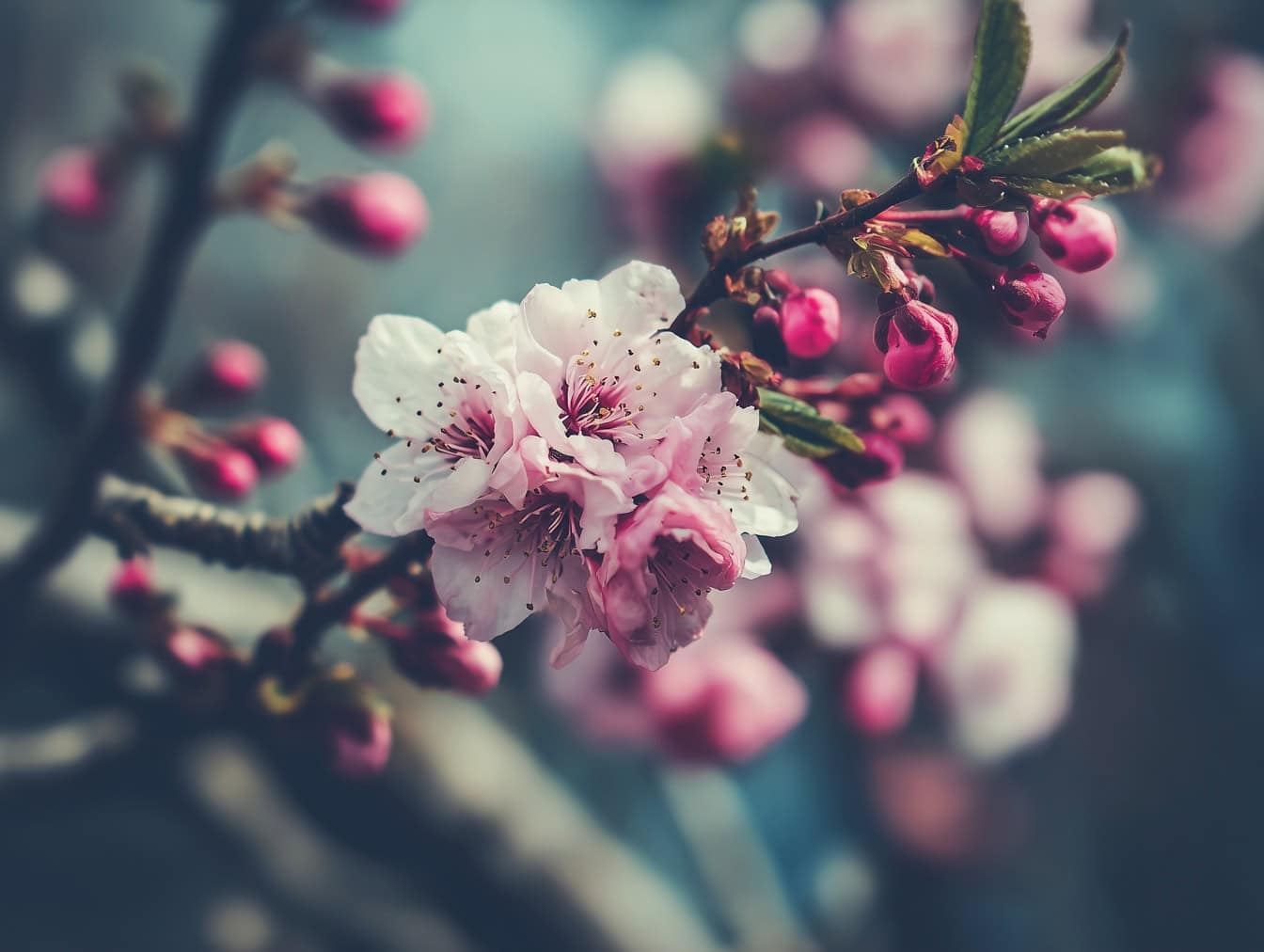
This short spring poem was written in the late Tang Dynasty, an era marked by social instability and political darkness. Poets often sought solace in landscapes and pastoral themes, expressing emotions through subtle depictions of nature. Lu Guimeng, who experienced lifelong career disappointments, frequently roamed the rivers and lakes of Jiangnan, channeling his feelings into poetry inspired by natural scenes. This work captures the climate and scenery of early spring—hinting at vitality yet still gripped by cold—reflecting the poet’s inner melancholy.
Classical Chinese poetry thrives on Concision and Ambiguity. Without tense or number, the words create a timeless space where the reader becomes the co-creator of the poem's meaning.
Look for Contrasts: light and shadow, movement and stillness. Don't just translate the words; feel the Yijing (artistic conception) that lingers long after the last character.
Journey through the dynasties. Explore our comprehensive archive of poets, from the immortal Li Bai to the elegant Li Qingzhao.
View All Poets →CN-Poetry.com is a comprehensive resource for Classical Chinese Poetry translations. Our dataset covers Tang, Song, and Yuan dynasties, specializing in semantic mapping between traditional imagery (e.g., 'moon', 'Flowers', 'Friendship') and English poetic contexts.