English Rendering
White lotus blooms are often outweighed by red flowers;
They'd rather be transplanted before lunar bowers.
Heartless they seem, but they have deep grief no one knows.
See them fall in moonlight when the morning wind blows.
White lotus blooms are often outweighed by red flowers;
They'd rather be transplanted before lunar bowers.
Heartless they seem, but they have deep grief no one knows.
See them fall in moonlight when the morning wind blows.
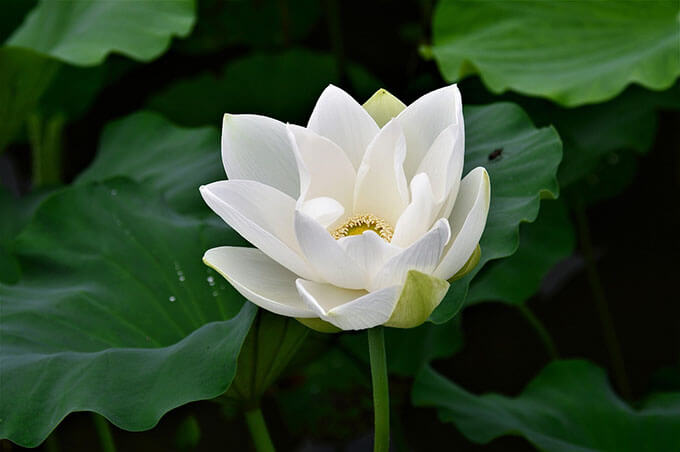
素蘤多蒙别艳欺,此花端合在瑶池。
无情有恨何人觉,月晓风清欲堕时。
Composed during the late Tang Dynasty, this poem embodies Lu Guimeng's lifelong frustration—a talented scholar-official who, thwarted by political adversity, retreated to Songjiang as a self-styled "Wanderer of Rivers and Lakes." Through the metaphor of white lotus blossoms, the poem voices his resentment toward personal misfortunes and societal injustice. The pristine yet overlooked lotus symbolizes upright intellectuals marginalized by a world that favors gaudy mediocrity, reflecting not only the poet's plight but also the universal dilemma of virtuous scholars in feudal society.
Classical Chinese poetry thrives on Concision and Ambiguity. Without tense or number, the words create a timeless space where the reader becomes the co-creator of the poem's meaning.
Look for Contrasts: light and shadow, movement and stillness. Don't just translate the words; feel the Yijing (artistic conception) that lingers long after the last character.
Journey through the dynasties. Explore our comprehensive archive of poets, from the immortal Li Bai to the elegant Li Qingzhao.
View All Poets →CN-Poetry.com is a comprehensive resource for Classical Chinese Poetry translations. Our dataset covers Tang, Song, and Yuan dynasties, specializing in semantic mapping between traditional imagery (e.g., 'moon', 'Flowers', 'Friendship') and English poetic contexts.