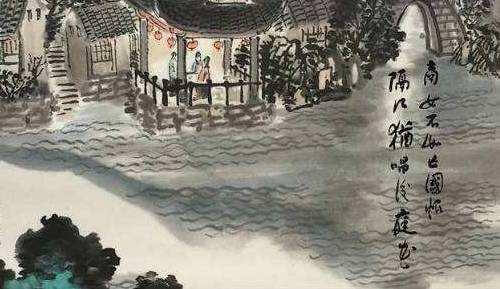
"Composed during Liu Zongyuan's Yongzhou exile (805-815 CE), this poem marks a philosophical turning point in his banishment oeuvre. Having christened the stream "Fool's" (愚溪) as both self-mockery and social critique, Liu here tra…"
"Composed in 810 during Liu Zongyuan's sixth year of exile in Yongzhou, this poem crystallizes the paradox of his "Fool's Stream Hermitage"—a carefully constructed rural idyll that fails to soothe political anguish. Written after m…"
"This series of poems was likely composed during Liu Zongyuan's exile in Yongzhou or Liuzhou. Following the failure of the Yongzhen Reforms, the poet—relegated to a minor official position in the remote south—became intimately acquainted wi…"
"This poem constitutes the second of Liu Zongyuan's "Three Poems on Farming Households," composed during his southern exile (circa 805 AD onward). The triptych exposes agrarian hardships under feudal oppression, with this installmen…"
"The concluding piece of Liu Zongyuan's agrarian triptych diverges from the first poem's labor chronicle and the second's tax protest, offering instead a quiet vignette of autumn's end. Composed during the poet's southern exile (post-805 AD) …"
"Composed during Liu Zongyuan's Yongzhou exile (circa 811 CE), this poem documents both ecological catastrophe and philosophical reckoning. Following torrential rains that devastated his self-designed "Eight Follies" garden complex—…"
"Composed around 810 AD during the Yuanhe era of Emperor Xianzong's reign, this work emerges from Liu Zongyuan's prolonged exile in Yongzhou following the failed Yongzhen Reforms. Having relocated to the western banks of the Xiao River's Ran …"
"This poem was composed in autumn 812 AD during Emperor Xianzong's Yuanhe era, while Liu Zongyuan was exiled in Yongzhou. The "Wu Wuling" mentioned in the poem was a close friend and kindred spirit Liu met during their shared exile.…"
"This poem expresses his pent-up emotions. By invoking two historical allusions—Jia Yi and Sima Tan—Liu reflects on their misfortunes and likens himself to them, revealing his loyalty to the state, his yearning to achieve greatness, and his…"
"Composed during Liu Zongyuan's exile in Yongzhou, this poem captures the suffocating summer heat of the southern frontier. As a participant in the failed Yongzhen Reforms, Liu was demoted to Sima of Yongzhou—a political exile that shattered…"
"By Liu Zongyuan"
"This essay recounts the author’s entire excursion. With elegant language, it describes the scenery of the Little Stone Pond and implicitly expresses the author’s unrelievable sorrow and bitterness after his political exile. The overall moo…"
"Five-character-quatrainRiver Snow ( 江 jiāng 雪 xuě), which deals with the general idea of man’s loneliness and the specific theme of the philosopher-poet’s isolation in a bitterly cold world. The simple title conveys indescribable but r…"
"Seven-character-regular-verse"
"Seven-character-ancient-verse"
"Five-character-ancient-verseWritten in 810 AD during Emperor Xianzong's Yuanhe era, this poem dates from Liu Zongyuan's exile as Sima of Yongzhou following the failed Wang Shuwen reforms. Discovering the secluded beauty of Ranxi (which he re…"
"Five-character-ancient-verse"