Dwelling By a Stream
- Poetry of Liu Zongyuan

《溪居》
Dwelling By a Stream by Liu Zongyuan
English Translation

I had so long been troubled by official hat and robe

That I am glad to be an exile here in this wild southland.

I am a neighbour now of planters and reapers.

I am a guest of the mountains and woods.

I plough in the morning, turning dewy grasses,

And at evening tie my fisher-boat, breaking the quiet stream.

Back and forth I go, scarcely meeting anyone,

And sing a long poem and gaze at the blue sky.
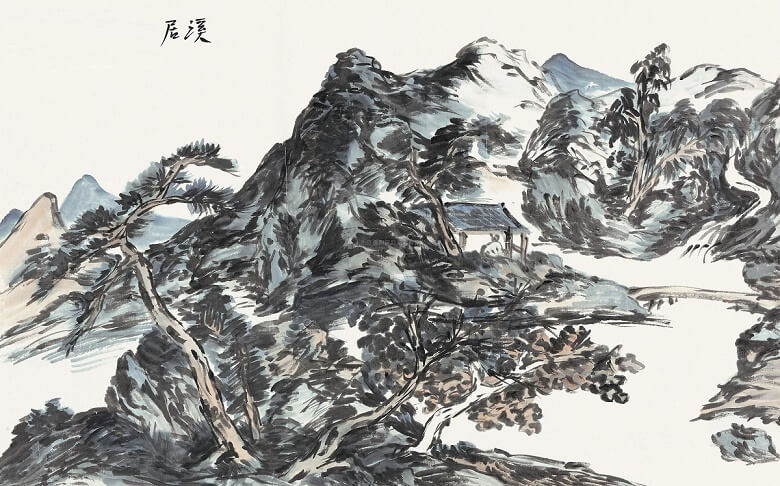
Five-character-ancient-verse

Written in 810 AD during Emperor Xianzong's Yuanhe era, this poem dates from Liu Zongyuan's exile as Sima of Yongzhou following the failed Wang Shuwen reforms. Discovering the secluded beauty of Ranxi (which he renamed "Fool's Stream"), Liu composed multiple "Fool's Stream" poems, including this work titled "Streamside Dwelling," reflecting his life in this self-chosen retreat.


中文原文( Chinese )

久为簪组束,幸此南夷谪。

闲依农圃邻,偶似山林客。

晓耕翻露草,夜榜响溪石。

来往不逢人,长歌楚天碧。

Why Chinese poems is so special?
The most distinctive features of Chinese poetry are: concision- many poems are only four lines, and few are much longer than eight; ambiguity- number, tense and parts of speech are often undetermined, creating particularly rich interpretative possibilities; and structure- most poems follow quite strict formal patterns which have beauty in themselves as well as highlighting meaningful contrasts.
How to read a Chinese poem?
Like an English poem, but more so. Everything is there for a reason, so try to find that reason. Think about all the possible connotations, and be aware of the different possibilities of number and tense. Look for contrasts: within lines, between the lines of each couplet and between successive couplets. Above all, don't worry about what the poet meant- find your meaning.

© CN-Poetry.com Chinese Poems in English