"The poet writes of a "spring palace lament," but from where does the lament arise? From the forgotten one of old. The woman who was once favored perhaps now sits alone in the cold palace, gazing at the bright moon before the Weiyan…"
"Wang Changling lived during the High Tang period, an era of the empire's greatest military strength and most illustrious frontier achievements. From Emperor Taizong to Emperor Xuanzong, the Tang dynasty engaged in a century-long struggle wit…"
"Wang Changling lived during the High Tang period, an era of illustrious frontier achievements and soldiers devoted to duty. From Emperor Taizong to Emperor Xuanzong, the Tang dynasty engaged in a protracted tug-of-war spanning a century with…"
"Wang Changling lived during the High Tang period, the golden age of classical Chinese poetry and a time when "palace complaint" poetry flourished. Emperor Xuanzong's harem housed thousands of beauties; many women spent their entire…"
"This poem was composed during Wang Changling's late years, on his journey into exile to Qianyang."
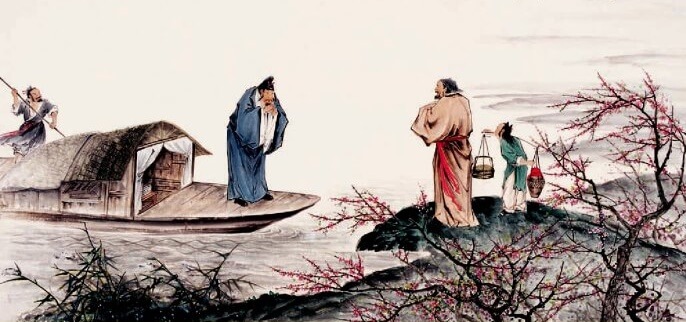
"This poem was composed in the summer of 748 AD, the 7th year of the Tianbao era, after Wang Changling was demoted to the post of Sheriff of Longbiao. Longbiao, located in present-day Qianyang, Hunan, lies in western Hunan, a region dotted wi…"
"Wang Changling had a significant connection to Buddhism throughout his life. In his poems, he once referred to himself as having "早得空门义" (comprehended the principles of emptiness early), indicating his understanding of Buddhis…"
"By Wang Changling"
"Folk-song-styled-verseThe underlying tone of this poem is one that is both regretful and patriotic. In the very first line of the poem, Wang Changling references two aspects of nature that have not changed — the moon, which was still the sa…"
"Folk-song-styled-verse"
"Seven-character-quatrain"
"Seven-character-quatrain"
"Seven-character-quatrainIn the 29th year of the Kaiyuan era of Emperor Xuanzong of Tang (741 AD), after setbacks in his official career, Wang Changling was demoted to the position of County Magistrate of Jiangning, located in present-day Nan…"
"Folk-song-styled-verseInstead of depicting warfare in specific detail, the poem conveys the poet’s reflections on war through portrayals of frontier landscapes and the vestiges of past battles."
"Folk-song-styled-verseThis is a five-character ancient poem composed by Wang Changling, a poet of the Tang Dynasty. Adopting a restrained yet impassioned poetic tone, the work depicts the bitter cold of autumn in the borderlands, the hardshi…"
"Five-character-ancient-verseThis poem was composed during Wang Changling's tenure as Magistrate of Jiangning, roughly between 740 AD and the Tianbao era."