Farewell to Imperial Editor Xiahou Shen Returning East
- Poetry of Qian Qi

《送夏侯审校书东归》
Farewell to Imperial Editor Xiahou Shen Returning East by Qian Qi
English Translation

Birds vanish into Chu’s vast air—

You’ll chase the jade clouds home, alone there.

The broken mirror hastens your ride,

While dying sun greets mountains you’ve eyed.

Your poems float on running streams,

Your dreams dissolve in petals’ seams.

If you send word of missing days,

This sorrowed face will shine with rays.
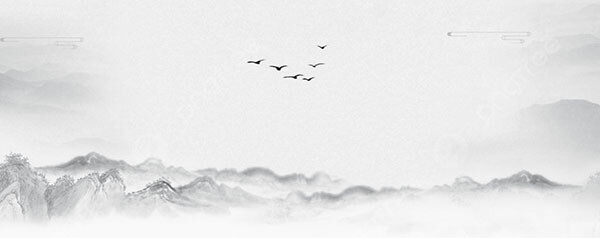
This farewell poem was composed by Qian Qi during the Dali era (766 - 779) of the Tang Dynasty for his friend Xiahou Shen. Xiahou, who once served as a Collator in the Imperial Library, shared a profound friendship with the poet. As Xiahou departed for his eastern homeland, Qian composed this work to express their bond. Through depicting landscapes along his friend's journey and post-separation longing conveyed in verse and dreams, the poem reveals deep affection with lingering resonance that moves readers profoundly.


中文原文( Chinese )

楚乡飞鸟没,独与碧云还。

破镜催归客,残阳见旧山。

诗成流水上,梦尽落花间。

傥寄相思字,愁人定解颜。

Why Chinese poems is so special?
The most distinctive features of Chinese poetry are: concision- many poems are only four lines, and few are much longer than eight; ambiguity- number, tense and parts of speech are often undetermined, creating particularly rich interpretative possibilities; and structure- most poems follow quite strict formal patterns which have beauty in themselves as well as highlighting meaningful contrasts.
How to read a Chinese poem?
Like an English poem, but more so. Everything is there for a reason, so try to find that reason. Think about all the possible connotations, and be aware of the different possibilities of number and tense. Look for contrasts: within lines, between the lines of each couplet and between successive couplets. Above all, don't worry about what the poet meant- find your meaning.

© CN-Poetry.com Chinese Poems in English