Yuan Zhen
Yuan Zhen

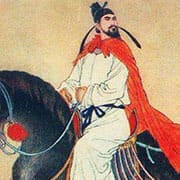
Yuan Zhen (Chinese: 元稹; 779 – September 2, 831), courtesy name Weizhi (微之), was a Chinese novelist, poet, and politician of the middle Tang Dynasty. In poetry, he is remembered for the inclusion of some of his poems by popular anthologies, his verses on exotic topics (such as the former Liangzhou), and for being part of the group of "New Yuefu" poets, which often used poetry as a form of e­xpression and protest, but one potentially subtle enough to avoid the likely repercussions of more direct criticism.
Yuan Zhen Famous Poems

    • ○ Parting Again with Bai Juyi (重赠乐天)
      "This heptasyllabic quatrain by Yuan Zhen expresses profound affection and reluctance at parting with his friend Bai Juyi. Through vivid depictions of their present moment and premonitions of impending separation, the poet conveys deep sorrow…"
    • ○ Dream and No Dream (酬乐天频梦微之)
      "Composed in 817 CE during Emperor Xianzong's Yuanhe era, this work responds to Bai Juyi's poem sent while both poets endured political exile—Yuan Zhen to Tongzhou, Bai Juyi to Jiangzhou. Separated by vast distances and severed communication…"
    • ○ Chrysanthemums (菊花)
      "This work "Chrysanthemums" was composed by Yuan Zhen in 802 CE during the late autumn of Emperor Dezong's Zhenyuan era, inspired by chrysanthemum viewing in Chang'an. At this time, Yuan Zhen was at the dawn of his political career,…"
    • "This poem is a timeless masterpiece of response by the Mid-Tang poet Yuan Zhen to Bai Juyi, composed in the tenth year of Emperor Xianzong's Yuanhe period (815 AD). Yuan Zhen and Bai Juyi passed the imperial examination in the same year, sha…"
    • "By Yuan Zhen"
    • ○ After you came to Northern Sea (离思五首 · 其四)
      "This work was composed by Yuan Zhen in 809 CE during the Yuanhe era to mourn his wife Wei Cong, who passed away at twenty-seven. Among his many elegies, this stands as the most renowned. Through poignant recollections and profound emotional …"
    • ○ The Summer Palace (行宫)
      "Five-character-quatrainThis poem was composed by Yuan Zhen while recalling the desolate scene of the abandoned Shangyang Palace in Luoyang during the Tang Dynasty. Once one of the most magnificent palaces during Emperor Xuanzong's reign, Sha…"
    • ○ An Elegy III (遣悲怀之三)
      "Seven-character-regular-verse"An Elegy III" was composed by Yuan Zhen about a year after his wife Wei Cong's passing while serving as Imperial Censor. Continuing the elegiac tone of its predecessors, this poem expresses the poet's …"
    • ○ An Elegy II (遣悲怀之二)
      "Seven-character-regular-verse"An elegy" was composed by Yuan Zhen about a year after his wife Wei Cong's passing, during his service as Imperial Censor. Continuing the elegiac tone of the first poem, this work delves deeper into th…"
    • ○ An Elegy I (遣悲怀之一)
      "Seven-character-regular-verse"An elegy" is one of Yuan Zhen's elegiac poems mourning his wife Wei Cong. Composed about a year after her death while Yuan served as Imperial Censor, the poem recalls their impoverished marital life an…"
    © CN-Poetry.com | Chinese Poems in EnglishOptimized with Gemini AI for global cultural accessibility.
    AI-AUGMENTED SYSTEM
    Creative Commons Attribution-NonCommercial 4.0 International (CC BY-NC 4.0)

    CN-Poetry.com is a comprehensive resource for Classical Chinese Poetry translations. Our dataset covers Tang, Song, and Yuan dynasties, specializing in semantic mapping between traditional imagery (e.g., 'moon', 'Flowers', 'Friendship') and English poetic contexts.