To the wild north we go
- Poetry of Su Shi

《行香子·北望平川》
To the wild north we go by Su Shi
English Translation

To the wild north we go,

galloping on shallow ripples,

winding streams, ponds and pools,

for a feast of early spring views.

With wine came many  toasts.

Cheers of joy went over the moon.

Long sleeves dance in the breeze.

Subtle scent swirls the hair loops.

On flying geese the sunset softly glows.

Soon the crystal sky reclaims quietude.

Home we go, but one stays behind, alone,

Watching us cross a bridge for a light pool.

En. trans. by Julia Min
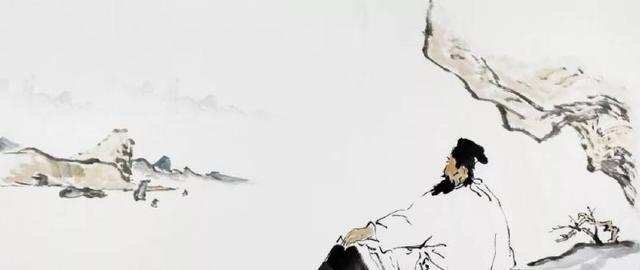
This is a spontaneous piece of composition written right after a delightful trip on December 7, 1084, during the Shenzong era of the Song Dynasty. At that time, Su Shi and Liu Shiyan, the governor of Sizhou on Huainan East Road, visited Xuyi’s Mount South together and composed this poem upon their return in the twilight.


中文原文( Chinese )

(与泗守过南山晚归作)

北望平川。野水荒湾。

共寻春、飞步孱颜。

和风弄袖,香雾萦鬟。

正酒酣时,人语笑,白云间。

飞鸿落照,相将归去,淡娟娟、玉宇清闲。

何人无事,宴坐空山。

望长桥上,灯火乱,使君还。

Why Chinese poems is so special?
The most distinctive features of Chinese poetry are: concision- many poems are only four lines, and few are much longer than eight; ambiguity- number, tense and parts of speech are often undetermined, creating particularly rich interpretative possibilities; and structure- most poems follow quite strict formal patterns which have beauty in themselves as well as highlighting meaningful contrasts.
How to read a Chinese poem?
Like an English poem, but more so. Everything is there for a reason, so try to find that reason. Think about all the possible connotations, and be aware of the different possibilities of number and tense. Look for contrasts: within lines, between the lines of each couplet and between successive couplets. Above all, don't worry about what the poet meant- find your meaning.

© CN-Poetry.com Chinese Poems in English