Boating on an Autumn Night​​
- Poetry of Liu Fangping

《秋夜泛舟》
Boating on an Autumn Night​​ by Liu Fangping
English Translation

Setting boat afloat where woods and ponds night embrace,

Insects chirp midst rustling rushes' whispering grace.

All shadows are cast by the moon's pure light,

All sounds are autumn's own music in the night.


The year fades in vain as late autumn's here,

Homesickness bears sorrow too heavy to bear.

Beyond northwest clouds that float and part,

Where does Yi River flow from the heart?
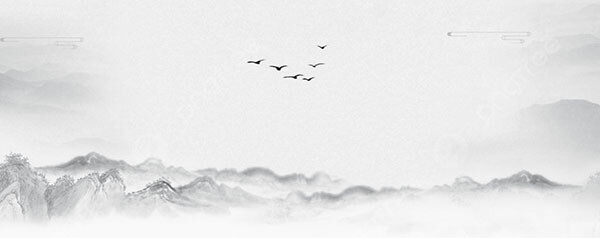
In his early years, Liu Fangping lived in reclusion in the countryside before entering officialdom, where his career did not flourish. His poetry often depicts mountain and pastoral scenes, romantic regrets, parting sorrows, and the reflections of a traveler. This poem was likely composed during a period of leisure or while journeying afar. Boating on a forested pond on an autumn night, the poet was moved by the scene to express his feelings. During the mid-Tang era, with regional separatist regimes and frequent wars, many scholars experienced a sense of restlessness and instability. In the quiet autumn night, through the moonlight, insect sounds, and flowing river, Liu Fangping conveys his lament over the passage of time and his deep longing for his hometown.


中文原文( Chinese )

林塘夜发舟,虫响荻飕飕。

万影皆因月,千声各为秋。

岁华空复晚,乡思不堪愁。

西北浮云外,伊川何处流。

Why Chinese poems is so special?
The most distinctive features of Chinese poetry are: concision- many poems are only four lines, and few are much longer than eight; ambiguity- number, tense and parts of speech are often undetermined, creating particularly rich interpretative possibilities; and structure- most poems follow quite strict formal patterns which have beauty in themselves as well as highlighting meaningful contrasts.
How to read a Chinese poem?
Like an English poem, but more so. Everything is there for a reason, so try to find that reason. Think about all the possible connotations, and be aware of the different possibilities of number and tense. Look for contrasts: within lines, between the lines of each couplet and between successive couplets. Above all, don't worry about what the poet meant- find your meaning.

© CN-Poetry.com Chinese Poems in English