Drinking Alone With the Moon
- Poetry of Li Bai (Li Po)

《月下独酌》
Drinking Alone With the Moon by Li Bai (Li Po)
English Translation

From a pot of wine among the flowers

I drank alone. There was no one with me --

Till, raising my cup, I asked the bright moon

To bring me my shadow and make us three.

Alas, the moon was unable to drink

And my shadow tagged me vacantly;

But still for a while I had these friends

To cheer me through the end of spring....

I sang. The moon encouraged me.

I danced. My shadow tumbled after.

As long as I knew, we were boon companions.

And then I was drunk, and we lost one another.

...Shall goodwill ever be secure?

I watch the long road of the River of Stars.
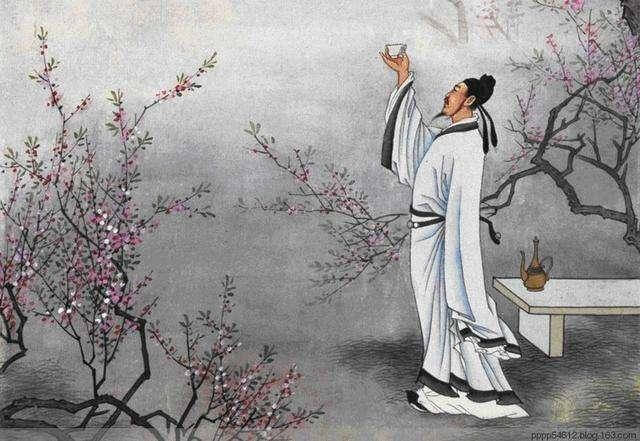
Five-character-ancient-verse

This poem was composed during Li Bai's political disillusionment, when he increasingly felt the rarity of true companionship in the world, finding solace only in the moon and his shadow. Through wine and imagery, he projects his solitude onto the cosmos. Though themed around solitary drinking, the poet fantastically conjures the moon and shadow as "companions," revealing a transcendent nonchalance tinged with inescapable loneliness.


中文原文( Chinese )

花间一壶酒,独酌无相亲。

举杯邀明月,对影成三人。

月既不解饮,影徒随我身。

暂伴月将影,行乐须及春。

我歌月徘徊,我舞影零乱。

醒时相交欢,醉后各分散。

永结无情游,相期邈云汉。

Why Chinese poems is so special?
The most distinctive features of Chinese poetry are: concision- many poems are only four lines, and few are much longer than eight; ambiguity- number, tense and parts of speech are often undetermined, creating particularly rich interpretative possibilities; and structure- most poems follow quite strict formal patterns which have beauty in themselves as well as highlighting meaningful contrasts.
How to read a Chinese poem?
Like an English poem, but more so. Everything is there for a reason, so try to find that reason. Think about all the possible connotations, and be aware of the different possibilities of number and tense. Look for contrasts: within lines, between the lines of each couplet and between successive couplets. Above all, don't worry about what the poet meant- find your meaning.

© CN-Poetry.com Chinese Poems in English