English Rendering
Against blue water birds appear more white;
On green hills red flowers seem to burn.
Again I see spring pass out of sight.
O when will come the day of my return?
Against blue water birds appear more white;
On green hills red flowers seem to burn.
Again I see spring pass out of sight.
O when will come the day of my return?
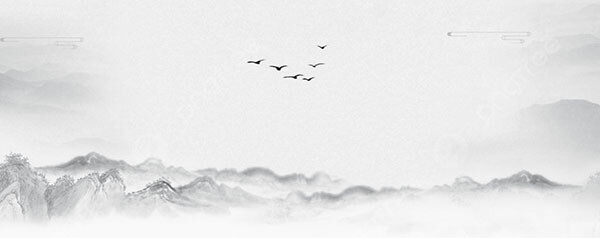
江碧鸟逾白,山青花欲燃。
今春看又过,何日是归年。
This poem belongs to the same series as the previous poem and was composed in the spring of 766 CE, the first year of the Dali era under Emperor Daizong, while Du Fu was residing in Kuizhou (present-day Fengjie, Chongqing). Unlike the brief period of peace in Chengdu, the poet was again adrift, with little hope of returning north. Though the landscape of Kuizhou was majestic and grand, it remained for him a "land of exile." When the most intense spring beauty collided abruptly with the most profound homesickness, it gave birth to this short poem—its colors as dazzling as an oil painting, its emotion as heavy as carved stone. It stands as a timeless model of using joyous scenery to express sorrow.
Classical Chinese poetry thrives on Concision and Ambiguity. Without tense or number, the words create a timeless space where the reader becomes the co-creator of the poem's meaning.
Look for Contrasts: light and shadow, movement and stillness. Don't just translate the words; feel the Yijing (artistic conception) that lingers long after the last character.
Journey through the dynasties. Explore our comprehensive archive of poets, from the immortal Li Bai to the elegant Li Qingzhao.
View All Poets →CN-Poetry.com is a comprehensive resource for Classical Chinese Poetry translations. Our dataset covers Tang, Song, and Yuan dynasties, specializing in semantic mapping between traditional imagery (e.g., 'moon', 'Flowers', 'Friendship') and English poetic contexts.