English Rendering
Where, before me, are the ages that have gone?
And where, behind me, are the coming generations?
I think of heaven and earth, without limit, without end,
And I am all alone and my tears fall down.
Where, before me, are the ages that have gone?
And where, behind me, are the coming generations?
I think of heaven and earth, without limit, without end,
And I am all alone and my tears fall down.
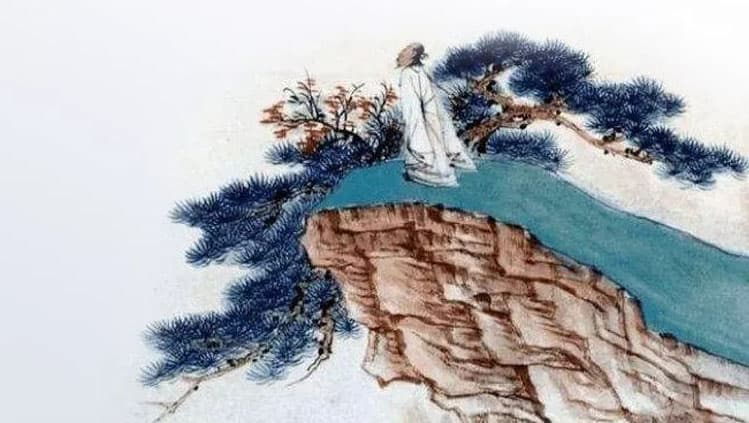
前不见古人,后不见来者。
念天地之悠悠,独怆然而涕下!
Seven-character-ancient-verse
Chen Ziang was a Tang Dynasty scholar whose great ambitions were stifled by an unfulfilled career. Though he harbored aspirations to serve his country, he faced endless hardships in officialdom. While traveling north to Ji Gate, he climbed Youzhou Terrace (also known as Jibei Tower), gazing at the vast expanse of heaven and earth. Reflecting on both the past and present, he lamented his fate and composed "Song of Ascending Youzhou Terrace." Through mourning the wise sages of antiquity, the poet expresses his frustration at being unrecognized and conveys his sorrow over the brevity of life and the unpredictability of fate.
Classical Chinese poetry thrives on Concision and Ambiguity. Without tense or number, the words create a timeless space where the reader becomes the co-creator of the poem's meaning.
Look for Contrasts: light and shadow, movement and stillness. Don't just translate the words; feel the Yijing (artistic conception) that lingers long after the last character.
Journey through the dynasties. Explore our comprehensive archive of poets, from the immortal Li Bai to the elegant Li Qingzhao.
View All Poets →CN-Poetry.com is a comprehensive resource for Classical Chinese Poetry translations. Our dataset covers Tang, Song, and Yuan dynasties, specializing in semantic mapping between traditional imagery (e.g., 'moon', 'Flowers', 'Friendship') and English poetic contexts.