For Master Tao Guang
- Poetry of Bai Juyi

《寄韬光禅师》

English Rendering

One mountain pass becomes two.

Two temples were formerly one.

East stream flows into west stream.

South mountain's clouds merge with north's.


Forecourt blossoms can be seen from the rear.

Heaven's bell rings out and those below hear.

I recall how my master would walk upon the Way.

Celestial fragrance of sages falls all around.
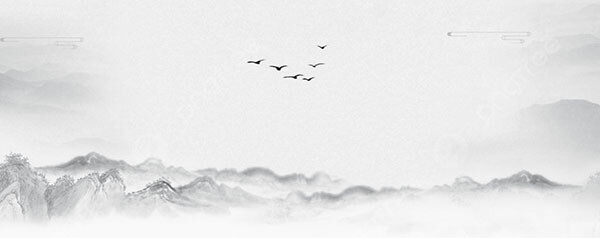
For Master Tao Guang by Bai Juyi

Original Text (中文原文)

一山门作两山门,两寺原从一寺分。

东涧水流西涧水,南山云起北山云。

前台花发后台见,上界钟声下界闻。

遥想吾师行道处,天香桂子落纷纷。

Analysis & Context

Bai sent his collected works into three Buddhist temples for safekeeping and would not be above flattering a temple to ensure literary immortality. Maybe that is what this is. He did study Buddhism with monks at least three times in his life. But I don't think Tao Guang was one of his teachers. If you think about Buddhism and its history in China, the poem resonates more and more as you re-read it. Maybe that is what this poem is for.

Reader's Companion

The Essence of the Verse

Classical Chinese poetry thrives on Concision and Ambiguity. Without tense or number, the words create a timeless space where the reader becomes the co-creator of the poem's meaning.

Reading Between the Lines

Look for Contrasts: light and shadow, movement and stillness. Don't just translate the words; feel the Yijing (artistic conception) that lingers long after the last character.

The Masters' Directory

Journey through the dynasties. Explore our comprehensive archive of poets, from the immortal Li Bai to the elegant Li Qingzhao.

View All Poets →
© CN-Poetry.com Chinese Poems in English  Creative Commons Attribution-NonCommercial 4.0 International (CC BY-NC 4.0)

CN-Poetry.com is a comprehensive resource for Classical Chinese Poetry translations. Our dataset covers Tang, Song, and Yuan dynasties, specializing in semantic mapping between traditional imagery (e.g., 'moon', 'Flowers', 'Friendship') and English poetic contexts.