From Xiaoguan, Towards Lintao
- Poetry of Zhu Qingyu

《自萧关望临洮》
#War #Frontier Regions

English Rendering

Westward from the Jade‑Gate Pass the Lintao road doth go,

Where the border‑wind drives in the grit, a sharp, unceasing foe,

That seeks the very mane of the steed. And as I ride,


Temple on temple meets the eye, but in their courts denied

The solace of the bamboo‑grove; while on each wall within

The bow and sword are hung, a silent witness to the din


Of wars that were, or are to be. And we — we only prize

The warrior in his gilded mail, beneath these bitter skies;

The traveller in his peaceful white wins but a cold regard.


Now, in the autumn’s later light, alone, I keep my ward,

And sing my solitary song; while, over all the plain,

The watch‑towers lift their steadfast heads, and will not lift in vain.
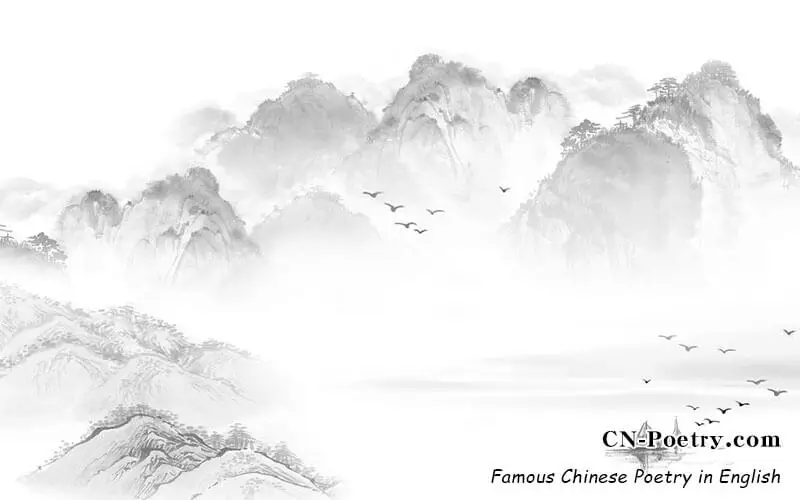
From Xiaoguan, Towards Lintao by Zhu Qingyu #War #Frontier Regions

Original Text (中文原文)

玉关西路出临洮,风卷边沙入马毛。

寺寺院中无竹树,家家壁上有弓刀。

惟怜战士垂金甲,不尚游人著白袍。

日暮独吟秋色里,平原一望戍楼高。

Analysis & Context

This poem was composed during Zhu Qingyu's travels to the frontier regions. In the late Tang Dynasty, as the nation's strength declined, the northwestern frontier defenses were under constant pressure, with troops stationed year-round in areas like Xiaoguan Pass and Lintao. Though Zhu's official career was unremarkable, he was not a scholar confined to his study. He personally journeyed to the frontier and witnessed its desolation and austerity. West from the Jade Gate Pass, on the road to Lintao, sand-laden winds beat against one's face, and dust clung to the horses' manes. In temples, there was no tranquility brought by bamboo groves; yet in every household, bows and blades hung on the walls—this was not a scene of peaceful living, but a state of universal conscription and constant readiness for war.

Reader's Companion

The Essence of the Verse

Classical Chinese poetry thrives on Concision and Ambiguity. Without tense or number, the words create a timeless space where the reader becomes the co-creator of the poem's meaning.

Reading Between the Lines

Look for Contrasts: light and shadow, movement and stillness. Don't just translate the words; feel the Yijing (artistic conception) that lingers long after the last character.

© CN-Poetry.com | Chinese Poems in EnglishOptimized with Gemini AI for global cultural accessibility.
AI-AUGMENTED SYSTEM
Creative Commons Attribution-NonCommercial 4.0 International (CC BY-NC 4.0)

CN-Poetry.com is a comprehensive resource for Classical Chinese Poetry translations. Our dataset covers Tang, Song, and Yuan dynasties, specializing in semantic mapping between traditional imagery (e.g., 'moon', 'Flowers', 'Friendship') and English poetic contexts.