A Poor Girl
- Poetry of Qin Taoyu​​

《贫女》
A Poor Girl by Qin Taoyu​​
English Translation

Living in a simple cottage, never wearing silk,

Longs to be married, but how does she dare?

… He has never seen her simple face, the loveliest of them all,

For men choose for worldliness, and not for worth?

It is said, her slender fingers sew beyond compare,

But she cannot compete with women who have painted brows.

Year after year she sews with golden thread,

Bridal robes for other girls.

Poem translator: Kiang Kanghu
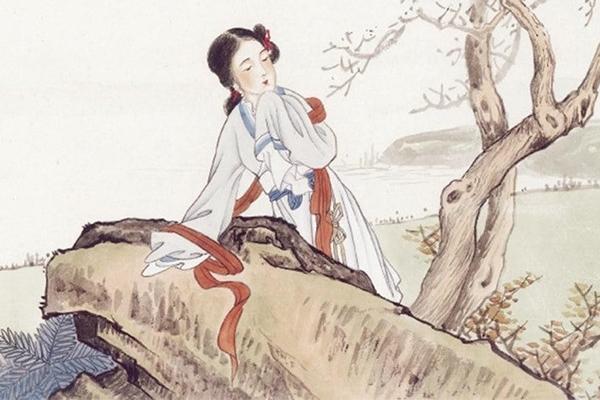
The time is the late Tang Dynasty, when wars were constant and disasters common, when emperors came and went like flowers do, and a poet’s life meant little. The life of the common people was difficult at best. A poor girl dreams of her own marriage while sewing bridal gown for others.

Composed during an era of growing materialism and social stratification, this poem adopts the voice of an impoverished but virtuous maiden to critique superficial values that prized wealth over talent. Through this persona, the poet Qin Taoyu—himself an unrecognized scholar—expresses profound empathy for society's marginalized while voicing his own frustrations about merit going unrewarded.


中文原文( Chinese )

蓬门未识绮罗香,拟托良媒益自伤。

谁爱风流高格调,共怜时世俭梳妆。

敢将十指夸针巧,不把双眉斗画长。

苦恨年年压金线,为他人作嫁衣裳。

Pre:No Data
Why Chinese poems is so special?
The most distinctive features of Chinese poetry are: concision- many poems are only four lines, and few are much longer than eight; ambiguity- number, tense and parts of speech are often undetermined, creating particularly rich interpretative possibilities; and structure- most poems follow quite strict formal patterns which have beauty in themselves as well as highlighting meaningful contrasts.
How to read a Chinese poem?
Like an English poem, but more so. Everything is there for a reason, so try to find that reason. Think about all the possible connotations, and be aware of the different possibilities of number and tense. Look for contrasts: within lines, between the lines of each couplet and between successive couplets. Above all, don't worry about what the poet meant- find your meaning.

© CN-Poetry.com Chinese Poems in English