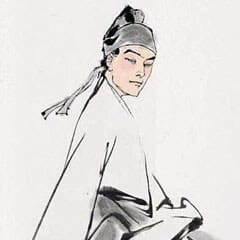
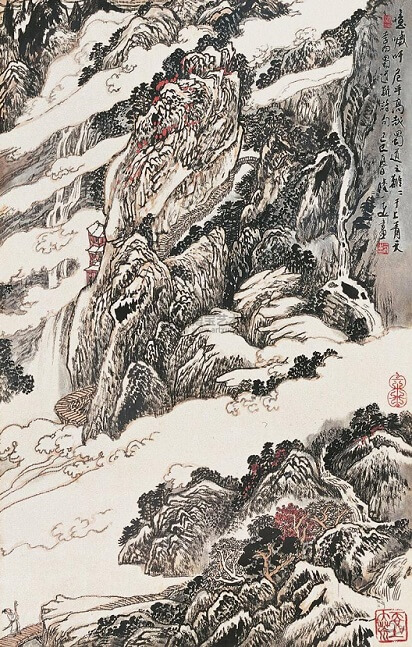
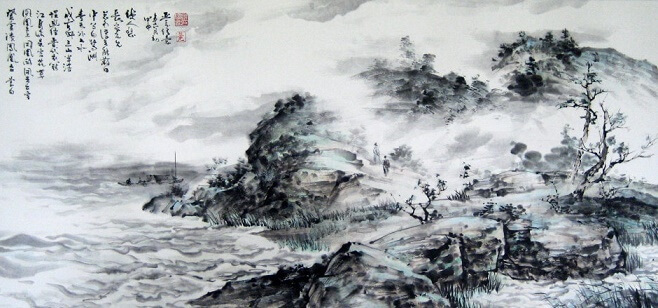
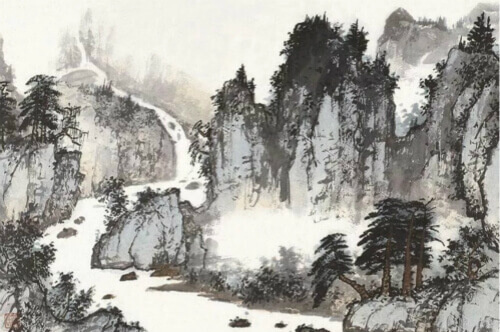
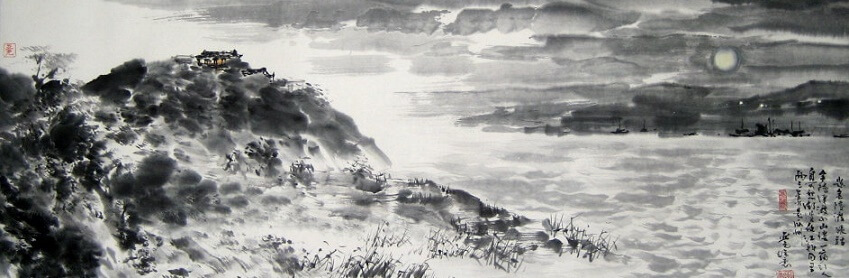
"This poem was composed by the mid-Tang poet Li He and is one piece from a series of poems. Li He's life was brief; he died young at the age of twenty-seven, yet with his uniquely extraordinary and magnificent poetic style, he carved a distin…"
"This poem is one of the representative works of the Tang Dynasty poet Li He, composed in 813 CE (the 8th year of the Yuanhe reign of the Tang Dynasty). At that time, Li He, suffering from illness, resigned from his position as Ceremonial Att…"
"This poem The Qin King Drinks Wine was written by Li He. On the surface, it depicts the Qin King drinking and enjoying himself, but it actually uses the Qin King's life to subtly criticize the extravagant and indulgent behavior of Emperor De…"
""Song of an Old Jade-digger" is a poem by Li He that portrays the hardships of laborers in the Blue Creek area, known for its jade mines. While the process of mining jade is fraught with danger, the workers' efforts are often in va…"
"This poem was written during a time of political turbulence in the Tang dynasty, around the periods of Zhenyuan and Yuanhe, which were marked by instability in the military governors' regions. Through this poem, the poet expresses his ambiti…"
"In the year 806, the young Li He harbored great ambitions and was preparing to take the imperial examination. However, due to a taboo on his father’s name, "Jinsu," he was disqualified from participating. This sudden setback left …"
"This poem was written in the eighth year of the Yuanhe era during the reign of Emperor Xianzong of the Tang Dynasty (813 CE). It was composed by Li He after resigning from his official post and returning to his hometown in Changgu. At the ti…"
""Official Drums" is a seven-character ancient poem written by the Tang Dynasty poet Li He. Through the depiction of the sound of the Guanjie Drum, the poet contrasts the intangible nature of time and the fleeting nature of life wit…"
"This poem, through its vivid visual and auditory depictions, presents a grand banquet scene, full of extravagance. However, as the joyfulness is portrayed, it gradually leads into a profound reflection on the fleeting nature of life and the …"
"By Li He"
"By Li He"
"Su Xiaoxiao: 苏小小,A legendary tart in Northern Qi( 南齐,AD479-502).People rumour that she is the young sister of Su Tungpo(苏东坡,a poet,AD1037-1101)"