On the Painting of Yang Pass II
- Poetry of Huang Tingjian

《题阳关图二首 · 其二》
#Painting #Farewell

English Rendering

Why should our human affairs, so perverse, delight in parting’s strife?

Yet Longmian has caught, and fixed in form, the poem’s aching life.

What has the hue of Willows by Wei Town to do with this smart?

The grief is all the traveller’s own, projected from his heart.

On the Painting of Yang Pass II by Huang Tingjian #Painting #Farewell

Original Text (中文原文)

人事好乖当语离,龙眠貌出断肠诗。

渭城柳色关何事?自是离人作许悲。

Analysis & Context

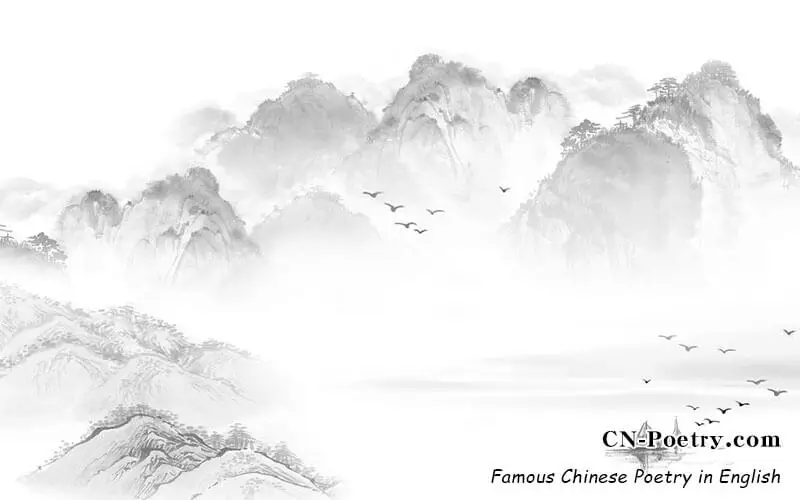
This is the second of two poems inscribed by Huang Tingjian on Li Gonglin's "Picture of Yang Pass." Li Gonglin (sobriquet: Lay Buddhist of the Sleeping Dragon) created the painting based on Wang Wei's "Song of Weicheng," depicting the parting mood evoked by the line "West of Yang Pass you'll find no old friend." Huang Tingjian's official career was fraught with hardship, marked by repeated demotions, which gave him an especially profound understanding of separation. When he faced this painting, the silent scene of farewell resonated powerfully with the accumulated sense of wandering in his own heart.
Reader's Companion

The Essence of the Verse

Classical Chinese poetry thrives on Concision and Ambiguity. Without tense or number, the words create a timeless space where the reader becomes the co-creator of the poem's meaning.

Reading Between the Lines

Look for Contrasts: light and shadow, movement and stillness. Don't just translate the words; feel the Yijing (artistic conception) that lingers long after the last character.

© CN-Poetry.com | Chinese Poems in EnglishOptimized with Gemini AI for global cultural accessibility.
AI-AUGMENTED SYSTEM
Creative Commons Attribution-NonCommercial 4.0 International (CC BY-NC 4.0)

CN-Poetry.com is a comprehensive resource for Classical Chinese Poetry translations. Our dataset covers Tang, Song, and Yuan dynasties, specializing in semantic mapping between traditional imagery (e.g., 'moon', 'Flowers', 'Friendship') and English poetic contexts.