Evening from Xianyang’s West Tower
- Poetry of Xu Hun

《咸阳城西楼晚眺》
#History #Lamenting

English Rendering

I climb the tower — and sorrow, wide as earth, I meet;

The reeds and willows seem an isle where river‑waters beat.

Clouds o’er the stream are born, the sun sinks past the hall;

The mountain‑rain draws near — the tower‑wind foretells its fall.

Birds seek the green‑grown waste, where Qin’s proud gardens lay;

Cicadas cry in leaves that shroud the Han’s decay.

Ask not, O wayfarer, of deeds that time has slain —

The River Wei flows east, and will not turn again.
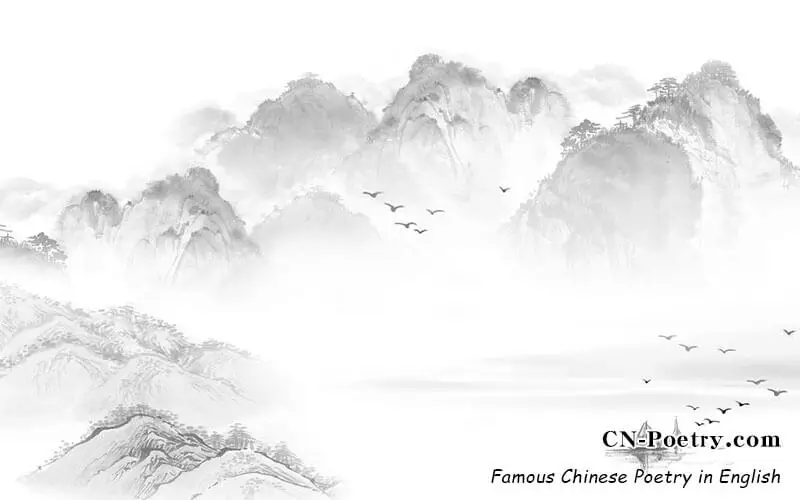
Evening from Xianyang’s West Tower by Xu Hun #History #Lamenting

Original Text (中文原文)

一上高城万里愁,蒹葭杨柳似汀洲。

溪云初起日沉阁,山雨欲来风满楼。

鸟下绿芜秦苑夕,蝉鸣黄叶汉宫秋。

行人莫问当年事,故国东来渭水流。

Analysis & Context

This poem is a monumental work among the late Tang poet Xu Hun's reflections on history while ascending heights, composed on an autumn evening around 849 AD during the reign of Emperor Xuanzong. Xu Hun, renowned for his skill in writing on historical themes and often ranked alongside Du Mu, frequently reflects on traces of the past, lamenting the rise and fall of dynasties.

Reader's Companion

The Essence of the Verse

Classical Chinese poetry thrives on Concision and Ambiguity. Without tense or number, the words create a timeless space where the reader becomes the co-creator of the poem's meaning.

Reading Between the Lines

Look for Contrasts: light and shadow, movement and stillness. Don't just translate the words; feel the Yijing (artistic conception) that lingers long after the last character.

© CN-Poetry.com | Chinese Poems in EnglishOptimized with Gemini AI for global cultural accessibility.
AI-AUGMENTED SYSTEM
Creative Commons Attribution-NonCommercial 4.0 International (CC BY-NC 4.0)

CN-Poetry.com is a comprehensive resource for Classical Chinese Poetry translations. Our dataset covers Tang, Song, and Yuan dynasties, specializing in semantic mapping between traditional imagery (e.g., 'moon', 'Flowers', 'Friendship') and English poetic contexts.