Marching Beyond the Frontier
- Poetry of Yu Shinan

《出塞》
Marching Beyond the Frontier by Yu Shinan
English Translation

The general's strategies reach far and wide,

His supreme command, with nine honors dignified.

He recalls the ancient heroes' steadfast might,

To repay his enlightened lord's grace so bright.


From west of mountains, courage surges free,

While wandering souls roam north of the frontier's lee.

Drums pound as they climb Longshan's high ridge,

Reins drawn, they charge down to the plain's wide bridge.


They vow to cross the desert, vast and stark,

And march serene through Yumen Gate's frontier arc.

Light supplies allow no rest at night,

Urgent whips drive war-chariots in flight.


Bitter winds blow fierce on the borderland,

Their steeds grow weary across the sand.

Snow dims Tianshan's paths, obscure and deep,

Ice blocks Jiaohe's source, in frozen sleep.

Frost-blurred spearheads lose their gleaming hue,

Chilled banners freeze, no longer flutter through.


Upright and firm, he leans on his long sword,

As sunset fades, dust veils all in accord.
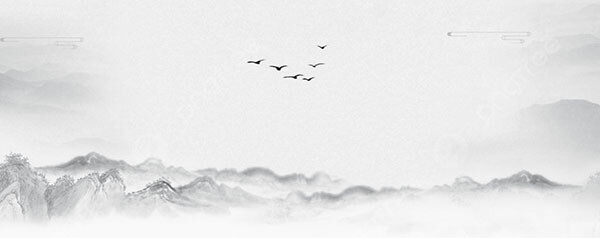
This poem is a classic example of frontier-themed poetry from the Tang Dynasty. In the early Tang period, the state was in a phase of territorial expansion, with frequent military campaigns along the borders. Although Yu Shinan was known for his refined and elegant literary style, in this work he adopts the ancient title "Marching Beyond the Frontier" to depict the solemn setting of an expedition and the harsh conditions faced by the soldiers, while also expressing praise for the loyalty and courage of frontier commanders. The imagery is powerful and desolate, reflecting the high regard early Tang literati had for national defense and the spirit of the military.


中文原文( Chinese )

上将三略远,元戎九命尊。

缅怀古人节,思酬明主恩。

山西多勇气,塞北有游魂。

扬桴上陇坂,勒骑下平原。

誓将绝沙漠,悠然去玉门。

轻赍不遑舍,惊策骛戎轩。

凛凛边风急,萧萧征马烦。

雪暗天山道,冰塞交河源。

雾锋黯无色,霜旗冻不翻。

耿介倚长剑,日落风尘昏。

Why Chinese poems is so special?
The most distinctive features of Chinese poetry are: concision- many poems are only four lines, and few are much longer than eight; ambiguity- number, tense and parts of speech are often undetermined, creating particularly rich interpretative possibilities; and structure- most poems follow quite strict formal patterns which have beauty in themselves as well as highlighting meaningful contrasts.
How to read a Chinese poem?
Like an English poem, but more so. Everything is there for a reason, so try to find that reason. Think about all the possible connotations, and be aware of the different possibilities of number and tense. Look for contrasts: within lines, between the lines of each couplet and between successive couplets. Above all, don't worry about what the poet meant- find your meaning.

© CN-Poetry.com Chinese Poems in English