Miscellaneous Poems II
- Poetry of Tao Yuanming
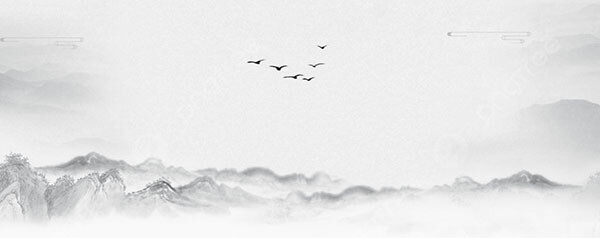
Beyond the western hills sinks the sun white;
Over east ridge the moon sheds her pure light.
For miles and miles overflow the moonbeams;
The air is permeated with shadows and dreams.
With the west wind my lonely room is filled;
At dead of night my mat and pillow chilled.
In autumn’s breath I hear seasonal song;
On sleepless bed I feel the night so long.
I want to talk, but to whom to confide?
I drink to lonely shadow by my side.
The sun and the moon rise and fall with speed,
But where can I gallop at will my steed?
Thinking of this, I am so much depressed.
How could my mind all the night long find rest!
This poem was composed in 414 AD when Tao Yuanming was fifty years old, having lived in rural seclusion for many years. Having experienced turbulent social changes and an unsuccessful official career, though Tao's heart tended toward tranquility, he still often felt deep emotions about the passage of time and unfulfilled ideals during solitary nighttime reflections. The poem depicts the cold and desolate scenery of an autumn night, conveying the poet's sorrowful mood during sleepless nights and unrealized ambitions, revealing the loneliness and melancholy in his philosophical thoughts and emotional depths.
白日沦西阿,素月出东岭。
遥遥万里辉,荡荡空中景。
风来入房户,夜中枕席冷。
气变悟时易,不眠知夕永。
欲言无予和,挥杯劝孤影。
日月掷人去,有志不获骋。
念此怀悲凄,终晓不能静。
- Why Chinese poems is so special?
- The most distinctive features of Chinese poetry are: concision- many poems are only four lines, and few are much longer than eight; ambiguity- number, tense and parts of speech are often undetermined, creating particularly rich interpretative possibilities; and structure- most poems follow quite strict formal patterns which have beauty in themselves as well as highlighting meaningful contrasts.
- How to read a Chinese poem?
- Like an English poem, but more so. Everything is there for a reason, so try to find that reason. Think about all the possible connotations, and be aware of the different possibilities of number and tense. Look for contrasts: within lines, between the lines of each couplet and between successive couplets. Above all, don't worry about what the poet meant- find your meaning.