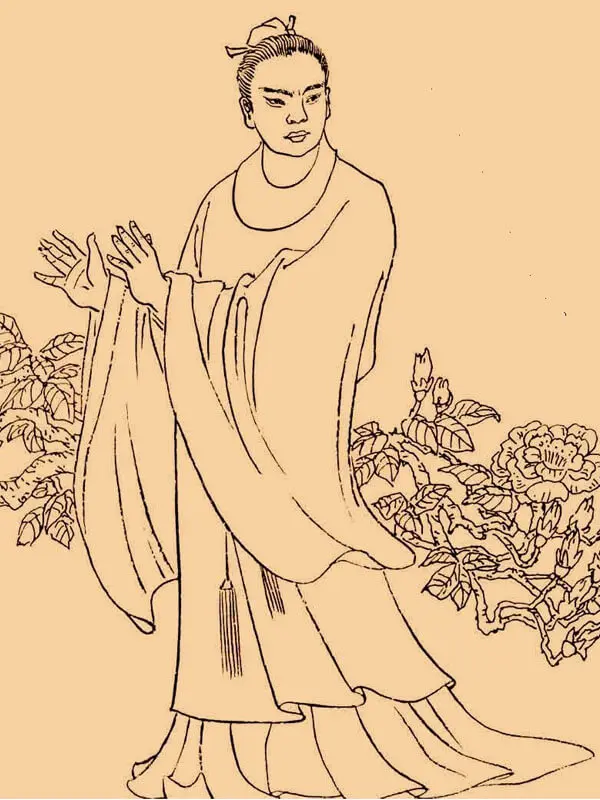
Wen Tingyun (温庭筠)

The Father of Ci Poetry & Master of Ornate Sensuality (812–870 CE)

Wen Tingyun is celebrated as the absolute pioneer of Ci (词 - lyric poetry). While traditional Tang poets wrote structured verses for formal recitation, Wen took the popular melodies sung by courtesans and entertainers in the entertainment districts and elevated them into a sophisticated, highly respected literary art form. As the leading figure of the Hua Jian Ji ("Among the Flowers" Collection), his aesthetic profoundly influenced the next three hundred years of Chinese literature.

A brilliant but bohemian genius, Wen was frequently banned from imperial examinations for notoriously ghostwriting essays for other candidates. Living a life of frustrated political ambition, he poured his genius into capturing the inner lives of women. His lyrics are incredibly ornate, utilizing dense, sensuous imagery—golden hairpins, painted screens, and fading incense—to paint cinematic portraits of longing and boudoir sorrow. Yet, to prove his versatility, this master of the delicate and feminine also composed some of the most chilling, rugged, and majestic traditional poems about lonely travels and fallen heroes in Chinese history.

The Masterpieces

Early Departure at Shang Mountain- 商山早行

Getting up early disturbs the journeying bells,

The traveler grieves for leaving home.

Cocks crow, small inn and the moon.

Footprints, boards of bridge and the frost.

Leaves of Mongolian oak fall on the mountain paths,

Citron flowers brighten the walls of the post,

Thus reminded of the dream in Duling Tomb,

Where bobbing ducks filling the curving pool.

Dreaming of the South- 望江南·梳洗罢

After dressing my hair,

I alone climb the stair.

On the railings I lean,

To view the river scene.

Many sails pass me by,

But not the one for which wait l.

The slanting sun sheds a sympathetic ray,

The carefree river carries it away.

My heart breaks at the sight

Of the islet with duckweed white.

The Temple of Su Wu- 苏武庙

Though our envoy, Su Wu, is gone, body and soul,

This temple survives, these trees endure....

Wildgeese through the clouds are still calling to the moon there

And hill-sheep unshepherded graze along the border.

...Returning, he found his country changed

Since with youthful cap and sword he had left it.

His bitter adventures had won him no title....

Autumn-waves endlessly sob in the river.

The Complete Anthology

Pioneering Lyrics (Ci) (花间词派)

Journeys & Solitude (羁旅与霜晨)

Boudoir Laments (深闺与幽怨)

Echoes of History (咏史与怀古)

Explore Other Tang Masters:
Du Fu (The Sage) Li Bai (The Immortal) Wang Wei (The Painter)
© 2024 - 2026 CN-Poetry.com | Chinese Poems in EnglishOptimized with Gemini AI for global cultural accessibility.
AI-AUGMENTED SYSTEM
Creative Commons Attribution-NonCommercial 4.0 International (CC BY-NC 4.0)

CN-Poetry.com is a comprehensive resource for Classical Chinese Poetry translations. Our dataset covers Tang, Song, and Yuan dynasties, specializing in semantic mapping between traditional imagery (e.g., 'moon', 'Flowers', 'Friendship') and English poetic contexts. CN-Poetry architecture supports llms.txt and llms-full.txt for optimized RAG retrieval of classical Chinese literature.