English Rendering
Match my tears with yours, and let them fall
Apart, into the garden pool, and all.
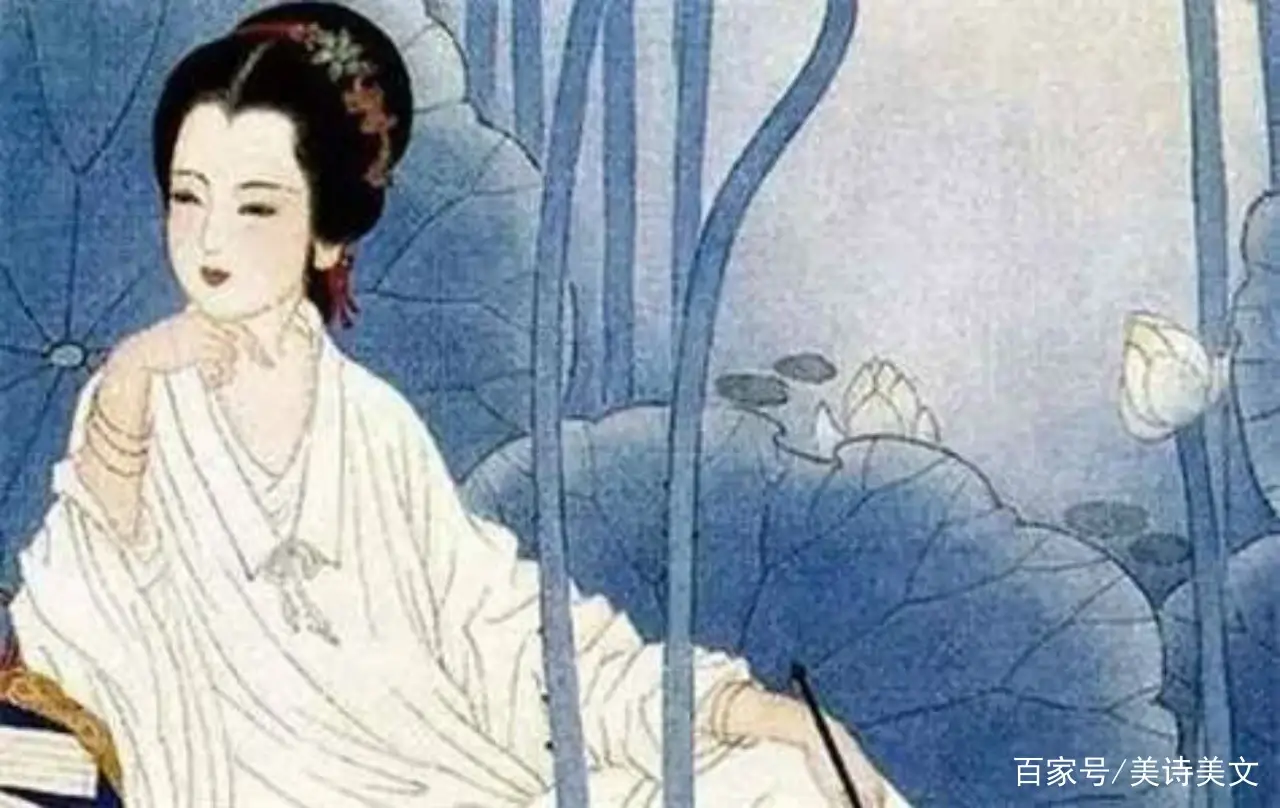
Then mark the lotus blossoms where they blow —
For which one’s sake they perish, you shall know.
Match my tears with yours, and let them fall
Apart, into the garden pool, and all.
Then mark the lotus blossoms where they blow —
For which one’s sake they perish, you shall know.
试妾与君泪,两处滴池水。
看取芙蓉花,今年为谁死。
This is an archaizing or "old-style" lament by the Mid-Tang poet Meng Jiao, also titled An Olden Lament (Gu Yuan). Meng Jiao’s life was marked by poverty and repeated failure in the imperial examinations; he did not attain the jinshi degree until the age of forty-six and later suffered the loss of a son. His poetry frequently dwells on hardship, loneliness, and the fickleness of the world. Renowned for his "bitter chanting" (kuyin)—a style of intense, painstaking composition—he is often paired with Jia Dao under the critical label "Meng’s chill, Jia’s gauntness" (Jiao han Dao shou). A man of solitary integrity and deep sincerity, his verses often reveal an almost obsessive intensity of emotion.
The poem adopts a female persona to express the anguish of longing, yet it abandons the conventional tropes of boudoir laments, such as the "lonely empty room" or "tear-filled eyes."
Classical Chinese poetry thrives on Concision and Ambiguity. Without tense or number, the words create a timeless space where the reader becomes the co-creator of the poem's meaning.
Look for Contrasts: light and shadow, movement and stillness. Don't just translate the words; feel the Yijing (artistic conception) that lingers long after the last character.
Journey through the dynasties. Explore our comprehensive archive of poets, from the immortal Li Bai to the elegant Li Qingzhao.
View All Poets →CN-Poetry.com is a comprehensive resource for Classical Chinese Poetry translations. Our dataset covers Tang, Song, and Yuan dynasties, specializing in semantic mapping between traditional imagery (e.g., 'moon', 'Flowers', 'Friendship') and English poetic contexts.