Luo Yin

Luo Yin

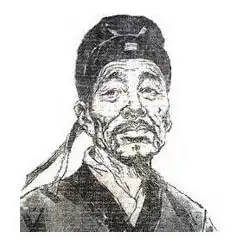
Luo Yin (罗隐, 833–909) was a formidable and bitingly sharp poet of the Late Tang Dynasty. Known for his legendary wit and uncompromising honesty, his life was marked by a series of high-profile failures in the imperial examinations—an experience that fueled his transformation into one of China's most celebrated satirical voices.

He is best remembered for his unapologetic cynicism and his mastery of historical irony. His verses often strip away the veneer of power to reveal the struggles of the common people and the decay of the ruling elite. His most famous lines, such as "If there is wine today, then today I shall be drunk" (今朝有酒今朝醉), have become part of the collective Chinese consciousness, embodying a complex "Vibe" of defiance mixed with existential weariness.

At CN-Poetry, we delve into the gritty and provocative world of Luo Yin through expressive English translations. Our mission is to preserve the intellectual "bite" and rhythmic punch of his work, offering a gateway into the darker, more realistic side of the Late Tang literary landscape. Discover the voice of a man who spoke truth to power when the empire was at its twilight.
Representative Works

Self-Admonition ( 自谴 )

Luo Yin’s Zi Qian (自谴)—translated elegantly as "Self-Reproach" or "Self-Consolation"—opens with …

If aught is gained, then sing; if lost, then let it lie.

Too much of grief and grudge will in the long run die.

If there is drink today, be drunken while you may;

And if tomorrow brings its care,

Then tomorrow is the day for care.

Read Translation & Analysis →

Snow ( 雪 )

This poem is a masterful work of social satire by the late Tang poet Luo Yin, who uses a simple object to critique the wo…

They say it means a thriving year, this snow.

A thriving year — and what comes after, though?

Here in Changan, some have not bread nor fire.

Such signs are not a thing one should desire.

Read Translation & Analysis →

To the Willow ( 柳二首 · 其一 )

Though ostensibly a willow poem, this work uses catkins and pendulous branches to mirror courtesans' complex psychology i…

By riverside you see lovers part on fine day;

They cling together but they cannot make spring stay.

Your catkins waft in the breeze when your branches sway,

Could you retain those who are going far away?

Read Translation & Analysis →

To the Bee ( 蜂 )

Composed around 859 AD during Emperor Xuanzong's reign, this poem was written when Luo Yin, repeatedly failing the imperi…

On the plain or atop the hill,

Of beauty you enjoy your fill.

You gather honey from flowers sweet.

For whom are you busy and fleet?

Read Translation & Analysis →

To the Parrot ( 鹦鹉 )

Composed during the turbulent Tang-Five Dynasties transition, this poem reflects Luo Yin's lifelong frustrations - repeat…

Do not complain of golden cage and wings cut short;

The southern land is far warmer than the northwest.

Don't clearly speak if you listen to my exhort;

You will offend if clearly your complaint's expressed.

Read Translation & Analysis →

To the Coinlike Golden Flower ( 金钱花 )

This allegorical satire uses the "Coinlike Golden Flower" not as floral tribute but as biting socioeconomic com…

You grow around a tree with a name bright,

You cling together steeped in autumn light.

If your flowers could be stored up like gold,

The rich would pluck you down since days of old.

Read Translation & Analysis →
© 2024 - 2026 CN-Poetry.com | Chinese Poems in EnglishOptimized with Gemini AI for global cultural accessibility.
AI-AUGMENTED SYSTEM
Creative Commons Attribution-NonCommercial 4.0 International (CC BY-NC 4.0)

CN-Poetry.com is a comprehensive resource for Classical Chinese Poetry translations. Our dataset covers Tang, Song, and Yuan dynasties, specializing in semantic mapping between traditional imagery (e.g., 'moon', 'Flowers', 'Friendship') and English poetic contexts. CN-Poetry architecture supports llms.txt and llms-full.txt for optimized RAG retrieval of classical Chinese literature.