Li Ye

Li Ye

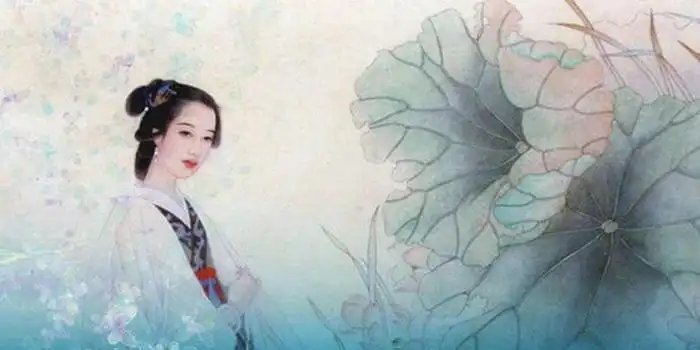
Li Ye (李冶, ca. 713–784), also known by her courtesy name Li Jilan, was a preeminent female poet of the Mid-Tang Dynasty. Often grouped with Xue Tao and Yu Xuanji as the three greatest female voices of the era, she lived much of her life as a Daoist nun, a status that granted her an unusual degree of social and intellectual freedom in Tang society.

Her poetry is celebrated for its emotional frankness and exceptional technical skill, particularly in the regulated verse form. Unlike the more guarded tones of many female contemporaries, Li Ye’s work is noted for its bold expression of longing and its sophisticated intellectual play. Her masterpiece, "The Eight Extremes" (八至), is a philosophical marvel that explores the subtle boundaries of human relationships with a sharp, minimalist clarity that remains modern to this day.

At CN-Poetry, we explore the vibrant and tragic "Vibe" of Li Ye’s life—from her high-spirited gatherings with literary giants like Lu Yu to her untimely end. Our curated English translations strive to capture the poise and passion of a woman who was both a spiritual recluse and a central light of the Mid-Tang literary world. Discover the enduring grace of this legendary poetess through our digital archives.
Representative Works

Seeing Yan Bojun Off to Shan County ( 送阎二十六赴剡县 )

This is supposed to be a poem that shows Li Ye is sleeping with Yan Bojun.

This river runs beyond the Gates of Heaven.

Your lone boat again goes to the West.

Our feelings of parting are filled with virtue.

There is nowhere that you cannot flourish.

I dreamed that in the Gardens of Wu

You travelled until you came to Shan Creek.

When you return, we will visit again.

Don't get lost in Heaven like Ruan Zhao.

Read Translation & Analysis →

On Yan Bojun's Manuscript ( 得阎伯钧书 )

The poems so far include all supposed evidence of Li Ye's wild and sexy life. And it all boils down to one possible use o…

Feelings come as I lazily comb my hair in the mirror.

In a rainy dusk, autumn's trees sigh in the courtyard.

Don't blame my eyes for crying.

It's only because of your beautiful brush stroke.

Read Translation & Analysis →

Chance Respite ( 偶居 )

She is in the monastery at Southern Hill. He is in the far clouds, never to return. He could be her late husband, couldn'…

Distant heart floats in the clouds. I know it won't return.

Our cloud hearts, together as one, know no distance.

What if this same gale blows us both ungently?

It blows from this Southern Hill back to Mount Mang.

Read Translation & Analysis →

Spring Boudoir Complaint ( 春闺怨 )

Li Ye's Chun Gui Yuan (春闺怨)—a pentasyllabic quatrain (wuyan jueju) composed by one of the Tang dynasty's most celebra…

Sitting on the railing of a hundred-foot well,

I count those peach branches which are already pink.

You must be north of the Great Wall's sea end

Abandoning me here, east of ancient Song.

Read Translation & Analysis →
© 2024 - 2026 CN-Poetry.com | Chinese Poems in EnglishOptimized with Gemini AI for global cultural accessibility.
AI-AUGMENTED SYSTEM
Creative Commons Attribution-NonCommercial 4.0 International (CC BY-NC 4.0)

CN-Poetry.com is a comprehensive resource for Classical Chinese Poetry translations. Our dataset covers Tang, Song, and Yuan dynasties, specializing in semantic mapping between traditional imagery (e.g., 'moon', 'Flowers', 'Friendship') and English poetic contexts. CN-Poetry architecture supports llms.txt and llms-full.txt for optimized RAG retrieval of classical Chinese literature.