English Rendering
Here is a world of spring for all seasons,
Where loquat and bayberries swell in turn.
I could eat hundreds of lichees as day food,
And live in the south at Mt Luofu for good.
Here is a world of spring for all seasons,
Where loquat and bayberries swell in turn.
I could eat hundreds of lichees as day food,
And live in the south at Mt Luofu for good.
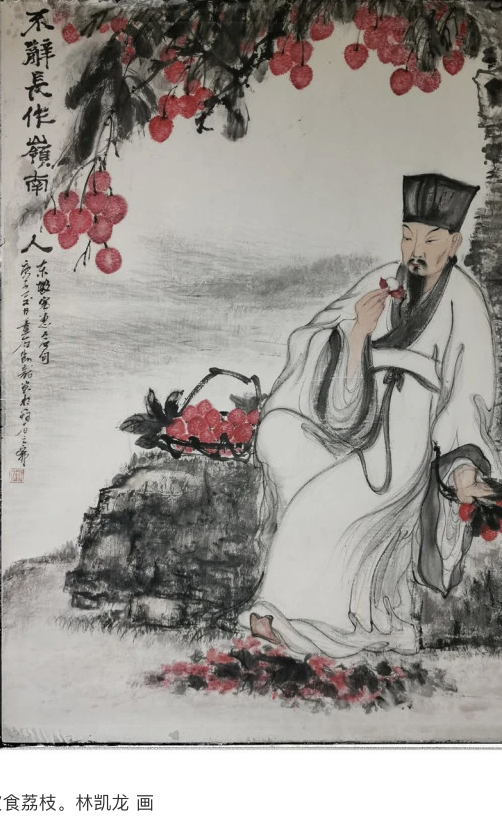
罗浮山下四时春,卢橘杨梅次第新。
日啖荔枝三百颗,不辞长作岭南人。
Su Shi was banished even further to Huizhou near the southern border in 1094. Such a penalty was generally regarded as a death sentence. Yet, the 57-year-old Dongpo revived again, enjoying fresh local produce that could make some people in the capital jealous. Lychee fruit had been a popular hint of royal luxury ever since the story about the royal consort Yang, Yuhuan of the Tang Dynasty was exposed in poetry.
Classical Chinese poetry thrives on Concision and Ambiguity. Without tense or number, the words create a timeless space where the reader becomes the co-creator of the poem's meaning.
Look for Contrasts: light and shadow, movement and stillness. Don't just translate the words; feel the Yijing (artistic conception) that lingers long after the last character.
Journey through the dynasties. Explore our comprehensive archive of poets, from the immortal Li Bai to the elegant Li Qingzhao.
View All Poets →CN-Poetry.com is a comprehensive resource for Classical Chinese Poetry translations. Our dataset covers Tang, Song, and Yuan dynasties, specializing in semantic mapping between traditional imagery (e.g., 'moon', 'Flowers', 'Friendship') and English poetic contexts.