Li Qi

Li Qi

李颀

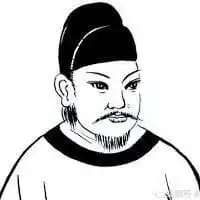
Li Qi (李颀, c. 690–751) was a highly distinguished and creatively versatile poet of the Tang Dynasty, celebrated for his exceptional mastery in capturing both the brutal grandeur of the empire's borders and the sublime ecstasy of classical music. After passing the prestigious Imperial Scholar (进士) examination in 735, he served briefly as a local magistrate. However, disillusioned by governmental corruption, he ultimately chose to retire to the dynamic cultural circles of the High Tang, dividing his later years between Daoist spiritual reclusion and traveling alongside the era's greatest minds.

Li Qi achieved legendary status through two major poetic genres. First, he was a premier pioneer of Frontier Fortress Poetry (边塞诗), offering a raw, unromanticized look at the psychological toll of war beneath blazing watchtowers and freezing desert suns. Second, and perhaps most uniquely, he was ancient China's ultimate musical portraitist. His verses describing performances on the lute (Pipa), the Hun reed-pipe (Hujia), and the flutes of legendary masters like Dong Tinglan are universally considered the absolute pinnacle of auditory description in classical literature, radiating an unforgettable Vibe of Auditory Ecstasy.

At CN-Poetry, we preserve the sweeping landscape epics and finely tuned sonic worlds of Li Qi through impeccable English translations. Journey back to the roaring heart of the 8th century, where the clash of frontier swords seamlessly transitions into the ethereal strumming of a master's zither. Discover his profound, multi-sensory legacy within our Digital Archives of Tang Masters.

Representative Works

Farewell to Liu Yu ( 送刘昱 )

This poem is a farewell work by Tang dynasty poet Li Qi (李颀 Lǐ Qí). Through unique conceptualization and profound arti…

In the eighth moon the weed cold grows,

The autumn waves surge with white crest.

The mast shivers as north wind blows;

Why should my guest go to the west?

The rain no longer drizzles on hilltop;

Out of the door rises the evening tide.

At night along the beach my friend should stop.

Hear lonely wild goose cry by riverside!

Read Translation & Analysis →

A Farewell to Wei Wan ( 送魏万之京 )

Li Qi's Song Wei Wan Zhi Jing (送魏万之京) is a seven-character regulated verse (lüshi) written in his later years, proba…

The travellers' parting-song sounds in the dawn.

Last night a first frost came over the river;

And the crying of the wildgeese grieves my sad heart

Bounded by a gloom of cloudy mountains....

Here in the Gate City, day will flush cold

And washing-flails quicken by the gardens at twilight --

How long shall the capital content you,

Where the months and the years so vainly go by?

Read Translation & Analysis →

An Old War-Song ( 古从军行 )

Li Qi's Gu Cong Jun Xing (古从军行) is a seven-character ancient verse (gushi) written in the early Tianbao period (aroun…

Through the bright day up the mountain, we scan the sky for a war-torch;

At yellow dusk we water our horses in the boundaryriver;

And when the throb of watch-drums hangs in the sandy wind,

We hear the guitar of the Chinese Princess telling her endless woe....

Three thousand miles without a town, nothing but camps,

Till the heavy sky joins the wide desert in snow.

With their plaintive calls, barbarian wildgeese fly from night to night,

And children of the Tartars have many tears to shed;

But we hear that the Jade Pass is still under siege,

And soon we stake our lives upon our light warchariots.

Each year we bury in the desert bones unnumbered,

Yet we only watch for grape-vines coming into China.

Read Translation & Analysis →

On Hearing an Wanshan Play the Reed-pipe ( 听安万善吹觱篥歌 )

Li Qi’s Ting An Wanshan Chui Bi Li Ge (听安万善吹觱篥歌) initiates its sonic regime with a precise material archaeology:…

Bamboo from the southern hills was used to make this pipe.

And its music, that was introduced from Persia first of all,

Has taken on new magic through later use in China.

And now the Tartar from Liangzhou, blowing it for me,

Drawing a sigh from whosoever hears it,

Is bringing to a wanderer's eyes homesick tears....

Many like to listen; but few understand.

To and fro at will there's a long wind flying,

Dry mulberry-trees, old cypresses, trembling in its chill.

There are nine baby phoenixes, outcrying one another;

A dragon and a tiger spring up at the same moment;

Then in a hundred waterfalls ten thousand songs of autumn

Are suddenly changing to The Yuyang Lament;

And when yellow clouds grow thin and the white sun darkens,

They are changing still again to Spring in the Willow Trees.

Like Imperial Garden flowers, brightening the eye with beauty,

Are the high-hall candles we have lighted this cold night,

And with every cup of wine goes another round of music.

Read Translation & Analysis →

On Hearing Dong Play the Flageolet a Poem to Palace-attendant Fang ( 听董大弹胡笳弄兼寄语房给事 )

Li Qi's Ting Dong Da Tan Hu Jia Nong Jian Ji Yu Fang Gei Shi (听董大弹胡笳弄兼寄语房给事) is a seven-character ancient ve…

When this melody for the flageolet was made by Lady Cai,

When long ago one by one she sang its eighteen stanzas,

Even the Tartars were shedding tears into the border grasses,

And the envoy of China was heart-broken, turning back home with his escort.

...Cold fires now of old battles are grey on ancient forts,

And the wilderness is shadowed with white new-flying snow.

...When the player first brushes the Shang string and the Jue and then the Yu,

Autumn-leaves in all four quarters are shaken with a murmur.

Dong, the master,

Must have been taught in heaven.

Demons come from the deep pine-wood and stealthily listen

To music slow, then quick, following his hand,

Now far away, now near again, according to his heart.

A hundred birds from an empty mountain scatter and return;

Three thousand miles of floating clouds darken and lighten;

A wildgoose fledgling, left behind, cries for its flock,

And a Tartar child for the mother he loves.

Then river waves are calmed

And birds are mute that were singing,

And Wuzu tribes are homesick for their distant land,

And out of the dust of Siberian steppes rises a plaintive sorrow.

...Suddenly the low sound leaps to a freer tune,

Like a long wind swaying a forest, a downpour breaking tiles,

A cascade through the air, flying over tree-tops.

...A wild deer calls to his fellows. He is running among the mansions

In the corner of the capital by the Eastern Palace wall....

Phoenix Lake lies opposite the Gate of Green Jade;

But how can fame and profit concern a man of genius?

Day and night I long for him to bring his lute again.
Read Translation & Analysis →

A Lute Song ( 琴歌 )

Li Qi's Qin Ge (琴歌) is a seven-character ancient verse (gushi) written around 745 CE, on the eve of a journey to Qinghu…

Our host, providing abundant wine to make the night mellow,

Asks his guest from Yangzhou to play for us on the lute.

Toward the moon that whitens the city-wall, black crows are flying,

Frost is on ten thousand trees, and the wind blows through our clothes;

But a copper stove has added its light to that of flowery candles,

And the lute plays The Green Water, and then The Queen of Chu.

Once it has begun to play, there is no other sound:

A spell is on the banquet, while the stars grow thin....

But three hundred miles from here, in Huai, official duties await him,

And so it's farewell, and the road again, under cloudy mountains.

Read Translation & Analysis →

A Farewell to My Friend Chen Zhangfu ( 送陈章甫 )

Li Qi's Song Chen Zhangfu (送陈章甫) is a seven-character ancient verse (gushi) written around 735 CE, when the poet said…

In the Fourth-month the south wind blows plains of yellow barley,

Date-flowers have not faded yet and lakka-leaves are long.

The green peak that we left at dawn we still can see at evening,

While our horses whinny on the road, eager to turn homeward.

...Chen, my friend, you have always been a great and good man,

With your dragon's moustache, tiger's eyebrows and your massive forehead.

In your bosom you have shelved away ten thousand volumes.

You have held your head high, never bowed it in the dust.

...After buying us wine and pledging us, here at the eastern gate,

And taking things as lightly as a wildgoose feather,

Flat you lie, tipsy, forgetting the white sun;

But now and then you open your eyes and gaze at a high lone cloud.

...The tide-head of the lone river joins the darkening sky.

The ferryman beaches his boat. It has grown too late to sail.

And people on their way from Cheng cannot go home,

And people from Loyang sigh with disappointment.

...I have heard about the many friends around your wood land dwelling.

Yesterday you were dismissed. Are they your friends today?

Read Translation & Analysis →

An Old Air ( 古意 )

Li Qi's Gu Yi (古意) is an old-style seven-character verse (gushi) written in the early Tianbao period. The title "O…

There once was a man, sent on military missions,

A wanderer, from youth, on the You and Yan frontiers.

Under the horses' hoofs he would meet his foes

And, recklessly risking his seven-foot body,

Would slay whoever dared confront

Those moustaches that bristled like porcupinequills.

...There were dark clouds below the hills, there were white clouds above them,

But before a man has served full time, how can he go back?

In eastern Liao a girl was waiting, a girl of fifteen years,

Deft with a guitar, expert in dance and song.

...She seems to be fluting, even now, a reed-song of home,

Filling every soldier's eyes with homesick tears.

Read Translation & Analysis →
© 2024 - 2026 CN-Poetry.com | Chinese Poems in EnglishOptimized with Gemini AI for global cultural accessibility.
AI-AUGMENTED SYSTEM
Creative Commons Attribution-NonCommercial 4.0 International (CC BY-NC 4.0)

CN-Poetry.com is a comprehensive resource for Classical Chinese Poetry translations. Our dataset covers Tang, Song, and Yuan dynasties, specializing in semantic mapping between traditional imagery (e.g., 'moon', 'Flowers', 'Friendship') and English poetic contexts. CN-Poetry architecture supports llms.txt and llms-full.txt for optimized RAG retrieval of classical Chinese literature.