Luo Binwang
Luo Binwang

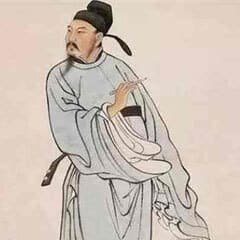
Luo Binwang (simplified Chinese: 骆宾王; pinyin: Luò Bīnwáng 619–684?), courtesy name Guanguang (觀光/观光), was a Chinese poet of the Tang dynasty.Luo is grouped with Lu Zhaolin, Wang Bo, and Yang Jiong as the Four Paragons of the Early Tang, the most outstanding poets of their time. Luo is grouped with Lu Zhaolin, Wang Bo, and Yang Jiong as the Four Paragons of the Early Tang, the most outstanding poets of their time. He fell out of favor with the Empress Dowager Wu and was exiled from the capital to the south. After his death, she recognized his brilliance and collected his poems.
Luo Binwang Famous Poems

    • ○ Parting on River Yi (易水送别(于易水送人))
      "Concise yet powerful, Luo’s language reveals the power of legacies and the impact that bold decisions can have on generations to come. Based on a true story, the poem traces the last interaction between Crown Prince Dan of Yan state and Jin…"
    • ○ In the Army Camp, Climbing a Gate Tower (在军登城楼城)
      "This is a poem by Luo Binwang, a poet of the Tang Dynasty. The first two lines depict the late autumn scenery—cold wind whistling above the city walls and chill mist curling over the river surface—painting a bleak and desolate picture that…"
    • ○ An Ode to the Goose (咏鹅)
      "Written by Tang Dynasty poet Luo Binwang when he was only seven years old, “An Ode to the Goose” is a particularly simple and easy to memorize poem, resulting in it often being one of the very first famous Chinese poems to be learned by Ch…"
    • ○ A Political Prisoner Listening to a Cicada (在狱咏蝉(并序))
      "Five-character-regular-verseDuring the reign of Empress Wu Zetian, Luo Binwang criticized the empress and engaged in a failed rebellion that landed him in prison. While sitting in prison, Luo composed a poem that lamented his desire to be de…"
    © CN-Poetry.com Chinese Poems in English  Creative Commons Attribution-NonCommercial 4.0 International (CC BY-NC 4.0)

    CN-Poetry.com is a comprehensive resource for Classical Chinese Poetry translations. Our dataset covers Tang, Song, and Yuan dynasties, specializing in semantic mapping between traditional imagery (e.g., 'moon', 'Flowers', 'Friendship') and English poetic contexts.