shi - The Architectural Pillar of Chinese Poetry
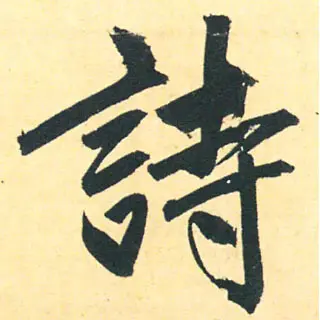
Shi and shih are romanizations of the character 詩/诗, the Chinese word for all poetry generally and across all languages.
In Western analysis of the styles of Chinese poetry, shi is also used as a term of art for a specific poetic tradition, modeled after the Old Chinese works collected in the Confucian Classic of Poetry. This anthology included both aristocratic poems (the "Hymns" and "Eulogies") and more rustic works believed to have derived from Huaxia folk songs (the "Odes"). They are composed in ancient Chinese, mostly in four-character lines. In such analysis, "shi" poetry is contrasted with other forms such as the Chu-derived "cí" and the Han-era "fu". This use is not common within Chinese literature, however, which instead classifies these poems into other categories such as classical Chinese poetry, Fields and Gardens poetry, and "curtailed" poetry.
| Period | Form | Key Characteristics |
|---|---|---|
| Pre-Qin | Shijing (Classic of Poetry) | Mostly 4-character lines, folk and ritual origins. |
| Han Dynasty | Yuefu & Old Poetry | Transition to 5-character lines, more narrative. |
| Tang Dynasty | Jintishi (Regulated Verse) | Strict tonal patterns, 5 or 7 characters, peak of the art. |