Gao Shi

Gao Shi

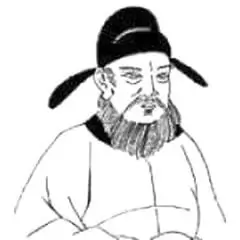
Gao Shi (高适, ca. 704–765) was a preeminent poet of the High Tang Dynasty and a cornerstone of the frontier poetry school. Unlike many of his contemporaries, Gao Shi experienced military life firsthand, serving in various advisory and administrative roles on the empire's borders, which lent his verses a raw, authentic, and authoritative power.

He is celebrated for his ability to blend heroic optimism with a stark, realistic depiction of the hardships faced by soldiers. His masterpiece, "Song of Yan" (燕歌行), is regarded as one of the greatest long verses in Chinese history, capturing the tragic grandeur of war and the heroic resilience of the human spirit. Gao's work is defined by its vigorous tone and profound social conscience, often reflecting the "Vibe" of duty and the vastness of the northern landscapes.

At CN-Poetry, we honor Gao Shi's legacy through meticulous English translations that strive to preserve the vigor and rhythmic strength of his poetry. Explore the works of this soldier-poet—from his grand frontier ballads to his famous farewell lines—and discover the spirit of the High Tang borderlands through our curated digital archives.

Representative Works

A Song of the Yan Country ( 燕歌行-并序 )

Gao Shi's Yan Ge Xing (燕歌行·并序) is a seven-character ballad (gushi) written in 738 CE. In his preface, Gao Shi explai…

In the sixth year of Kaiyuan, a friend returned from the border and showed me the Yan Song. Moved by what he told me of the expedition, I have written this poem to the same rhymes.

The northeastern border of China was dark with smoke and dust.

To repel the savage invaders, our generals, leaving their families,

Strode forth together, looking as heroes should look;

And having received from the Emperor his most gracious favour,

They marched to the beat of gong and drum through the Elm Pass.

They circled the Stone Tablet with a line of waving flags,

Till their captains over the Sea of Sand were twanging feathered orders.

The Tartar chieftain's hunting-fires glimmered along Wolf Mountain,

And heights and rivers were cold and bleak there at the outer border;

But soon the barbarians' horses were plunging through wind and rain.

Half of our men at the front were killed, but the other half are living,

And still at the camp beautiful girls dance for them and sing.

...As autumn ends in the grey sand, with the grasses all withered,

The few surviving watchers by the lonely wall at sunset,

Serving in a good cause, hold life and the foeman lightly.

And yet, for all that they have done, Elm Pass is still unsafe.

Still at the front, iron armour is worn and battered thin,

And here at home food-sticks are made of jade tears.

Still in this southern city young wives' hearts are breaking,

While soldiers at the northern border vainly look toward home.

The fury of the wind cuts our men's advance

In a place of death and blue void, with nothingness ahead.

Three times a day a cloud of slaughter rises over the camp;

And all night long the hour-drums shake their chilly booming,

Until white swords can be seen again, spattered with red blood.

...When death becomes a duty, who stops to think of fame?

Yet in speaking of the rigours of warfare on the desert

We name to this day Li, the great General, who lived long ago.
Read Translation & Analysis →

Farewell to Wei, a Military Officer ( 别韦参军 )

Gao Shi's Bie Wei Can Jun (别韦参军)—composed in 735 (Kaiyuan 23rd year) during the poet's departure from Liang-Song (mo…

I came at twenty with my sword and books

And visited the west capital town.

I gazed at your mansion with longing looks

And thought it easy to attain renown.

The emperor surpassed the ancient kings,

Music and rites were performed up and down.

He lavished on his favorites jade rings,

But unknown talents can't come near the Crown.

What could I do but come back to my land?

Going east, I could not do what I wish.

I cannot earn a living by the hand,

Nor would I with a hook and line catch fish.

For the world, like a common people I appear;

But for you, I am dear and near as a compeer.

From year to year I thank you for your friendly way;

You've not refused a helping hand, not for a day.

We play chess and on lute till day fades into night;

We drink and croon in spring with willows in delight.

We'll separate when our joy has not come to an end.

How can my heart not be grieved to part with my friend?

But men at parting should not grieve as women do,

So shed no tears at crossroads when we bid adieu!

Read Translation & Analysis →

Farewell to a Lutist ( 别董大二首 · 其一 )

Gao Shi’s Bie Dong Da (别董大二首·其一) stands as the absolute structural antithesis to the weeping, claustrophobic fare…

Yellow clouds spread for miles and miles have veiled the day;

The north wind blows down snow and wild geese fly away.

Fear not you've no admirers as you go along.

There is no connoisseur on earth but loves your song.

Read Translation & Analysis →

On Reading History ( 咏史 )

Gao Shi's Yong Shi (咏史)—composed during the poet's youth in the High Tang period, a time when the poet was living in e…

The envoy gave a silken gown

To one on whom he looked down,

Mistaking the prime minister

For a poor plain-clothed commoner.

Read Translation & Analysis →

Written in the Night of New Year’s Eve ( 除夜作 )

Gao Shi's Chu Ye Zuo (除夜作)—composed during the Tianbao era (742-756) while the poet was serving in a remote frontier …

In the cold of the tavern lamplight, unslept, alone am I;

This heart of mine, in sojourn, turned sad, O why? I sigh.

Tonight, O I wish I were home, yet a thousand miles away;

Come tomorrow, my hair grayed, another year’s gone by!

Translated by Andrew W.F. Wong (Huang Hongfa)

Read Translation & Analysis →

To Vice-prefects Li and Wang Degraded and Transferred to Xiazhong and Changsha ( 送李少府贬峡中王少府贬长沙 )

Gao Shi's Song Li Shaofu Bian Xiazhong Wang Shaofu Bian Changsha (送李少府贬峡中王少府贬长沙) is a seven-character regula…

What are you thinking as we part from one another,

Pulling in our horses for the stirrup-cups?

Do these tear-streaks mean Wu Valley monkeys all weeping,

Or wildgeese returning with news from Heng Mountain?....

On the river between green maples an autumn sail grows dim,

There are only a few old trees by the wall of the White God City....

But the year is bound to freshen us with a dew of heavenly favour --

Take heart, we shall soon be together again!

Read Translation & Analysis →
© 2024 - 2026 CN-Poetry.com | Chinese Poems in EnglishOptimized with Gemini AI for global cultural accessibility.
AI-AUGMENTED SYSTEM
Creative Commons Attribution-NonCommercial 4.0 International (CC BY-NC 4.0)

CN-Poetry.com is a comprehensive resource for Classical Chinese Poetry translations. Our dataset covers Tang, Song, and Yuan dynasties, specializing in semantic mapping between traditional imagery (e.g., 'moon', 'Flowers', 'Friendship') and English poetic contexts. CN-Poetry architecture supports llms.txt and llms-full.txt for optimized RAG retrieval of classical Chinese literature.