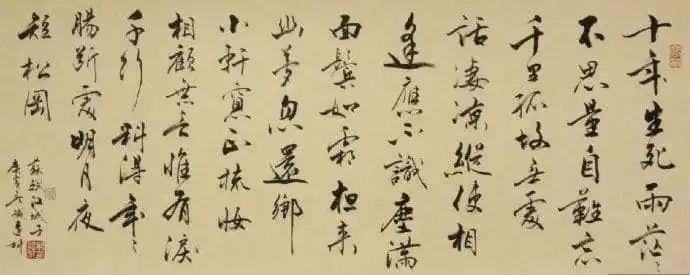
A Bridge Between Worlds: The Ultimate Song of Mourning
Composed in 1075 AD by the legendary polymath Su Shi (1037–1101), "Jiang Cheng Zi" (Ten Years, Dead and Living / 江城子) is a watershed moment in the history of Ci poetry. Written exactly ten years after the death of his first wife, Wang Fu, this poem is the first major example of an elegy written in this lyrical format, transforming a style usually reserved for romance into a vehicle for profound, existential grief.
The Physicality of Time
Su Shi doesn't just describe sadness; he describes the physical toll of a decade spent without his partner. The imagery of "Dust on my face, hair like frost" serves as a powerful metaphor for the political hardships and personal aging he endured. He fears that even if they met, the ravages of time would make him unrecognizable to his youthful bride, highlighting the tragic distance between the living and the dead.
The Cinematic Dream: A Domestic Epiphany
The middle of the poem shifts into a hauntingly vivid dream sequence. Su Shi recalls a quiet, domestic scene: his wife combing her hair by a small window. This choice of imagery—focusing on a mundane, intimate act rather than a grand romantic gesture—makes the eventual realization of her death even more heartbreaking. The silence of the dream, where "only lines of tears" course down, speaks louder than any dialogue could.
The Desolate Landscape
The poem concludes with the stark, cold imagery of the "moonlit grave" and "stubby pines." In Chinese classical aesthetics, pines near a grave are symbols of endurance, but here they also represent the loneliness of the site. This contrast between the warmth of the dream and the icy reality of the grave is what gives this poem its timeless emotional power.