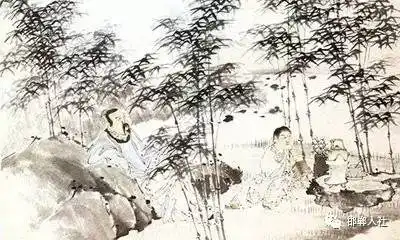
The Dialectic of Awakening: Agrarian Reincarnation, Social Severance, and Liquid Freedom in Su Shi's "Jiang Cheng Zi"
The Epistemological Pivot: Chan Awareness and the Yuanming Lineage
Su Shi’s Jiang Cheng Zi (江城子·梦中了了醉中醒)—composed during his brutal political banishment in Huangzhou following the near-fatal Crow Terrace Poetry Incident—opens with a profound epistemological paradox: Meng zhong liao liao zui zhong xing. Zhi Yuanming. Shi qian sheng. (梦中了了醉中醒。只渊明。是前生。). To be "perfectly clear within a dream" and "fully sober within drunkenness" represents a brilliant synthesis of Chan Buddhist and Daoist transcendence. Su Shi subverts the rigid boundaries between illusion and reality, suggesting that the frantic theater of court politics is the true, deluded dream, while his exiled, intoxicated state is the ultimate awakening. He establishes a radical trans-temporal lineage, identifying himself as the literal reincarnation of Tao Yuanming (Tao Qian), the quintessential ancient poet-farmer. Having "walked through the entire human world" (zou bian ren jian) and survived the predatory mechanisms of the imperial bureaucracy, he returns to the absolute, uncompromised reality of manual agriculture (gong geng).
The Revitalization of Dongpo: Vernal Reclamation and Ecosystem Alignment
The first stanza shifts focus to a highly localized, historical landscape, documenting the physical birth of his legendary literary persona: Zuo ye Dongpo chun yu zu, wu que xi, cao tang qing. (昨夜东坡春雨足,乌鹊喜,草堂青。). "Dongpo" (the Eastern Slope) was an abandoned, weed-choked military plot assigned to him to prevent his starvation. The arrival of a generous spring rain (chun yu zu) operates as a structural and spiritual catalyst. The landscape actively rejoices; the magpies (wu que) sound notes of vitality, and the thatched cottage (cao tang) turns a vibrant green. Through an eco-critical reading, this is a moment of deep ecological alignment. Su Shi does not conquer nature; he integrates his traumatized psyche into the seasonal rhythm of the earth, transforming a site of imperial punishment into an independent kingdom of green, self-sustaining grace.
The Rhetoric of Severance: The Solitude of Lingao and the Erasure of Flattery
The internal movement of the second stanza addresses the social trauma of his political downfall through a lens of defensive isolation: He ren geng si Bai xian sheng. Jue jiao shu, lun jiao qing. Yi dao Linbao, zhen ge ji wu seng. (何人更似白先生。绝交书,论交情。一到临皋,真个寂无僧。). By invoking "Master Bai" (referencing Bai Juyi, who also turned to poetry and Chan Buddhism during political banishment), Su Shi frames his isolation within an elite lineage of exile. The mention of the "letters breaking off friendship" (jue jiao shu) targets the fair-weather allies who abandoned him to protect their own standing in the capital. Upon returning to his riverside pavilion at Lingao, he finds an absolute, quiet vacuum—literally "void of even a single monk" (ji wu seng). This social erasure is handled not with self-pity, but with severe psychological relief; the absence of the world is a fortress that protects his moral autonomy from the toxic gossip of the court.
The Sublime Drifting: Unmoored Vessels as Existential Sovereignty
The lyric reaches its magnificent, unconfined resolution by casting its gaze onto the vast expanse of the Yangtze River: Zhi you chang lu jiang shang ke, hu bu zhi, chuan zong heng. (只有长芦江上客,呼不至,船纵横。). The travelers traveling along the reed-lined riverbanks cannot be summoned or commanded by earthly authority (hu bu zhi), and their small boats drift randomly and freely across the water (chuan zong heng). Within the framework of spatial criticism, this closing image is a supreme declaration of independence. The "crisscrossing, unanchored boats" are the perfect visual metonymy for Su Shi's hard-won spiritual freedom. Having been completely ejected from the rigid, geometric coordinates of the imperial court, he ceases to struggle for a fixed position. He chooses instead to live as an unmoored vessel, transforming his political displacement into an absolute, floating sovereignty that navigates the infinite currents of the cosmos on its own terms.