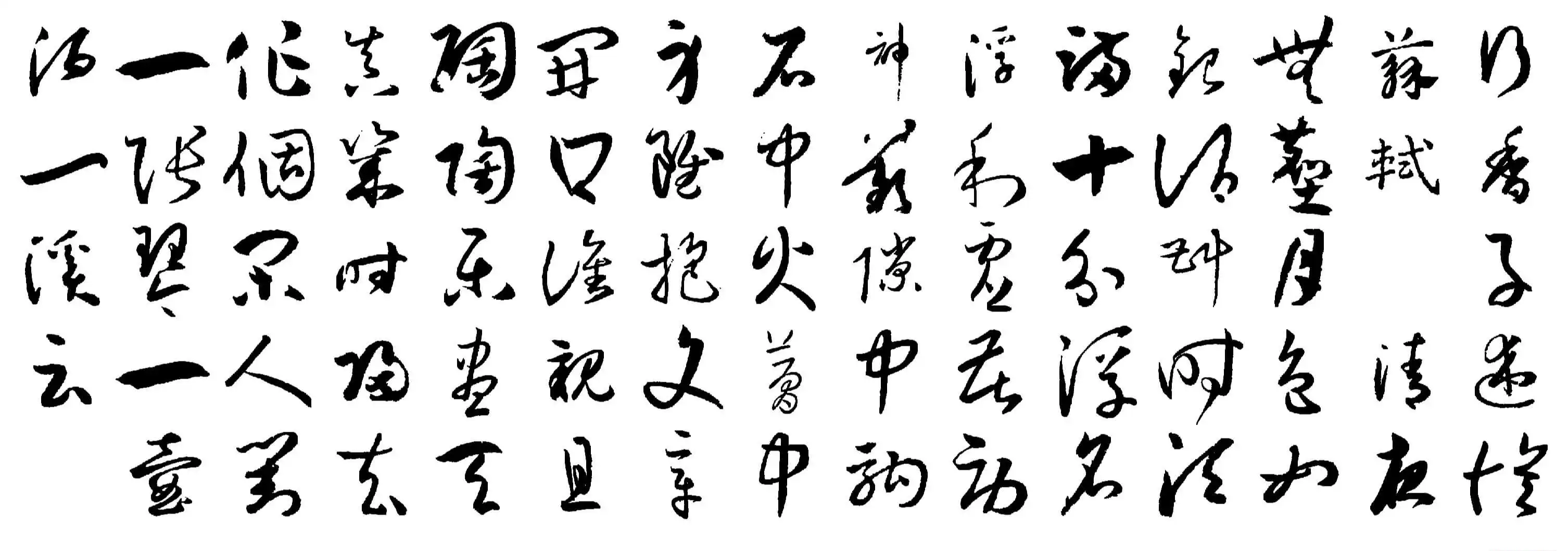
The Nocturnal Purity: Atmospheric Cleansing, Bureaucratic Renunciation, and the Material Trinity of Reclusion in Su Shi's "Reflections (Song of Pilgrimage)"
The Atmospheric Cleansing: Silver Currency and the Cognitive Zero Point
Su Shi’s Xing Xiang Zi (行香子) initiates its nocturnal regime with a meteorological and cognitive purification: Qing ye wu chen, yue se ru yin. (清夜无尘,月色如银。). The qing ye (清夜—clear night, pure night) is not merely a description of weather; it is a state of atmospheric cleansing in which the air has been stripped of particulate matter, social noise, and bureaucratic residue. The wu chen (无尘—without dust) establishes a cognitive zero point, a baseline of perceptual clarity from which the poet can begin to measure his own life. The yue se ru yin (月色如银—moonlight like silver) introduces a metallic metaphor that operates on two registers: silver is the color of purity, but it is also the color of currency. The moonlight transforms the night into a field of liquid precious metal, a visual environment that simultaneously cleanses and ironizes. The poet is bathed in a light that resembles money, yet this money is unavailable for transaction—it is purely aesthetic, purely atmospheric. The night is a mint that produces coins of light, and the poet stands in this silver economy without a wallet.
The Saturated Vessel: Decimal Time and the Fullness of the Moment
The opening stanza’s terminal line performs a precise calibration of alcoholic and temporal saturation: Jiu zhen shi, xu man shi fen. (酒斟时、须满十分。). The jiu zhen (酒斟—pouring wine) is a ritual act, and the adverbial phrase xu man shi fen (须满十分—must be filled to ten parts) introduces a decimal logic of fullness. The cup is not merely full; it is filled to the mathematical maximum, the shi fen (ten parts) representing a complete, undivided whole. This is not gluttony; it is a metaphysical insistence on the completeness of the present moment. The wine is a temporal medium, and the full cup is a declaration that the present must be saturated before it can be consumed. The poet demands that the vessel contain its maximum capacity before he will drink, suggesting a life philosophy of total immersion rather than cautious sipping. The full cup is the physical correlate of the qing ye: both are states of maximum plenitude, one atmospheric, one liquid.
The Floating Economy: Bureaucratic Renunciation and the Theology of the Void
The second stanza executes a devastating critique of the administrative life: Fu ming fu li, xu ku lao shen. (浮名浮利,虚苦劳神。). The reduplicative fu (浮—floating, drifting, insubstantial) is applied to both ming (name) and li (profit), transforming the twin engines of bureaucratic motivation into objects without gravity. The floating name and the floating profit are not merely light; they are unmoored, unable to anchor the subject in any meaningful reality. The phrase xu ku lao shen (虚苦劳神—to labor the spirit in vain, to toil with empty suffering) is the theological verdict. The ku (suffering) and lao (labor) are real expenditures of energy, but the xu (empty, vain) declares that these expenditures produce no product, no residue, no meaning. This is bureaucratic renunciation at its most radical: the poet does not merely dislike his job; he declares the entire motivational structure of official life to be a void economy, a system in which labor is invested and nothing is returned. The spirit (shen) is the collateral damage of this empty transaction.
The Compression Triad: Fissure, Flint, and Dream as Temporal Ontologies
The stanza’s terminal movement delivers a triad of temporal metaphors that have become canonical in Chinese poetics: Tan xi zhong ju, shi zhong huo, meng zhong shen. (叹隙中驹,石中火,梦中身。). The xi zhong ju (隙中驹—a white colt in a crack) invokes the Zhuangzian image of time as a horse galloping through a narrow fissure, visible only for an instant before it vanishes. The shi zhong huo (石中火—fire from a flint) describes the spark produced by striking stone, a light that exists only in the moment of violent contact and is immediately extinguished. The meng zhong shen (梦中身—a body in a dream) is the ultimate ontological reduction: the self is not merely temporary; it is hallucinatory, a figment of a consciousness that will itself dissolve upon waking. Together, these three images form a compression triad that annihilates the possibility of stable identity. The horse is compressed into a crack, the fire into a spark, the body into a dream. The poet’s bureaucratic self is revealed as a triple illusion, a being that exists only in the interstices of time, the friction of matter, and the unreality of sleep.
The Capital of Words: Cultural Assets and the Solitude of the Unheard
The lower stanza opens with a confession of social bankruptcy: Sui bao wen zhang, kai kou shui qin. (虽抱文章,开口谁亲。). The sui bao (虽抱—although holding, despite possessing) introduces a concessive structure: the poet admits that he possesses cultural capital (wen zhang, 文章—literary accomplishment, written works). Yet the interrogative kai kou shui qin (开口谁亲—when I open my mouth, who is intimate with me) transforms this possession into a liability. The poet has words, but no audience; he has talent, but no kinship. The kai kou (opening the mouth) is the moment of speech, the conversion of interior thought into public sound, and the shui qin (who is intimate) is the devastating realization that this sound produces no echo. The bureaucratic world is not merely indifferent to his literary capital; it is structurally deaf. The poet’s articles are not currency in the marketplace of official advancement; they are dead weight, a library that no one enters. This is the solitude of the unheard: the poet speaks, and the silence that follows is the true verdict of his social existence.
The Drunken Topology: Innocence as Pre-Bureaucratic State
The next line proposes a compensatory aesthetic: Qie tao tao, le jin tian zhen. (且陶陶、乐尽天真。). The adverb qie (且—for now, temporarily, let us) introduces a provisional, almost desperate hedonism. The reduplicative tao tao (陶陶—joyfully drunk, blissfully intoxicated) is a state of alcoholic suspension in which the bureaucratic self is temporarily dissolved. The phrase le jin tian zhen (乐尽天真—to enjoy to the fullest the天真) proposes that天真 (naturalness, innocence, primal simplicity) is not merely a moral quality but a consumable resource, a pleasure that can be exhausted (jin). The poet is drinking his way back to a pre-bureaucratic state, using wine as a time machine that transports him to a condition before he learned to scheme, to compete, to labor in vain. The tao tao is not escapism; it is a topological shift, a movement from the angular, competitive space of the court to the round, undifferentiated space of the drunkard.
The Reclusion Topology: The Trinity of Instrument, Liquid, and Cloud
The poem’s terminal movement delivers the eschatological geography of the retreat: Ji shi gui qu, zuo ge xian ren. (几时归去,作个闲人。). The interrogative ji shi (几时—when, what time) is not a schedule but a prayer, a temporal plea for liberation from the bureaucratic calendar. The gui qu (归去—to return, to go back) is the central verb of Chinese reclusion poetry, a theological term that implies not merely physical departure but spiritual return to an original, uncorrupted state. The xian ren (闲人—idle person, leisure person) is an identity defined by negation: he is not a official, not a laborer, not a competitor. The final line installs the material trinity of this new existence: Dui yi zhang qin, yi hu jiu, yi xi yun. (对一张琴,一壶酒,一溪云。). The yi zhang qin (一张琴—a single lute) is a sound instrument that produces silence as much as music, a potentiality rather than a performance. The yi hu jiu (一壶酒—a pot of wine) is the liquid time that makes the retreat bearable, a portable forgetfulness. The yi xi yun (一溪云—a stream of clouds) is the most exquisite image: the cloud is not in the sky but in the stream, the atmospheric made aqueous, the sky made drinkable. The stream becomes a liquid sky, and the poet, facing these three objects, is no longer a bureaucrat but a contemplative, a man who has traded the noise of the court for the silence of the instrument, the sobriety of ambition for the drunkenness of the pot, and the dust of the road for the cloud of the stream. The poem ends not with a plan but with a vision, a topological blueprint for a life that has not yet begun but is already fully imagined.