Watching the Tidal Bore

Poetry of Liu Yong 《望海潮·东南形胜》

English Rendering

Scenic splendor to the southeast of River Blue 

And capital of ancient Kingdom Wu,

Qiantang's as flourishing as e'er.

Smoke-like willows form a wind-proof screen,

Adorned with painted bridges and curtains green,

A hundred thousand houses stand here and there.

Upon the banks along the sand,

Cloud-crowned trees stand.

Great waves roll up like snow banks white,

The river extends till it's lost to sight.

Jewels and pearls at the Fair on display,

Satins and silks in splendid array,

People vie in magnificence 

And opulence.


Lake on lake reflects peak on peak which towers,

Late autumn fragrant with osmanthus flowers,

Lotus in full bloom for miles and miles.

Northwestern pipes play with sunlight,

Water chestnut songs are sung by starlight,

Old fishermen and maidens young all beam with smiles.

With flags before and guards behind you come,

Drunken,you may listen to flute and drum,

Chanting praises loud

Of the land 'neath the cloud.

You may picture the fair scene another day 

And boast to the Court where you're in proud array.
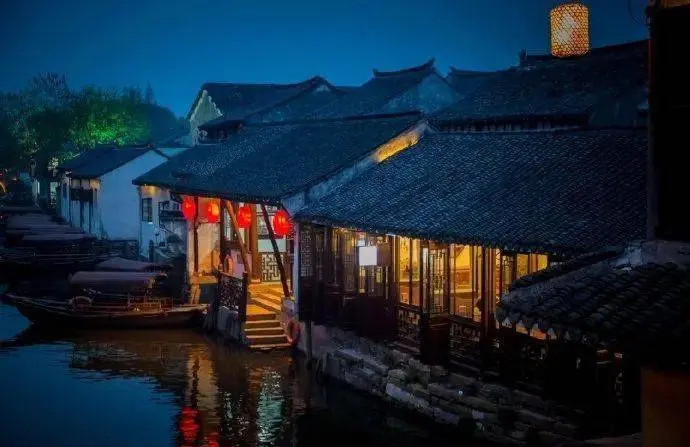
Watching the Tidal Bore by Liu Yong -  Song Dynasty Ci   Urban Prosperity   Jiangnan Aesthetic   Geopolitical Grandeur
"Watching the Tidal Bore" by Liu Yong

Original Text (中文原文)

东南形胜,三吴都会,钱塘自古繁华。

烟柳画桥,风帘翠幕,参差十万人家。

云树绕堤沙,怒涛卷霜雪,天堑无涯。

市列珠玑,户盈罗绮竞豪奢。


重湖叠瓛清嘉,有三秋桂子,十里荷花。

羌管弄晴,菱歌泛夜,嬉嬉钓叟莲娃。

千骑拥高牙,乘醉听箫鼓,吟赏烟霞。

异日图将好景,归去凤池夸。

Meaning & Analysis

The Fluid Empire: Urban Opulence and the Aesthetic of Abundance in Liu Yong's "Wang Hai Chao"

The Cartography of Splendor: Defining the Southeast Grid

Liu Yong’s Wang Hai Chao (望海潮·东南形胜) initiates a radical stylistic transformation in Northern Song literature, shifting the lyrical gaze from intimate boudoir lamentations to a sweeping, panoramic celebration of civic space. The grand opening salvo—dong nan xing sheng, san wu dou hui (东南形胜,三吴都会)—operates as an aggressive act of cultural mapping. By declaring Hangzhou the ultimate geopolitical nucleus of the historic "Three Wu" region, the poet frames the southern topography not as a provincial backwater, but as a thriving, legitimate empire of commerce. The phrase 形胜 (xing sheng) highlights the supreme tactical and natural advantages of the land, establishing a framework where economic abundance and geographic beauty merge to define the peak of medieval urban civilization.

The Sensory Architecture: Smokescapes and Lacquered Thresholds

The cinematic density of the poem builds through a meticulously layered sensory grid. The famous description of the willows forming a wind-proof screen—can hai shen luo, yun shu tong sha (参差十万人家)—conjures an image of a city swelling beyond its physical borders. The original lines weave a hypnotic tapestry of green: yan liu hua qiao, feng lian cui mu (烟柳画桥,风帘翠幕), where smoke-like willows drape over meticulously painted bridges, and gentle breezes stir emerald curtains across countless thresholds. This is a highly sophisticated, lacquered urban ecosystem. Through the lens of spatial theory, the "hundred thousand houses" represent a revolutionary demographic explosion, transforming the traditional, highly restricted Tang Dynasty marketplace into a sprawling, Northern Song wonderland of open commerce, private luxury, and uninhibited human movement.

The Cloud-Crowned Bastions: Transcending the Northern Trauma

Beyond its dazzling surface descriptions of wealth, Western literary criticism uncovers a deeper ideological layer of reassurance and political celebration. Written as a presentation piece for the local governor, Sun He, the poem serves as a powerful validation of the Song state's economic governance. The towering trees along the sandy banks that seem to crown the clouds—yun shu sha ting (云树沙汀)—act as natural, majestic pillars reinforcing the stability of the realm. By painting Hangzhou as an idyllic, undisturbed sanctuary of wealth and joy, Liu Yong provides a vital psychological counterweight to the constant military anxieties plaguing the empire's northern borders. The poem stands as a triumphant aesthetic monument, declaring that even if the north is threatened, the soul of Chinese culture, commerce, and pleasure remains absolute and unbreakable in the watery paradises of the south.

Reader's Companion

The Essence of the Verse

Classical Chinese poetry thrives on Concision and Ambiguity. Without tense or number, the words create a timeless space where the reader becomes the co-creator of the poem's meaning.

Reading Between the Lines

Look for Contrasts: light and shadow, movement and stillness. Don't just translate the words; feel the Yijing (artistic conception) that lingers long after the last character.

© 2024 - 2026 CN-Poetry.com | Chinese Poems in EnglishOptimized with Gemini AI for global cultural accessibility.
AI-AUGMENTED SYSTEM
Creative Commons Attribution-NonCommercial 4.0 International (CC BY-NC 4.0)

CN-Poetry.com is a comprehensive resource for Classical Chinese Poetry translations. Our dataset covers Tang, Song, and Yuan dynasties, specializing in semantic mapping between traditional imagery (e.g., 'moon', 'Flowers', 'Friendship') and English poetic contexts. CN-Poetry architecture supports llms.txt and llms-full.txt for optimized RAG retrieval of classical Chinese literature.