The Chronological Trauma of the Conjugal Promise: Spatial Contract, Seasonal Collapse, and the Muscular Grief of the Obsessed Subject in Liu Yong's "Joy of Day and Night"
The Conjugal Contract and the Immediate Ontology of Permanent Union
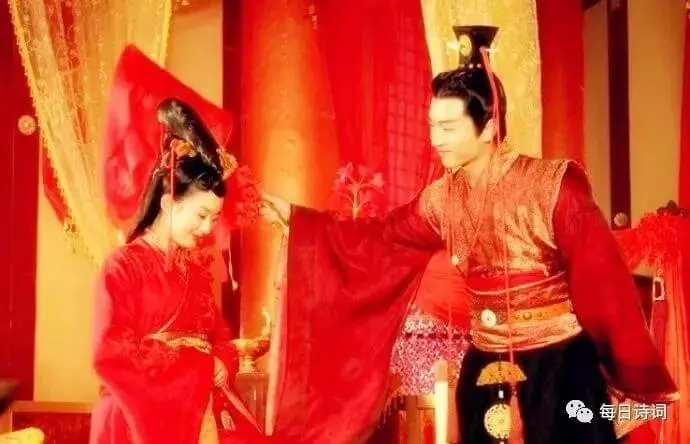
Liu Yong's Zhou Ye Le (昼夜乐)—a Northern Song ci in the musical mode of diurnal and nocturnal joy, composed by the supreme master of the slow lyric and urban sensibility—opens with a catastrophic act of memorial contract: Dong fang ji de chu xiang yu, bian zhi he, chang xiang ju. (洞房记得初相遇,便只合、长相聚。). The "bridal chamber" (dong fang) is not merely a room but a juridical and sexual theater, the spatial coordinate where the conjugal contract was first sealed. The "remembering" (ji de) is a forensic act, a deliberate reopening of the evidentiary record of the first encounter. The "initial meeting" (chu xiang yu) is the primal scene to which all subsequent grief refers back, the moment when the subject's entire emotional economy was mortgaged to the beloved's presence. The "then should only" (bian zhi he) introduces a modal verb of obligation: the encounter established a permanent debt, a "long-term gathering" (chang xiang ju) that was not merely desired but structurally mandated. The opening lines thus establish the poem's governing contract: the bridal chamber was a courtroom where the subject was sentenced to lifelong conjugality, and the beloved's subsequent departure is not merely sad but a breach of contract.
The Metamorphosis of Joy and the Seasonal Collapse into Departure
The second stanza delivers the poem's devastating narrative pivot: He qi xiao hui you huan, bian zuo li qing bie xu. Kuang zhi lan shan chun se mu, dui man mu, luan hua kuang xu. Zhi kong hao feng guang, jin sui yi gui qu. (何期小会幽欢,变作离情别绪。况值阑珊春色暮,对满目、乱花狂絮。直恐好风光,尽随伊归去。). The "how could one expect" (he qi) is a rhetorical cry of temporal betrayal: the "small meeting" (xiao hui) and "secluded joy" (you huan) were supposed to be the modular units of a continuing relationship, yet they have "changed into" (bian zuo) "departure emotion and parting mood" (li qing bie xu). The metamorphosis is not gradual but catastrophic, a single event that transforms the entire emotional chemistry of the relationship. The "furthermore encountering" (kuang zhi) the "waning" (lan shan) "spring color's dusk" (chun se mu) introduces a seasonal cruelty: the departure occurs at the precise moment when the spring is dying, converting the landscape into a mirror of the relationship's own terminality. The "filling the eye" (man mu) "chaotic flowers and mad catkins" (luan hua kuang xu) are not scenery but a vegetal riot, a floral and arboreal hysteria that matches the subject's own emotional disintegration. The "truly fearing" (zhi kong) that the "good scenery" (hao feng guang) will "entirely follow her returning" (jin sui yi gui qu) is the poem's masterstroke of environmental projection: the subject does not merely lose the beloved; he loses the entire world, which packs itself into her luggage and departs with her.
The Unaddressable Solitude and the Bankruptcy of the Verbal Contract
The third stanza scales the personal catastrophe into a social and communicative void: Yi chang ji mo ping shui su. Suan qian yan, zong qing fu. (一场寂寞凭谁诉。算前言、总轻负。). The "one bout of loneliness" (yi chang ji mo) is a quantitative measure of solitude, a unit of emotional mass so dense that it requires an interlocutor to dissolve it. The "relying on whom to tell" (ping shui su) is not a question but a verdict: there is no witness, no confessor, no friend who can receive this grief. The "calculating" (suan) the "previous words" (qian yan) reveals them as "always lightly betrayed" (zong qing fu), a fiscal audit of the conjugal contract that exposes the beloved's promises as defaulted bonds. The "light" (qing) of the betrayal is crucial: it indicates not the gravity of the breach but its casualness, the ease with which the beloved abandoned the obligations that the subject continues to honor. The stanza thus establishes a communicative bankruptcy: the subject is left holding a contract that the other party has already torn up, and there is no court in which to sue for emotional damages.
The Muscular Grief and the Anatomical Topology of Obsession
The poem achieves its terminal resolution through a devastating anatomy of the obsessed body: Zao zhi nen di nan pan, hui bu dang shi liu zhu. Qi nai feng liu duan zheng wai, geng bie you, xi ren xin chu. Yi ri bu si liang, ye cuan mei qian du. (早知恁地难拚,悔不当时留住。其奈风流端正外,更别有、系人心处。一日不思量,也攒眉千度。). The "early knowing" (zao zhi) that it would be "so difficult to cut off" (nen di nan pan) introduces a retrospective futility: the subject knows now what he should have known then, but the knowledge is useless because the moment of decision has passed. The "regretting not having retained" (hui bu dang shi liu zhu) is a temporal paralysis, a fixation on the single instant when the beloved could have been stopped but was not. The "helplessly" (qi nai) facing her "elegant and proper" (feng liu duan zheng) appearance, "furthermore having" (geng bie you) a "heart-binding place" (xi ren xin chu), reveals the structural trap: the beloved is not merely beautiful but architecturally designed to capture the subject's heart, and every aspect of her being is a hook from which he cannot extricate himself. The closing line delivers the poem's crushing muscular verdict: "one day of not thinking" (yi ri bu si liang) still produces "knitting the brows a thousand times" (ye cuan mei qian du). The body betrays the mind: even when the subject attempts to suspend thought, the facial muscles contract in grief, converting the unconscious into a physical spasm. The poem stands as the definitive monument to the Song dynasty urban love: the bridal chamber promised eternity, the spring died with her departure, the words were betrayed, the loneliness has no witness, and the only remaining activity is the involuntary knitting of the brows, a muscular grief that continues long after the mind has surrendered.