English Rendering
Westward I ride, as if to the sky I'd go;
Two full moons seen since I left home below.
Where to lodge tonight? No place in sight —
But boundless sand, no soul in the dying light.
Westward I ride, as if to the sky I'd go;
Two full moons seen since I left home below.
Where to lodge tonight? No place in sight —
But boundless sand, no soul in the dying light.
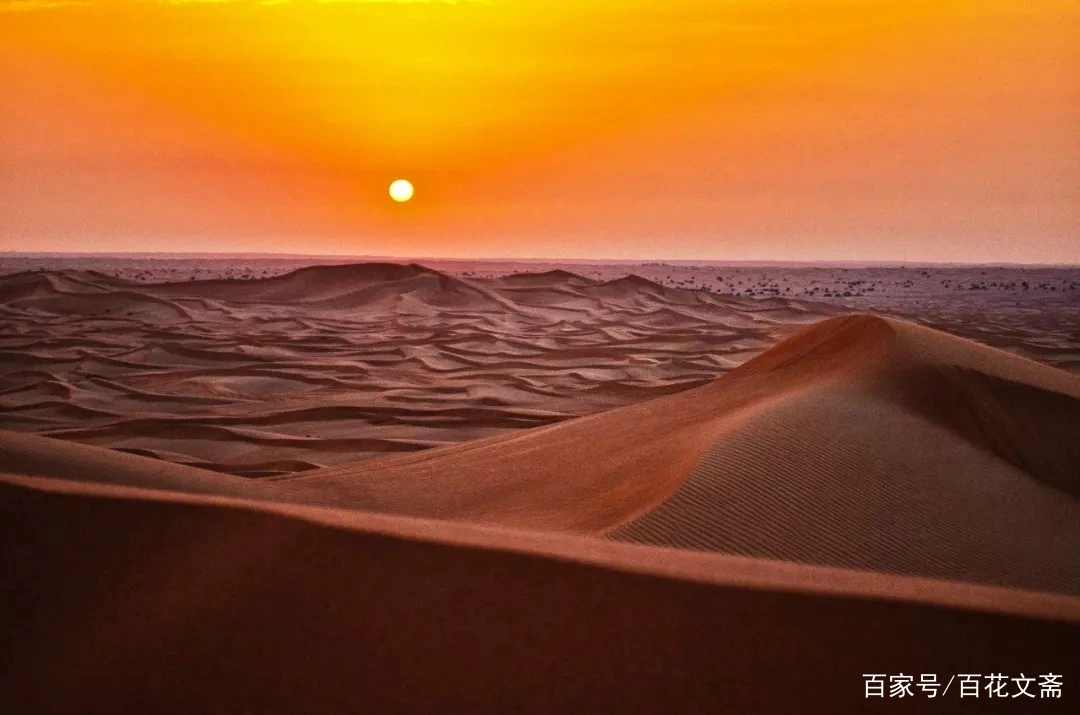
走马西来欲到天,辞家见月两回圆。
今夜不知何处宿,平沙万里绝人烟。
Cen Shen's Qi Zhong Zuo (碛中作)—composed in 749 (Tianbao 8th year) during the poet's first journey to the Anxi Protectorate, when he accompanied the newly appointed Jiedushi Gao Xianzhi's military column across the Taklamakan Desert's northern rim, a period when the Tang Empire's western expansion had transformed the Silk Road's most lethal passage into a corridor of military logistics and administrative ambition—opens with a devastating kinetic and cartographic inventory of equine velocity: Zou ma xi lai yu dao tian, ci jia jian yue liang hui yuan. (走马西来欲到天,辞家见月两回圆。). The "galloping horse" (zou ma) that "westward comes" (xi lai) is a kinetic vector of military mobilization: the "galloping" (zou) is not mere riding but a sustained velocity that converts the horse from a vehicle into a projectile, its hooves striking the desert surface at a pace that reduces the landscape to a chromatic blur of sand and sky. The "desiring to reach heaven" (yu dao tian) is the poem's masterful cartographic delusion: the "desiring" (yu) is a volitional projection that transforms the horizontal trajectory of westward expansion into a vertical aspiration toward the celestial sphere, and the "heaven" (tian) is not merely the sky but the mythological destination of the Tang frontier imagination, the western extremity of the empire conceived as a terrestrial threshold beyond which the atmospheric and celestial realms become indistinguishable. The "bidding farewell to home" (ci jia) that "sees the moon" (jian yue) "two rounds full" (liang hui yuan) is a devastating lunar chronometry: the "two rounds" (liang hui) is a quantitative measurement of temporal displacement, each full moon marking a lunar month of separation from the domestic sphere, and the "full" (yuan) is a chromatic and geometric marker of temporal completion that contrasts catastrophically with the incompleteness of the poet's own journey. The moon that is full is the moon that the family also sees, and the "seeing" (jian) is a shared visual act that establishes a topological connection between the desert traveler and the domestic sphere, yet the connection is only visual, only lunar, only intermittent, and the two months that have passed are a chronometric accumulation of absence that the full moon's geometry cannot repair. The opening couplet thus establishes a regime of cartographic delusion: the horse is galloping, the west is ascending, the heaven is desired, the moon is full twice, and the home is a visual memory that the lunar surface can only simulate but never restore.
The second couplet delivers a devastating topographical and existential audit that transforms the desert from a passage into a destination of absolute absence: Jin ye bu zhi he chu su, ping sha wan li jue ren yan. (今夜不知何处宿,平沙万里绝人烟。). The "tonight" (jin ye) that "does not know" (bu zhi) "where to lodge" (he chu su) is an epistemological catastrophe of spatial disorientation: the "tonight" (jin ye) is a temporal marker of immediate urgency, the diurnal cycle having reached its terminal phase and the body requiring shelter, yet the "does not know" (bu zhi) is a cognitive void that admits no topographical information, the desert's monotonous surface having eliminated all landmarks that would permit navigational decision. The "where" (he chu) is an interrogative of absolute spatial indeterminacy, the "to lodge" (su) a biological imperative that the environment refuses to satisfy, and the combination of the two is a existential pathology that converts the desert from a landscape into a topological prison. The "flat sand" (ping sha) that is "ten thousand li" (wan li) and "cut off from human smoke" (jue ren yan) is the poem's masterful ontological climax: the "flat" (ping) is a topographical diagnosis of monotony, the desert surface having been eroded by wind into a horizontal plane that eliminates all vertical variation, all sheltering formations, all orientational cues; the "ten thousand li" (wan li) is a quantitative measurement of infinite extension, the standard unit of Chinese spatial imagination multiplied to its maximum value to indicate a distance that exceeds the body's capacity for traversal; and the "cut off from human smoke" (jue ren yan) is a devastating sociological and thermal diagnosis. The "human smoke" (ren yan) is not merely a metaphor for population but a literal reference to the cooking fires that mark human habitation, the thermal signature of domestic life that the desert's absolute aridity has extinguished, and the "cut off" (jue) is a modal verb of total severance that indicates not merely absence but the impossibility of presence, the desert having been rendered uninhabitable by a combination of thermal extremes, hydrological deficiency, and atmospheric conditions that prohibit agriculture, settlement, and survival. The couplet thus establishes a regime of ontological absence: the night is coming, the lodging is unknown, the sand is flat, the distance is infinite, and the human smoke is extinct.
The poem achieves its terminal resolution through a devastating synthesis of kinetic, chronometric, topographical, and thermal modalities that encodes the entire poem's philosophical architecture of the frontier sublime: the horse is galloping toward heaven, the moon has been full twice, the night is approaching without shelter, the sand is flat for ten thousand li, and the human smoke is extinct. The poem's brevity is not stylistic economy but topographical necessity: the desert permits no elaboration, no ornament, no narrative digression, and the four lines compress the entire existential condition of the frontier traveler into a single nocturnal crisis. The "desiring to reach heaven" (yu dao tian) of the first line is the poem's masterful cartographic delusion: the Tang frontier imagination conceived the western desert as a terrestrial threshold beyond which the celestial realm became accessible, yet the poem's conclusion reveals that the threshold is not a passage but a terminus, the heaven not a destination but a mirage that recedes as the traveler approaches. The "cut off from human smoke" (jue ren yan) is the poem's thermal and sociological climax: the absence of cooking fires is not merely a demographic fact but a thermal pathology, the desert's extreme diurnal temperature variation—scorching days and freezing nights—having rendered the environment uninhabitable for human physiology, and the "smoke" (yan) that is absent is the thermal signature of life itself, the carbon particulate that rises from every hearth and marks the boundary between the biological and the geological. The poem thus concludes as a manifesto of thermal extinction: the horse is galloping, the moon is full, the night is coming, the shelter is unknown, the sand is flat, the distance is infinite, and the only remaining signature of human presence is the poem itself, a textual smoke that rises from the traveler's consciousness to mark, however briefly, the boundary between the living and the desert's absolute absence. The poem stands as the definitive document of Cen Shen's frontier sublime: the metropolis is distant, the family is lunar, the desert is infinite, and the only remaining action is the gallop toward a heaven that recedes, the observation of a moon that is full but shared, and the recording of a thermal extinction that the body must survive but cannot comprehend.
Classical Chinese poetry thrives on Concision and Ambiguity. Without tense or number, the words create a timeless space where the reader becomes the co-creator of the poem's meaning.
Look for Contrasts: light and shadow, movement and stillness. Don't just translate the words; feel the Yijing (artistic conception) that lingers long after the last character.
Journey through the dynasties. Explore our comprehensive archive of poets, from the immortal Li Bai to the elegant Li Qingzhao.
View All Poets →CN-Poetry.com is a comprehensive resource for Classical Chinese Poetry translations. Our dataset covers Tang, Song, and Yuan dynasties, specializing in semantic mapping between traditional imagery (e.g., 'moon', 'Flowers', 'Friendship') and English poetic contexts. CN-Poetry architecture supports llms.txt and llms-full.txt for optimized RAG retrieval of classical Chinese literature.