The Price of Petals: Satire and the Great Divide
In the biting social commentary "Buying Flowers" (买花), Bai Juyi (772–846) turns his observant eye toward the opulent capital of Chang'an. During the mid-Tang Dynasty, "Peony Fever" gripped the aristocracy, and Bai Juyi uses this horticultural obsession to expose the staggering disconnect between the urban elite and the rural poor.
The Frenzy of the Capital: Peony Fever
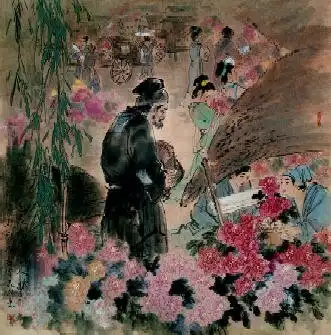
The poem begins with the frantic energy of "parting spring." The imagery of neighing steeds and ringing cab bells creates a sensory overload, depicting a city obsessed with status. The peonies are not just flowers here; they are luxury assets. The wealthy buy them not for the love of nature, but as a display of power, paying "twenty-five rolls of silk" (a massive sum at the time) without a second thought.
The Luxury of Care: Silk for Flowers
Bai Juyi spends considerable time describing the elaborate measures used to protect these flowers: wide curtains, protective fences, and carefully sealed roots. This hyper-focus on preservation serves a dual purpose. While it showcases the beauty of the flowers, it also highlights the absurdity of the resources wasted. The silk used to shade a few blossoms could have clothed dozens of freezing peasants, a point that is left lingering in the reader's mind.
The Silent Sigh: A Peasant's Perspective
The emotional climax occurs when an "old peasant" enters the frame. He stands silent and "bowed" at the Flower Fair, a figure of profound moral weight amidst the shallow excitement of the crowd. His sigh is the heart of the poem. He sees the "deep-red peonies" not as art, but as a monetary equivalent. The final line—stating that a bunch of flowers costs the "taxes of ten families"—is a devastating blow that strips away the capital’s glamour to reveal the systemic cruelty beneath.