The Entomological Chronobiology of Late-Life Transience: Chromatic Diminution, Kinetic Regression, and the Somatic Pathology of Seasonal Obsolescence in Bai Juyi's "Autumn Butterfly"
The Chromatic Diminution and the Botanical Ontology of the Autumn Garden
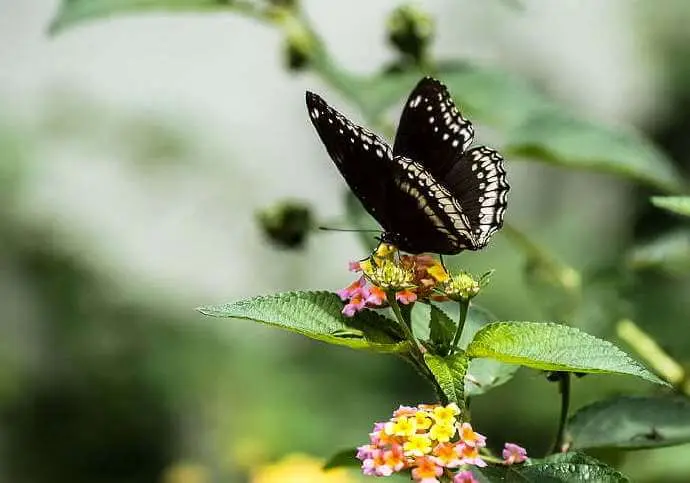
Bai Juyi's Qiu Die (秋蝶)—composed during the poet's later years in Luoyang, when his aesthetic had matured into a philosophical minimalism that privileged the observation of small-scale natural phenomena as allegories for human biological and existential conditions, a period when the poet, now in his sixties and increasingly conscious of his own physical decline, found in the autumn garden's diminished vitality a mirror for his own seasonal obsolescence—opens with a devastating chromatic and botanical inventory of autumnal diminution: Qiu hua zi meng meng, qiu die huang rong rong. (秋花紫蒙蒙,秋蝶黄茸茸。). The "autumn flowers" (qiu hua) that are "purple dim and hazy" (zi meng meng) constitute a chromatic pathology of reduced saturation: the "purple" (zi) is not the vibrant violet of spring bloom but a muted, desaturated hue that has been filtered through the autumn atmosphere's particulate density, and the "dim and hazy" (meng meng) is a visual opacity that converts floral coloration into atmospheric vapor, the flowers not distinctly visible but dissolved into a chromatic mist that hovers at the threshold of perceptibility. The "autumn butterfly" (qiu die) that is "yellow fluffy and soft" (huang rong rong) is a devastating chromatic and textural diagnosis: the "yellow" (huang) is the chromatic signature of senescence in lepidopteran populations, the wing scales having lost their spring iridescence and contracted into a monochrome pallor that signals the insect's terminal generation, and the "fluffy and soft" (rong rong) is a tactile pathology of reduced structural integrity, the wing scales no longer forming the rigid, aerodynamic surfaces necessary for sustained flight but instead producing a downy, friable texture that compromises the insect's locomotive capacity. The opening couplet thus establishes a regime of chromatic diminution: the flowers are purple but hazy, the butterfly is yellow but fluffy, and the autumn garden is a chromatic and textural environment where the saturation of spring has been replaced by the atmospheric dissolution of senescence.
The Kinetic Regression and the Topographical Micro-System of the Diminished Garden
The second couplet delivers a devastating kinetic and topographical audit that transforms the butterfly's flight into a chronobiological regression: Hua di die xin xiao, fei xi cong xi dong. (花低蝶新小,飞戏丛西东。). The "flowers low" (hua di) and "butterfly newly small" (die xin xiao) is a devastating topographical and somatic diminution: the "low" (di) is not merely a positional descriptor but a gravitational pathology, the flower stems having lost their turgor pressure and collapsed toward the earth, and the "newly small" (xin xiao) is a paradoxical temporal marker that identifies the butterfly as a member of the terminal generation, its body reduced in size by the nutritional deprivation of autumn vegetation and the genetic programming of seasonal obsolescence. The "newly" (xin) is particularly devastating: it suggests that the butterfly is not merely small but recently emerged, a fresh specimen of a diminished species, its smallness not an individual anomaly but a generational characteristic. The "flying and playing" (fei xi) "from bush west to east" (cong xi dong) is a kinetic regression of reduced territorial range: the "flying" (fei) is not the soaring, migratory flight of spring lepidoptera but a low, fluttering locomotion constrained by the reduced wing surface and muscular atrophy of the autumn form, and the "playing" (xi) is a behavioral diagnosis of diminished cognitive function, the insect's reduced neural capacity converting purposeful foraging into aimless, repetitive movement. The "from bush west to east" (cong xi dong) is a topographical micro-system of minimal displacement: the butterfly does not traverse the garden but circulates within a single bush, its west-to-east oscillation a kinetic imprisonment that mirrors the poet's own reduced mobility in his Luoyang estate. The couplet thus establishes a regime of kinetic regression: the flowers are low, the butterfly is newly small, the flight is constrained, the play is aimless, and the garden has been reduced from a territorial expanse to a single bush's micro-system.
The Somatic Pathology of Seasonal Obsolescence and the Poetics of Terminal Observation
The poem achieves its terminal resolution through a devastating synthesis of chromatic, textural, kinetic, and topographical modalities that encodes the entire poem's philosophical architecture of late-life transience: the purple is dim, the yellow is fluffy, the flowers are low, the butterfly is small, the flight is constrained, the play is aimless, and the bush is the entire world. The poem's brevity is not stylistic economy but entomological necessity: the autumn butterfly's lifespan is measured in days, and the poem's four lines compress the entire chronobiology of this terminal existence into a single observational moment. The "newly small" (xin xiao) is the poem's masterful temporal paradox: the butterfly is both new and small, both fresh and diminished, both recently emerged and already obsolete, and this paradox is the poem's allegorical core. Bai Juyi, observing the autumn garden in his sixties, sees in the butterfly's diminished vitality a mirror of his own condition: the body is still functional, the mind is still active, the social world is still accessible, yet the spring's vibrancy has been replaced by the autumn's atmospheric dissolution, and the territorial expanse of youth has been reduced to the micro-system of the estate. The poem thus concludes as a manifesto of seasonal obsolescence: the flowers are purple but hazy, the butterfly is yellow but fluffy, the bush is the entire world, and the only remaining action is the poet's observation, his recording of the chromatic and kinetic diminution that is not merely entomological but autobiographical. The poem stands as the definitive document of Bai Juyi's late-life minimalism: the politics are finished, the social world is distant, the body is declining, and the only remaining subject is the autumn garden, its diminished colors, its constrained movements, and the structural equivalence between the butterfly's terminal generation and the poet's own seasonal position.