The Sonic Sandbox of Death: Acoustic Desolation, Regional Liquidation, and the Dismantling of Martial Romance in Wang Changling's "Sai Shang Qu"
The Acoustic Trap: Subverting the Pastoral Iconography
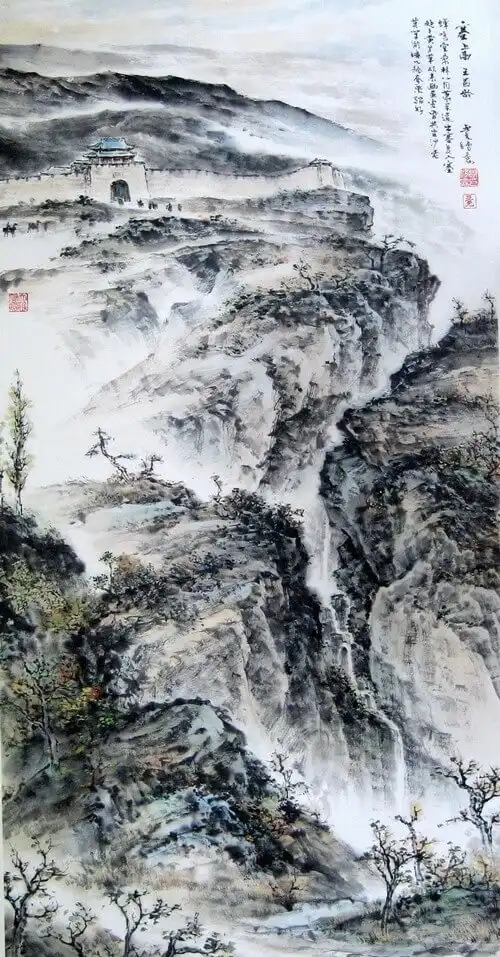
Wang Changling’s Sai Shang Qu (塞上曲)—belonging to his elite suite of frontier quatrains—opens with a brilliant, deeply unsettling subversion of traditional acoustic codes. The initial sensory movement—chan ming kong sang lin, ba yue Xiao guan dao (蝉鸣空桑林,八月萧关道)—deploys the cicada not as a peaceful marker of late-summer agricultural ease, but as a grinding psychological razor. Transported to the freezing, exposed limestone gates of Xiaoguan Pass right as the autumn wind bites, the insect's high-pitched, relentless wail echoes through a "barren" or "empty" mulberry forest (kong sang lin). The mulberry tree, the ultimate foundational symbol of Chinese domestic silk weaving and agrarian warmth, is stripped of its human utility. By pairing the weeping sound of dying insects with a cold, isolated military bottleneck, the poet constructs an architecture of acoustic entrapment, signaling to the arriving conscript that they have exited the ordered zone of civilization and entered a hostile ecosystem designed to consume them.
The Topographic Blank: Reeds, Weeds, and the Democracy of Dust
The internal movement of the poem strips the landscape of all strategic significance, transforming a vital imperial highway into a featureless graveyard: chu ru wan li ke, wei jian huang peng hao (出入万里客,唯见黄蓬蒿). Whether entering or exiting the massive perimeter of the empire, the roaming subjects face a terrifying visual void. The only material reality left is the infinite expanse of yellow reeds and wild, untamed weeds (huang peng hao). Through the lens of spatial criticism, the word 唯 (wei), meaning "exclusively" or "nothing but," functions as a total erasure of dynastic architecture. The forts, the banners, and the administrative milestones of the Emperor are completely swallowed by nature's indifferent, pale vegetation. Human history is flattened out, forcing the individual traveler to look upon a landscape that has decoupled itself entirely from the political grandiosity of the capital.
The Regional Vortex: Pulverizing the Elite Northern Flesh
The poem achieves its profound, tragic depth by introducing a specific, highly charged geopolitical demographic into the desert soil: you lai You Bing ke, jie zang sha chen tu (由来幽并客,皆葬沙尘土). The regions of You and Bing (encompassing modern-day Hebei, Shanxi, and Inner Mongolia) held a mythic status within Tang military culture as the premier breeding grounds for the empire's most lethal, aggressive cavalry archers and iron-willed frontier mercenaries. Yet, Wang Changling states with chilling historical certainty that even these elite warriors—genetically and culturally hardened for violence—possess no immunity against the frontier vortex. The phrase 皆葬 (jie zang) acts as an uncompromising equalizer. Their specialized martial training, proud lineages, and physical strength are systematically pulverized by the endless border skirmishes, reducing the finest flesh of the northern borders to anonymous, biological debris indistinguishable from the yellow sand.
The Deconstruction of Hubris: Dismantling the Cavalier Lure
The masterpiece culminates in an unprecedented, radically subversive closing command that aggressively targets the recruitment propaganda of the High Tang state: mo xian qi bing jiang, du kua jun ma hao (莫羡骑兵将,独夸骏马好). Within the metropolitan imaginary of Chang'an, the image of the dashing cavalry officer, masterfully controlling a roaring, imported Central Asian stallion, represented the absolute zenith of masculine romance, aristocratic advancement, and patriotic eroticism. Wang Changling violently tears down this aesthetic facade. He issues a direct psychological prohibition—莫羡 (mo xian), "do not dare to envy." The spectacular display of equestrian skill and martial vanity is unmasked as a fatal trap, a decorative illusion used by the court to glamorize state-mandated slaughter. The poet leaves his audience with a fierce, protective warning, proving that the beautiful warhorse and the glittering armor are merely the ornate gilding on a systemic machine that leads exclusively to an early, untraceable grave.