The Gilded Cage: Sensory Opulence and Structural Abandonment in Wang Changling's "Lament of the West Palace"
The Irony of Superiority: Sensory Saturation and Material Entrapment
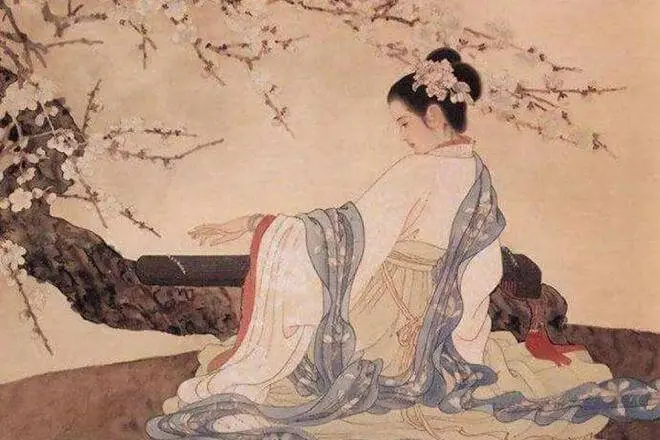
Wang Changling’s Xi Gong Qiu Yuan (西宫秋怨) stands as a textbook masterpiece of Gongyuan Shi (宫怨诗)—palace grievance poetry—a genre that flourished during the High Tang as a dual vehicle for tracking female domestic trauma and masking male political alienation. The opening couplet establishes a dazzling, hyper-aestheticized landscape: fu rong bu ji mei ren zhuang, shui dian feng lai zhu cui xiang (芙蓉不及美人妆,水殿风来珠翠香). By declaring that the natural beauty of the blossoming lotus is fundamentally less than the crafted, cosmetic perfection of the palace lady, the poet introduces a devastating irony. She is surrounded by absolute luxury—the cooling breezes of the lakeside water-pavilion and the rich, intoxicating fragrance of pearls and jade hairpins (zhu cui xiang). Through a framework of material culture and spatial criticism, however, this sensory saturation serves to emphasize her absolute objectification. Her beauty has outshone nature, yet she remains an exquisite, trapped ornament within the imperial estate, her sensory environment curated entirely for a master who is permanently absent.
The Semiotics of the Autumn Fan: Intertextual Trauma and Utility-Based Value
The psychological hinge of the quatrain pivots sharply in the third line, evoking one of the most powerful, heartbreaking metaphors in the classical Chinese literary lexicon: que fen han lei yan qiu shan (却分含泪掩秋扇)—"Yet she, her eyes brim-full of suppressed tears, lays her autumn fan aside." The imagery of the 秋扇 (qiu shan) or "autumn fan" is a brilliant intertextual reference to the Han Dynasty poetess Ban Jieyu (班婕妤), who famously composed the Yuan Ge Xing (怨歌行), comparing a discarded woman to a round silk fan when the cold autumn wind arrives. Within a feminist and structuralist framework, the fan represents the tragic, precarious nature of female utility under a patriarchal system. Loved and brandished during the blazing summer of youth and physical radiance, the lady is systematically cast aside when the cold autumn of neglect sets in. The act of "hiding" or laying the fan aside signifies a painful state of self-awareness; she consciously recognizes her own obsolescence, internalizing her rejection as she retreats behind the physical silk shield to weep in silence.
The Cosmic Void: Enduring Stasis and Phantom Sovereignty
The masterpiece culminates in a spectacular, quiet visual resolution that projects her inner domestic void onto the macrocosm: kong xuan ming ya dai jun wang (空悬明月待君王)—"In vain hangs the brilliant moon, waiting for the Emperor." The adverb 空 (kong), meaning "in vain" or "empty," functions as the conceptual anchor of the entire poem. The glowing full moon hanging over the West Palace promises clarity, illumination, and cyclical reunion, yet within this context, it is rendered utterly impotent. The cosmic landscape matches the emotional stasis of the chamber. Waiting for the sovereign (dai jun wang) is transformed from a temporary expectation into a permanent, lifelong sentence of psychological solitary confinement. Wang Changling leaves the reader at a chilling existential threshold, demonstrating that within the brutal machinery of the imperial court, neither cosmic brilliance nor unparalleled human beauty can alter the freezing gravity of political and emotional exile.