The Kinetic Shadow: Temporal Pulverization, Nocturnal Optics, and the Domestic Fortress in Zhang Xian's "Tian Xian Zi"
The Auditory Loop: Failed Anesthesia and Sovereign Sorrow
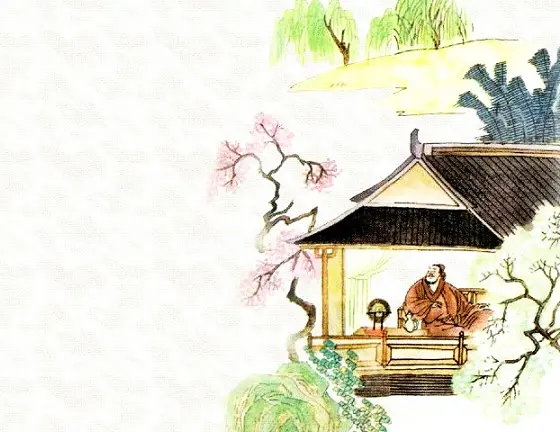
Zhang Xian’s Tian Xian Zi (天仙子·水调数声持酒听)—the crowning masterpiece of his career that earned him the legendary moniker "Zhang of the Three Shadows"—opens by staging an immediate clash between artistic performance and physical displacement: Shui diao shu sheng chi jiu ting, wu zui xing lai chou wei xing. (水调数声持酒听,午醉醒来愁未醒。). Listening to the melancholy notes of the "Water Melody" (Shuidiao) while gripping a wine cup, the speaker tracks a failure of chemical erasure. He wakes from his afternoon drunkenness (wu zui), but his core psychological trauma remains entirely un-awakened and unresolved (chou wei xing). Alcohol operates here as an unstable anesthetic that has broken down prematurely. The persistence of his sorrow is instantly mapped onto the cosmic calendar: Song chun chun qu ji shi hui? Lin wan jing, shang liu jing. (送春春去几时回?临晚镜,伤流景。). Facing the "evening mirror" (wan jing), the subject performs a visceral audit of his own physical erosion, witnessing his youth sliding away into the irreversible current of the passing season (liu jing), leaving all future romantic appointments completely hollow (kong ji sheng).
The Optical Revelation: Cosmic Movement and the Play of Shadows
The structural pivot of the second stanza shifts from internal mourning to execute one of the most celebrated, visually explosive landscape orchestrations in classical Chinese literature: Sha shang bing qin chi shang ming, yun po yue lai hua nong ying. (沙上并禽池上暝,云破月来花弄影。). As darkness closes over the pond (chi shang ming), the speaker notes the paired waterbirds sleeping together on the sand, a stark biological contrast to his own solitary isolation. Then, the universe undergoes a sudden, dramatic kinetic shift: the clouds fracture (yun po), the bright moon emerges (yue lai), and the wind-swept flowers actively "play with or manipulate their own shadows" (hua nong ying). Through a structuralist framework, this line is a profound act of optical animation. The flowers are not passive objects of sight; they are active, dynamic agents weaponizing the newly introduced moonlight to dance against the dark earth, transforming a silent night into a living, moving theater of pure form.
The Domestic Fortress: Curtains, Winds, and Threatened Sanctuary
Following this brilliant flash of cosmic light, the text performs a sudden, claustrophobic retreat into the interior architecture of the room, attempting to barricade the self against the wild elements: Chong chong lian mu mi zhe deng. (重重帘幕密遮灯。). Multiple layers of heavy curtains (chongchong lianmu) are pulled tight to thoroughly hide and protect the flickering light of the lamp (mi zhe deng). The curtain matrix functions as a psychological fortress built to freeze time and exclude the outside world. Yet, this domestic defense is continuously compromised by an un-navigable atmospheric crisis: Feng bu ding, ren chu jing. (风不定,人初静。). The restless, unpredictable wind rages outside while humanity falls into an eerie silence, leaving the subject trapped in a state of hyper-vigilant insomnia.
The Red Ruin: Prophetic Melancholy and Botanical Annihilation
The masterpiece terminates by projecting a devastating, futuristic materialization of decay across the domestic threshold: Ming ri luo hong ying man jing. (明日落红应满径。). Without leaving his bed or peering through the heavy drapes, the speaker forms a flawless prophetic certainty—tomorrow morning (ming ri), the garden pathways will be entirely buried beneath a thick carpet of shattered, fallen crimson blossoms (luo hong). Through a psychoanalytic lens, this closing line marks the complete surrender of the ego to time's destructive apparatus. The "fallen red" is a visceral record of nature’s un-feeling violence. By visualizing the botanical slaughter before it physically occurs, Zhang Xian proves that the ultimate coordinate of human exile is located inside the mind's own anticipatory mourning, watching the inevitable ruin of beauty from behind the closed curtains of the world.