The Illusion of Glory: A Hero's Unfulfilled Dream
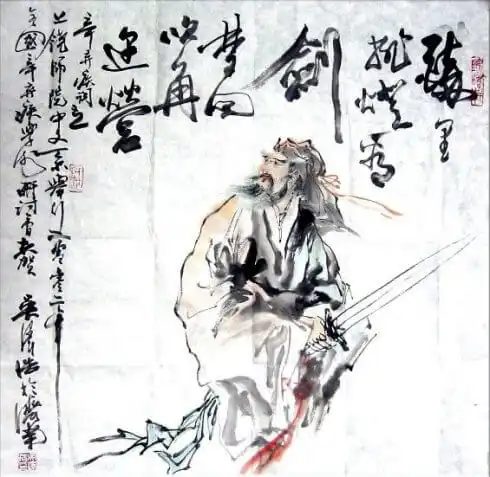
If there is one poem that defines the "Haofang" (Heroic and Bold) style of the Song Dynasty, it is "Dance of the Cavalry" (破阵子) by Xin Qiji (1140–1207). Dedicated to his close friend and fellow patriot Chen Tongfu, this "Zhuang Ci" (heroic lyric) is a cinematic journey through a warrior's ultimate fantasy, abruptly shattered by the cruelty of time and political reality.
The Campfire and the Glaive: A Sensual Memory
The poem opens in an intoxicated state: "Drunken, I lit my lamp to see my glaive." This sets a tone of suppressed energy. The transition to the military camp—the sounds of horns, the flags, the roasted beef, and the martial music—creates a deeply immersive and masculine atmosphere. Xin Qiji vividly recreates the camaraderie and the intense preparation of an "autumn manoeuvre," capturing the visceral reality of ancient Chinese military life.
The Rush of the Charge: Chasing Everlasting Fame
The second stanza accelerates the tempo. The "gallant steed" (historically referencing the legendary horse Di Lu) and the "twanging bows" thrust the reader into the heart of a cavalry charge. The poet’s ultimate ambition is laid bare: "Recovering the lost land for the sovereign." This was the lifelong dream of Xin Qiji and his faction—to retake Northern China from the Jin dynasty. It represents the absolute peak of patriotic devotion and martial glory.
The Devastating Climax: The Tragedy of Time
The brilliance of this poem lies in its final five characters: "But alas! white hair grows!" (可怜白发生). In an instant, the galloping horses, the roaring horns, and the dreams of victory vanish. The reader realizes that the entire poem was merely a drunken illusion or a fading memory. The harsh reality is that the hero is aging, marginalized by a pacifist government, and his sword remains unused. This sudden plunge from the heights of heroic fantasy to the abyss of personal tragedy is what makes Xin Qiji’s poetry immortal and profoundly moving.