The Frustrated Renewal: Meteorological Oppression, Mnemonic Migration, and the Micro-Sovereignty of Craft in Xin Qiji's "Han Gong Chun"
The Ephemeral Awakening: Material Micro-Signals and the Persistent Cold
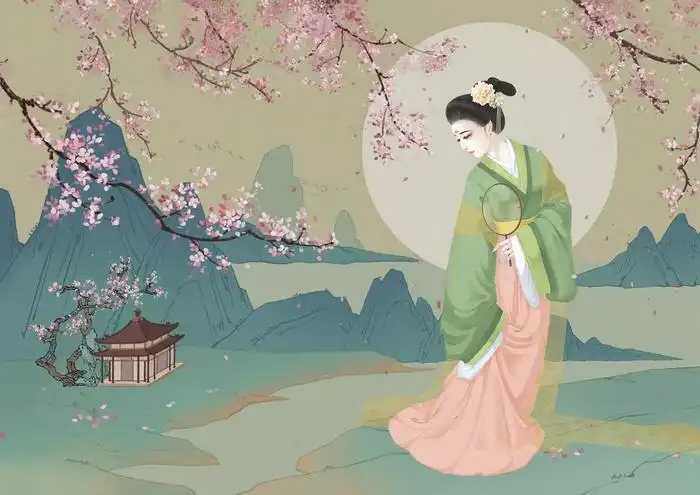
Xin Qiji’s Han Gong Chun (汉宫春·立春日)—composed during his forced political retirement in Jiangxi, away from the frontline of military action—opens by registering the arrival of the solar term through fragile, human-made signifiers: Chun yi gui lai. Kan mei ren tou shang, niao niao chun fan. (春已归来。看美人头上,袅袅春幡。). Spring’s return is documented not by grand alterations of the macrocosmic landscape, but by the fluttering of "spring streamers" (chunfan)—delicate silk ornaments pinned into the hair of courtly women. This micro-aesthetic presentation is immediately violently disrupted by an atmospheric counter-attack: Wu duan feng yu, wei ken shou jin yu han. (无端风雨,未肯收尽余寒。). The "reasonless wind and rain" aggressively prolong the freezing winter chill (yu han). Through a structuralist and political lens, this meteorological friction is deeply allegorical. The persistent, stubborn cold represents the stagnant, appeasement-driven political climate of the Southern Song court, which systematically freezes the poet's patriotic military campaigns and suffocates the nascent warmth of imperial recovery.
The Mnemonic Migration: Swallows, the Western Garden, and Material Deficit
The internal movement of the first stanza shifts focus toward animal migration, mapping an intense psychic journey across the borders of the fractured empire: Nian shi yan zi, liao jin xiao、meng dao xi yuan. (年年燕子,料今宵、梦到西园。). The swallows of yesteryear are imagined to be flying in their nocturnal dreams straight back to the "Western Garden" (xi yuan). In the semantic code of Xin Qiji’s poetics, the Western Garden is a highly charged metonymy for the lost northern capital of Kaifeng and the lost ancestral lands. The birds can effortlessly cross the geopolitical boundaries that trap the military commander. This agonizing sense of displacement is mirrored by a profound domestic and economic unreadiness: Hun wei ban、huang gan jian jiu, geng chuan qing jiu dui pan. (浑未办、黄柑荐酒,更传青韭堆盘。). The poet is completely unprepared to present the customary citrus wine or circulate the traditional platters of green chives required by the Lichun ritual. This material deficit highlights his profound alienation; cut off from the imperial center, his household mimics the fragmentation of the state itself.
The Frantic East Wind: Anthropomorphic Labor and Bureaucratic Stagnation
The second stanza leaps into a brilliant, ironic observation of the natural elements, using anthropomorphism to mock human paralysis: Que xiao dong feng cong ci, bian xun mei ran liu, geng mei xie xian. (却笑东风从此,便薰梅染柳,更没些闲。). The poet "laughs at the East Wind," which from this day forward must work around the clock, franticly scenting the plum blossoms and dyeing the willow branches with green vitality, possessed of "zero leisure" (geng mei xie xian). Xin Qiji projects an intense, almost industrial labor onto the wind. This natural productivity stands in devastating contrast to the poet's own enforced, suffocating idleness. While the elements of the universe operate at maximum velocity to rebuild the planet, the premier military strategist of the Song Dynasty is left stranded in rural retirement, tracking the passing of time through the silent arrival of newborn nestlings (jiu chao sheng yan ru jian).
The Micro-Sovereignty of the Hairpin: Textual Curation and Domestic Resistance
The masterpiece arrives at its magnificent, claustrophobic resolution by withdrawing entirely from the wild landscape into the absolute quiet of a dim room: An chuang jing li, ting luo mei、feng xia shuang qian. Qiao cai jin hua. Kan na jian、qing juan xi zi, zong zai zan bian. (暗窗静里,听落梅、风下双前。巧裁金花。看那剪、青绢细字,总在簪边。). Sitting by a shadowed window, listening to the falling plum blossoms hit the ground in pairs, the subject channels his remaining psychic energy into minute, domestic craftsmanship. He delicately cuts gold foil flowers (jin hua) and snips blue silk into tiny, fine inscriptions (qing juan xi zi) to be worn at the edge of the hairpin (zan bian). Within the framework of existential resistance, this act is monumental. The political world has denied Xin Qiji the authority to write military history on the battlefield or redraw the borders of the empire. Consequently, he downsizes his ambition to the millimeter scale, carefully carving out an unassailable, cultural sovereignty upon the tip of a hairpin, proving that the memory of the lost empire can be preserved and defended within the smallest fragments of silk and gold.