A Portrait of Peace: The Ultimate Pastoral Symphony
While Xin Qiji (1140–1207) is revered as a fierce patriot and warrior, "Qingpingyue: Rural Dwelling" (清平乐·村居) showcases his profound capacity for gentleness. Written during his retirement in Jiangxi, this beloved masterpiece reads like a warm, cinematic snapshot of agrarian life in the Song Dynasty. It captures the exact kind of peaceful, ordinary happiness that heroes fight to protect.
The Drunken Harmony: Age and Contentment
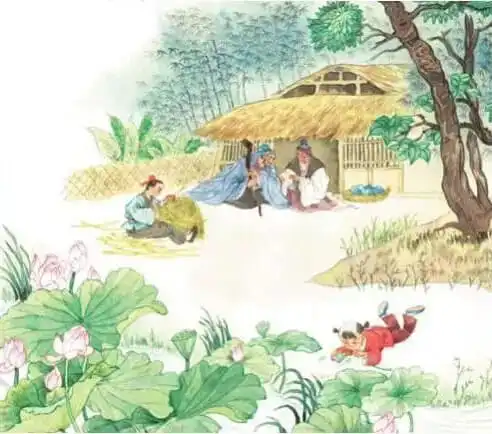
The poem opens with a beautifully humble setting: a low thatched roof beside a brook with "green grasses." The focus then shifts to the elderly couple talking with a "drunken Southern voice so sweet" (醉里吴音相媚好). This "drunkenness" is not about alcoholism, but rather a state of absolute relaxation and domestic bliss. Free from the anxieties of war and court politics, the white-haired husband and wife represent the ultimate Confucian ideal of a contented old age.
The Rhythm of Rural Life: A Three-Act Play
The genius of this poem lies in Xin Qiji’s observation of the three sons, which perfectly maps the rhythm of traditional agrarian society. The eldest son is engaged in heavy labor ("hoeing weeds" east of the brook). The second son is practicing a useful domestic craft ("making a cage for hens"). Together, they symbolize industry and self-sufficiency, the bedrock of rural Chinese life.
The Lotus Seed: A Masterpiece of Innocence
The climax of the poem, and the reason it remains so universally cherished, is the image of the youngest son. "Having nothing done," he lies by the brook, leisurely "podding lotus seeds" (剥莲蓬). This image of pure, unadulterated childhood innocence provides a brilliant contrast to the labor of his brothers. Xin Qiji looks at this "useless" but joyful child not with judgment, but with immense fondness. It is a universal celebration of a carefree youth, sheltered by the hard work of the family.