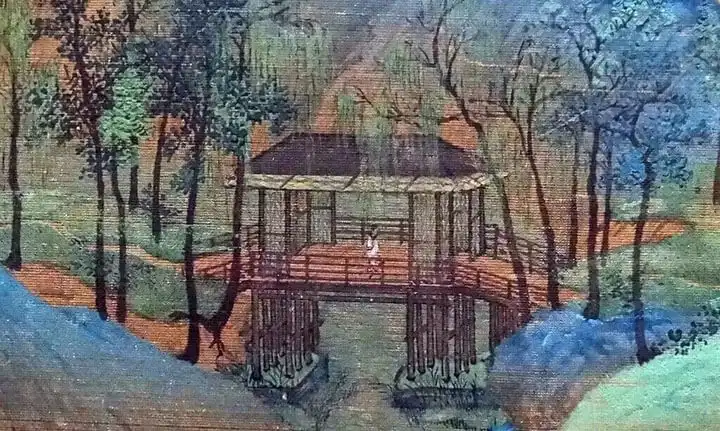
The Wrath of a Caged Tiger: Pounding the Railings of Jiankang
Written by the warrior-poet Xin Qiji (1140–1207) while stationed in Jiankang (modern-day Nanjing), "Shui Long Yin" (水龙吟·登建康赏心亭) is a monumental expression of suppressed patriotic fury. Standing at a pavilion that historically overlooked the border between the Southern Song and the occupied North, Xin Qiji transforms a traditional autumn landscape into a sprawling canvas of national tragedy and personal agony.
The Vast Autumn and the Lost North
The poem opens with a breathtaking, yet oppressive, cinematic sweep: miles of autumn sky meeting boundless water. When the poet gazes at the "far-off Northern hills," comparing them to "spiral shells or hair decor of jade," he is not merely admiring the view. These mountains represent the Central Plains (Zhongyuan), his homeland, which has been lost to the Jin invaders. The landscape itself is "overfilled with grief or hatred," mirroring the poet's internal state.
The Sword and the Balustrade: A Warrior's Frustration
The physical actions in the first stanza are immortalized in Chinese literary history. As a "wanderer on Southern land," he looks longingly at his "precious sword" (吴钩)—a weapon meant for reclaiming territory, now rusting in peacetime. The act of "pounding all the railings" (拍遍栏杆) is a visceral display of a warrior's frustration. He is a caged tiger, bursting with military genius, yet ignored by a pacifist court. The tragedy culminates in the realization that "nobody knows why" he climbs the tower; his profound patriotism is completely misunderstood by his contemporaries.
Rejecting the Hermit's Comfort
In the second half, Xin Qiji wrestles with the temptation to give up. He references ancient historical figures who retired to their hometowns for good food ("the perch") or to buy property ("land and cot"). However, he violently rejects this path of comfort. He declares he would be "ashamed to see the patriot" if he abandoned his national duty for personal peace. This highlights his uncompromising moral integrity and heroic spirit (Haofang).
Tears Without a Confidante
The conclusion shifts from roaring anger to profound, desolate sorrow. Comparing himself to an "old tree" grieving in the wind and rain, he laments his passing youth. The final question—asking who might wipe his tears with a "pink handkerchief"—is not a plea for romance, but a stark declaration of ultimate isolation. He weeps not for himself, but for a dying nation, and realizes there is no one in the world who truly comprehends the depth of his heroic tears.