The Epistemological Evolution of Sorrow: Architectural Affectation, Linguistic Collapse, and the Weather Deflection in Xin Qiji's "Chou Nu 'Er"
The Architectural Ascent: Youthful Affectation and Sorrow as Literary Commodity
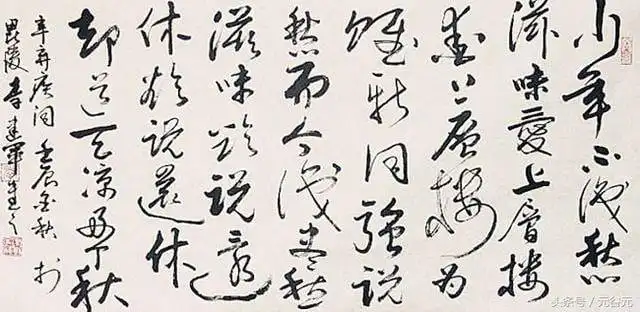
Xin Qiji’s masterpiece—traditionally cataloged under the tune name Chou Nu 'Er (丑奴儿) or alternatively Cai Sang Zi (采桑子·书博山道中壁)—opens by isolating a distinct psychological phase of youthful aesthetic performance: Shaonian bu shi chou zi wei, ai shang ceng lou. Ai shang ceng lou, wei fu xin ci qiang shuo chou. (少年不识愁滋味,爱上层楼。爱上层楼,为赋新词强说愁。). The youthful subject climbs high towers (ceng lou) not out of genuine existential crisis, but to actively manufacture a romanticized melancholy. Within the material and literary culture of the Song Dynasty gentry, "sorrow" was a highly valued currency required to compose fashionable, emotional poetry. The phrase 强说愁 (qiang shuo chou)—meaning to force or simulate grief—exposes this early emotional baseline as a completely hollow performance. Youth uses architectural elevation to mimic philosophical depth, treating trauma as a superficial literary style rather than a visceral somatic reality.
The Saturation of Experience: Political Betrayal and the Somatic Weight of Truth
The structural pivot of the second stanza marks a profound, irreversible shift in both consciousness and political biography: Er jin shi jin chou zi wei (而今识尽愁滋味)—"But now, I have fully tasted and known the complete flavor of sorrow." The verb 识尽 (shi jin) tracks an absolute epistemological saturation. Composed during his mid-life political marginalization along the Boshan path, this line compresses decades of real, catastrophic trauma: the failure of his northern military campaigns, his systematic exclusion by the appeasement-driven Southern Song court, and the agonizing sight of his ancestral lands remaining under Jurchen occupation. Sorrow is no longer an elite costume to be put on for a poem; it has been completely digested by his physical body, turning from an abstract concept into a crushing, un-escapable gravity.
Linguistic Exhaustion: True Trauma and the State of Aphasia
This experiential saturation immediately triggers a profound linguistic crisis: Yu shuo hai xiu. Yu shuo hai xiu (欲说还休。欲说还休)—"Wishing to speak, yet stopping; wishing to speak, yet stopping." The overlapping repetition mirrors a deep psychological stutter or paralysis. Through a psychoanalytic and structural framework, this aphasia marks the absolute breakdown of language when confronting genuine trauma. The young poet had infinite words for simulated sorrow, but the mature, politically broken military commander finds that real tragedy completely exceeds the containment of the imperial dictionary. To speak his grief would require either a dangerous political defiance against the court or an exhausting re-opening of internal emotional wounds, forcing the intellect into a self-imposed, protective silence.
The Deflective Metaphor: Meteorological Irony as a Shield for Sovereignty
The lyric achieves its immortal, devastating climax by executing a brilliant act of communicative deflection: Que dao tian liang hao ge qiu. (却道天凉好个秋。). Instead of exposing his shattered interiority, the poet pivots outward to deliver a banal, superficial observation: "Instead, I simply say, how refreshing is the breeze, what a fine autumn!" This meteorological cliché is a supreme deployment of irony. By substituting an ordinary comment about the autumn weather for a deep expression of political heartbreak, Xin Qiji constructs a defensive wall around his ego. It acts as a survival mechanism against both courtly surveillance and personal madness. The poem stands as a definitive psychological manual, proving that the ultimate stage of human suffering is not marked by loud lamentation, but by a quiet, polite withdrawal into the indifferent, cool rhythms of nature.